A 150-Year Journey
*This page lists major events from our founding in 1876 through 1995.
Information covering 1996 and beyond will be published as soon as preparations are complete.
Part 1: The Creation of "Sapporo Beer"
1876–1905
Opening of the Kaitakushi Beer Brewery and the Birth of “Sapporo Beer”
In July 1869 (Meiji 2), the new Meiji government established the “KAITAKUSHI” (Hokkaido Development Commission) to develop Hokkaido. This was part of the government’s modernization policy aimed at “enriching the nation and strengthening the military” and “promoting industry and commerce,” with the objectives of raising the standard of living in Hokkaido, building a defensive barrier against Russia, and increasing national wealth. The Kaitakushi established approximately 40 state-run factories across some 30 industries. Beer brewing was planned as one of these.
The hop cultivation and beer brewing business in Hokkaido began after Thomas Anticell, one of the foreign experts hired by the Kaitakushi, discovered wild hops in Iwanai, Hokkaido.
Two key figures were instrumental in launching the beer business: Hisanari Murahashi and Seibei Nakagawa. Hisanari Murahashi was in charge of constructing the brewery. Although it had initially been decided to build a pilot brewery in Tokyo, he overturned that decision, advocating instead for construction in Sapporo from the outset, and succeeded in making it happen.Nakagawa had trained in Germany in authentic beer brewing methods and, upon his return to Japan, was appointed as an engineer for the Kaitakushi. Thanks to the foresight and efforts of these two men, the “Kaitakushi Beer Brewery” was completed on September 8, 1876, and the opening ceremony was held on the 23rd of the same month. This is where the history of Sapporo Breweries begins.
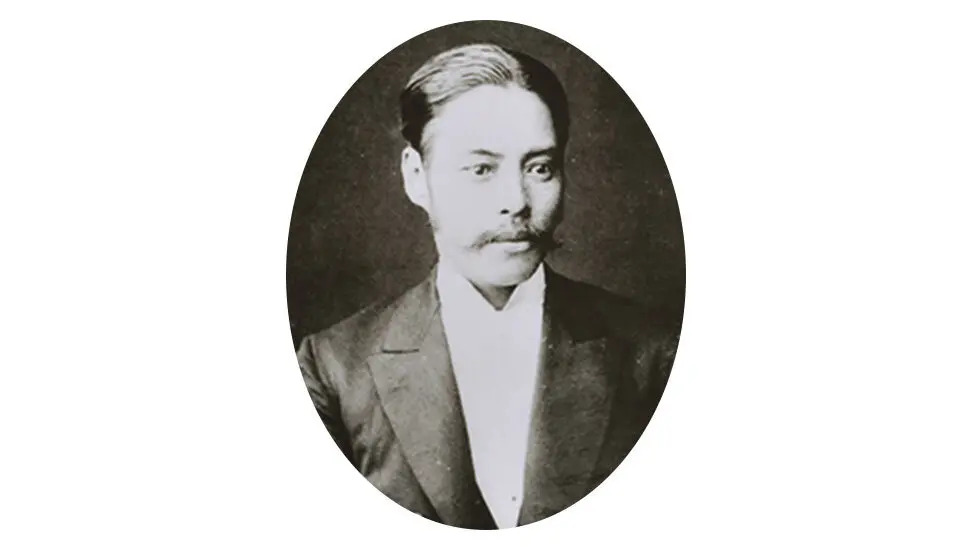
Hisanari Murahashi
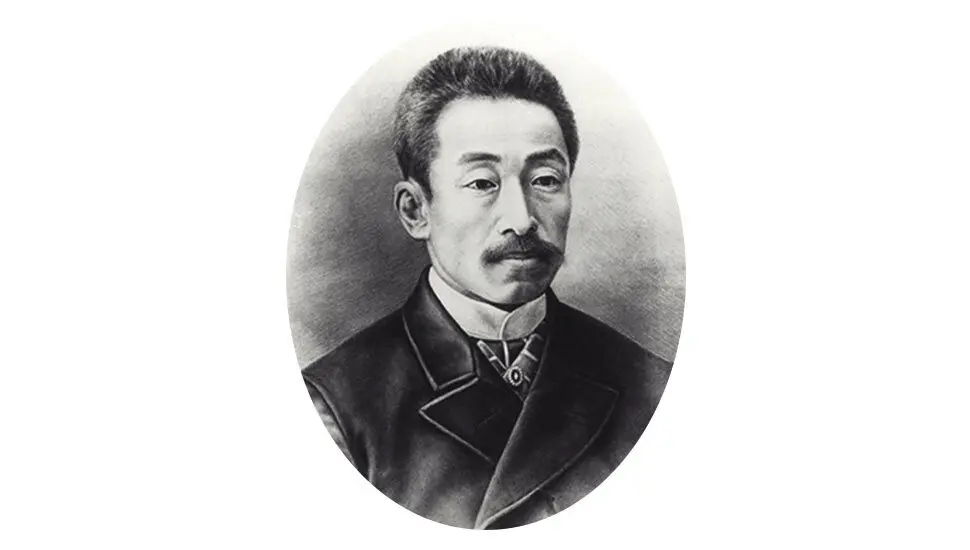
Seibei Nakagawa
A commemorative photograph taken at the opening ceremony shows a pile of beer barrels with the proud inscription: “Beer is an alcoholic beverage made from barley and hops.” This reflects the high expectations placed on domestic beer.
In September 1877, Hokkaido’s long-awaited first beer, named cold-matured“Sapporo Beer”, went on sale to the general public in Tokyo. The product name was prefixed with the word “cold-matured.” This indicated that it was a high-quality lager beer, fermented and aged slowly at low temperatures in accordance with authentic German brewing methods.
The price was 16 sen per large bottle. For the time, it was a luxury item. The label featured the “Polar Star,” the symbol of the Hokkaido Development Commission. This star, which shone in the northern night sky and served as a guiding light for the pioneers, has been passed down to this day as a symbol representing Sapporo Breweries’ tradition and the spirit of the pioneers.
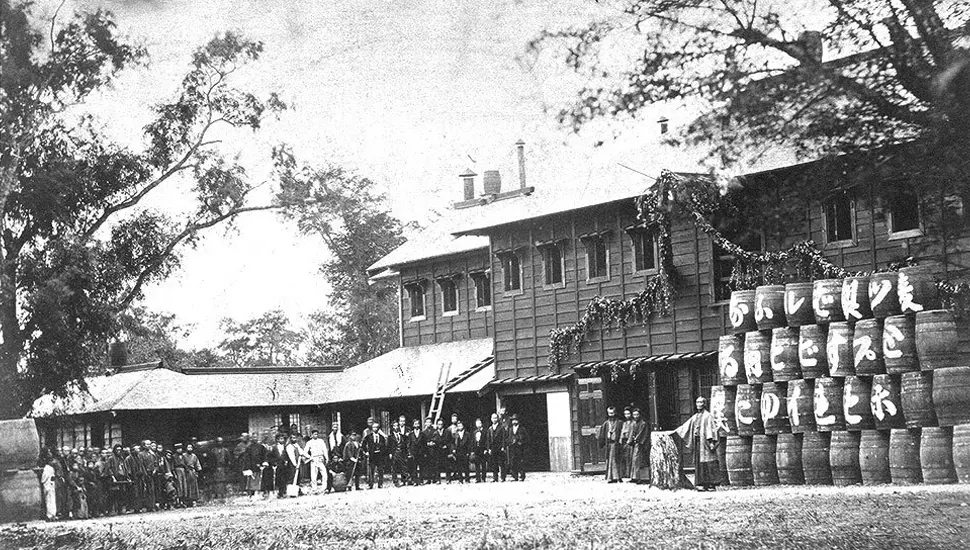
Commemorative photograph from the opening ceremony of the
“Kaitakushi Beer Brewery” (Hokkaido University Collection)
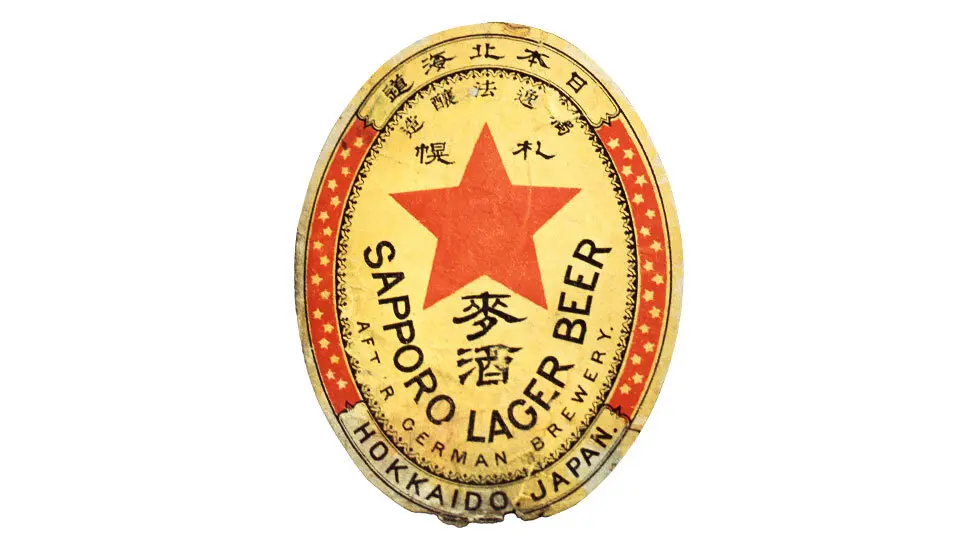
Label used in 1877
(Courtesy of MARUZEN-YUSHODO Company, Limited)
The Challenge of Sourcing Beer Ingredients Domestically
Kiyotaka Kuroda, the Commissioner of the Kaitakushi, aimed not only to brew beer but also to produce the ingredients—barley and hops—right here in Hokkaido. This was because it sought to establish a sustainable business that did not rely on imported beer ingredients, in tandem with the agricultural development of Hokkaido.
The Kaitakushi began experimental barley cultivation at experimental farms such as the Sapporo Government Farm, but it took considerable effort and time to find varieties suited to Hokkaido’s climate. It was not until 1880 that they were finally able to cover the entire amount of barley needed for brewing with domestically produced barley. As for hop cultivation, a hop garden was established in Sapporo in 1877. However, they repeatedly faced failures where the planted seedlings withered and died.After much trial and error, in 1881, they succeeded in sourcing all the hops used at the brewery from Hokkaido.
It was this persistent effort to source all raw materials domestically that laid the foundation for Sapporo Breweries’ enduring commitment to quality and later led to the development of collaborative contract cultivation.
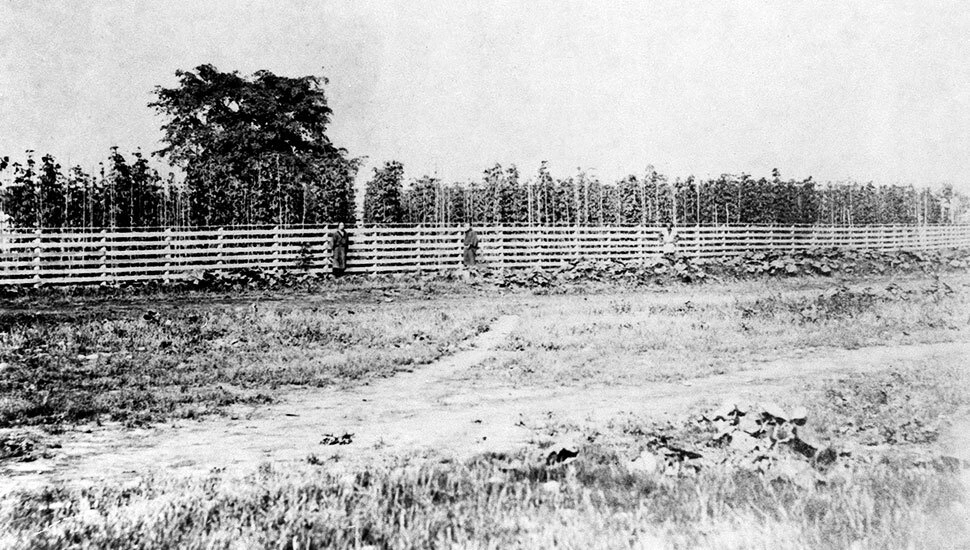
The Sapporo Hop Garden
around 1877 (Hokkaido University Collection)
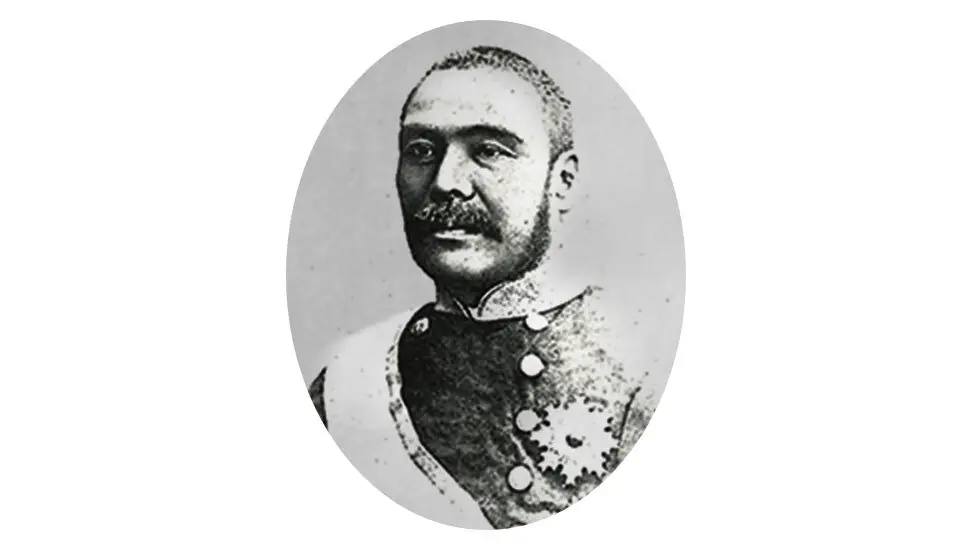
Kiyotaka Kuroda, Commissioner of the Kaitakushi
The End of the Kaitakushi and the Shift to Privatization
In February 1882, the Kaitakushi, which had spearheaded the development of Hokkaido as a national project, was abolished. Consequently, the Kaitakushi Beer Brewery was transferred from the Commission’s jurisdiction to the Engineering Bureau of the Ministry of Agriculture and Commerce and renamed the “Sapporo Beer Brewery,” though it was changed to the “Sapporo Beer Brewing Plant” the following year. It was then transferred to the newly established Hokkaido Government in January 1886.
Michitoshi Iwamura, the first Commissioner of the Hokkaido Government, established a policy to sell off factories and farms under the government’s jurisdiction to the private sector in order to further develop Hokkaido. Based on this policy, the brewery was also to be transferred to private ownership.
The entrepreneur Kihachiro Okura was the one who responded to this offer to take over the government-run enterprise. Having recognized the potential of the beer business through his study tours to Europe and the United States, he privatized the brewery in November 1886 as the “Okura-Gumi Sapporo Beer Brewery,” marking a new chapter in its history.
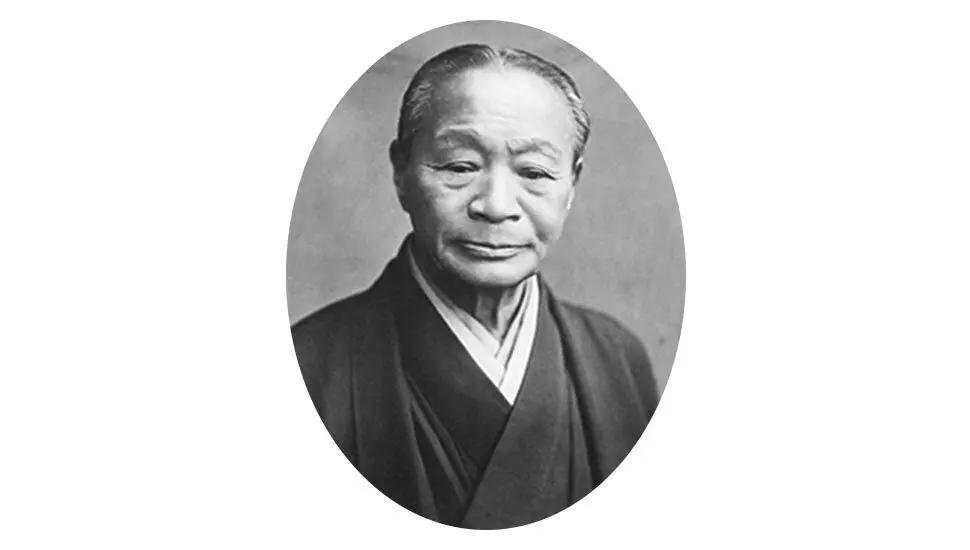
Kihachiro Okura
(Source: National Diet Library, “Portraits of Modern Figures”)
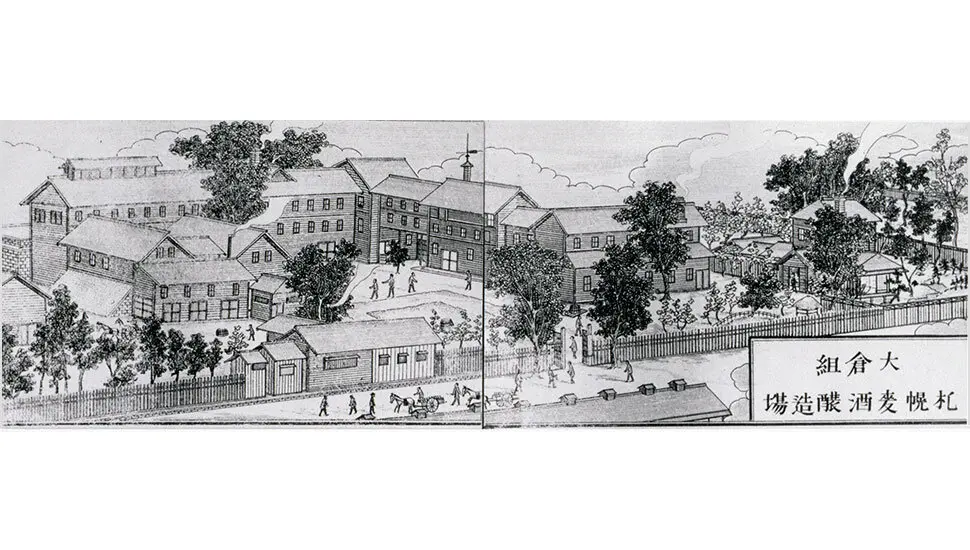
Okura-Gumi Sapporo Beer Brewery
(from *Sapporo Prosperity Chronicle*, published in 1887)
Establishment of the “Sapporo Beer Brewery Company”
Okura sought to solidify the beer business. The following year, in 1887, the brewery was transferred to Eiichi Shibusawa and Soichiro Asano, and others—who, like Okura, were interested in the beer business and wielded significant influence in political and financial circles. With Okura himself participating in management, the new company, “Sapporo Beer Brewery Company,” was established in December of that year. The capital and expertise of Japan’s leading industrialists were brought together, laying the foundation for the development of the beer business.
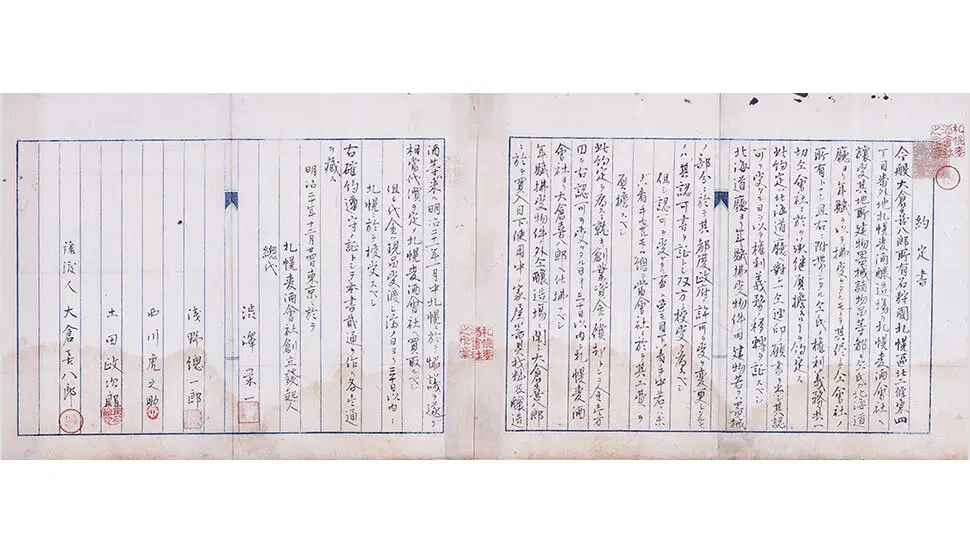
Agreement on the Transfer of the Brewery
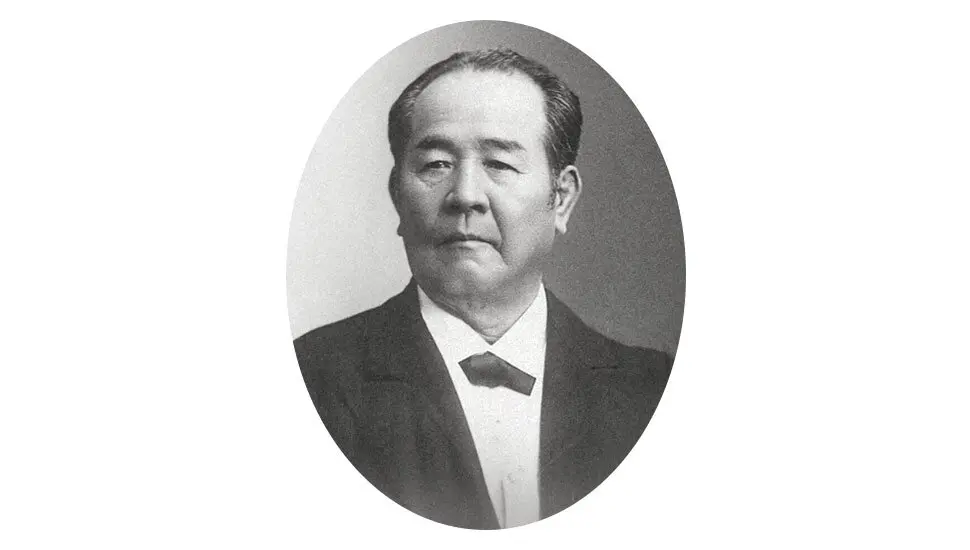
Eiichi Shibusawa
Part 2: The Birth of "Yebisu Beer"
1887–1905
Establishment of the Japan Beer Brewery Company the Launch of “Yebisu Beer”
Aiming to become Japan’s leading beer company, the Japan Beer Brewery Company.—another of our company’s roots—was established in September 1887 (Meiji 20). Small and medium-sized asset owners from Tokyo and Yokohama came together to launch what would today be called a venture business. However, due to the absence of influential capitalists like Shibusawa and Okura, management was unstable, leading to a situation where three presidents were replaced within just 10 months.
Mita Village in Ebara District, Tokyo Prefecture (now Yebisu Garden Place) was selected as the site for the brewery. In what was then a barren area of fields and forests, a modern, three-story, brick-built German-style brewery was constructed.In October 1889, two years after the company’s founding, the “Yebisu Beer Brewery” was completed. Brewing engineers were brought in from Germany, and beer production began in December of that same year.
Initially, “Daikoku-sama,” one of the Seven Lucky Gods, was a candidate for the product’s trademark, but since it was already registered, it could not be adopted, and the name was changed to “Ebisu-sama,” another of the Seven Lucky Gods.Thus, on February 25, 1890, "Yebisu Beer" was launched. Its quality was highly praised immediately after its release, and at the 3rd Domestic Industrial Exhibition held in Ueno starting in April of that year, it was rated "excellent" among the 83 beers entered.
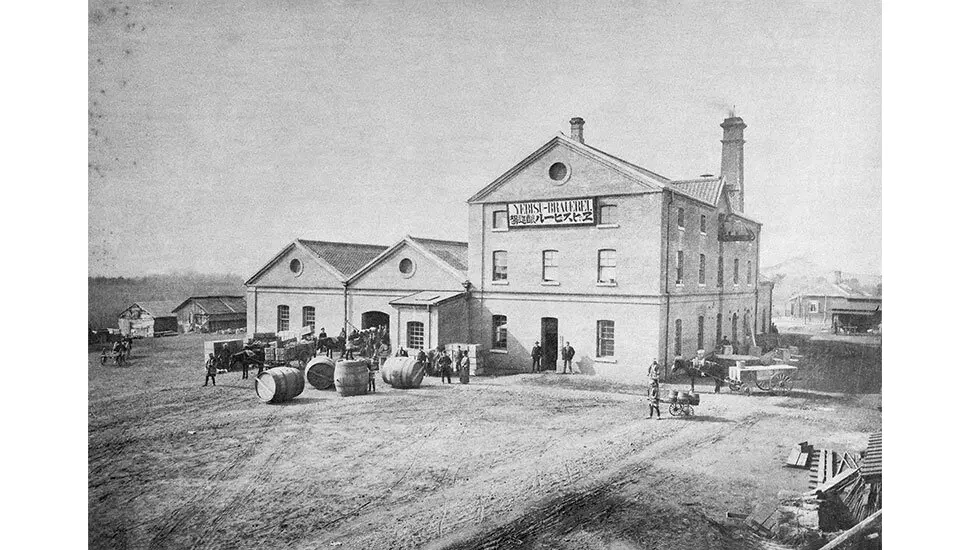
The "Yebisu Beer Brewery" at the time of its completion
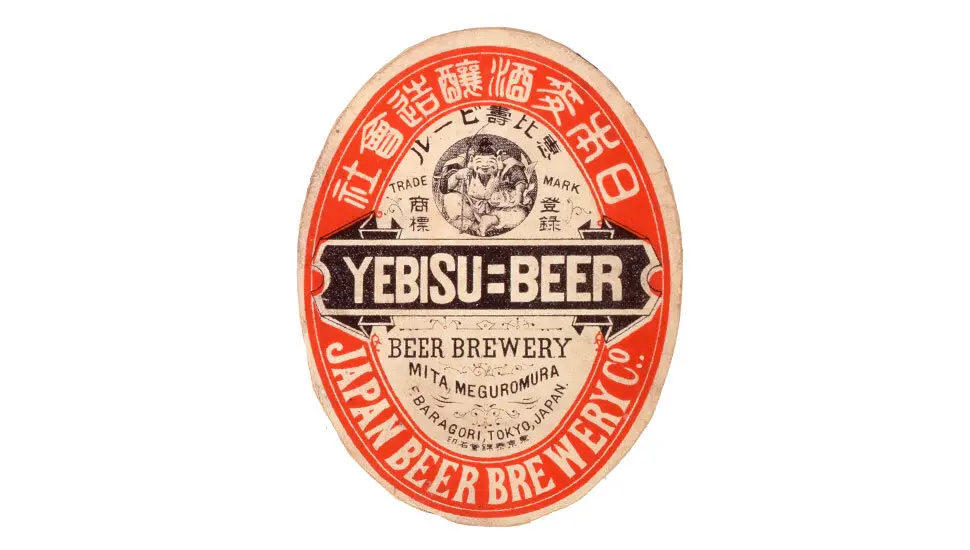
The label of the first "Yebisu Beer"
Recovery from a Management Crisis and the Achievement of Global Recognition
Although Nippon Beer got off to a smooth start upon its launch, its financial condition deteriorated due to the economic depression of 1890 and an underdeveloped sales network. Eventually, the company fell behind on paying employee salaries, and shareholders began calling for the company’s dissolution. To resolve this situation, Kyohei Makoshi, a Senior Managing Director at Mitsui & Co., was dispatched as a restructuring officer.Later hailed as the “King of Eastern Beer,” Makoshi assumed the position of Chairman—effectively serving as president of Japan Beer Brewery Company—in 1892. His first move was to implement drastic management rationalization, including thorough cost-cutting and the termination of contracts with trading companies that had been reaping undue profits.
At the same time, believing that the foundation of the turnaround lay in strengthening sales capabilities, he personally and energetically visited distributors nationwide, focusing his efforts on expanding sales channels. As a result, the company returned to profitability in just six months. By 1896, production of “Yebisu Beer” had grown to the point where it ranked first in the industry.As the popularity of "Yebisu Beer" grew, counterfeit products bearing the "Yebisu Beer" trademark began to appear on the market. Particularly during the years starting in 1897, the number of these counterfeit Yebisu products continued to rise, prompting Japan Beer to file numerous lawsuits for trademark infringement. This serves as proof of just how popular "Yebisu Beer" had become.
Under Makoshi’s outstanding management reforms, the popular Yebisu Beer was entered into the 1900 Paris World Exposition in France, where it won a gold medal. Subsequently, in 1904, it also won the Grand Prix at the St. Louis World Exposition, demonstrating that the quality of “Yebisu Beer” was recognized not only in Europe but also in the United States.
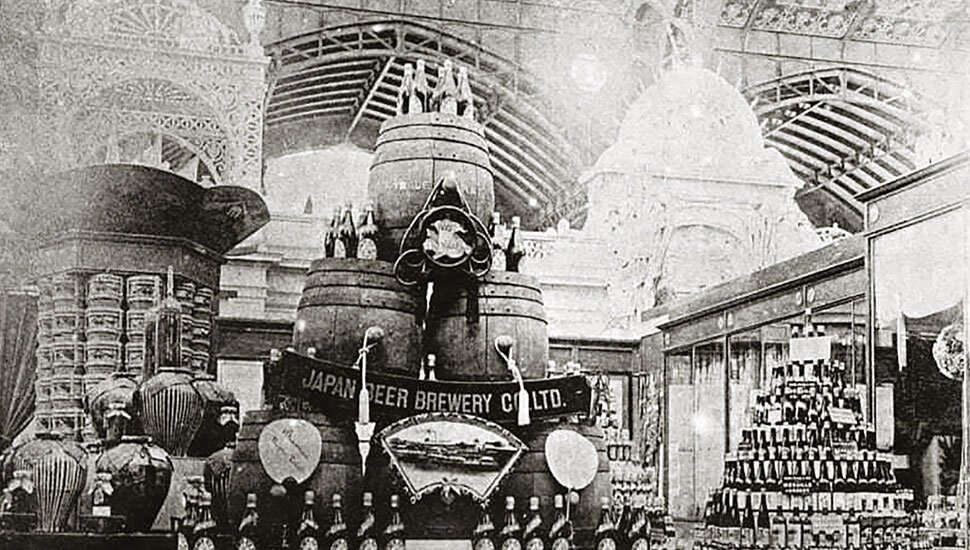
A scene from the exhibition at the Paris World Exposition
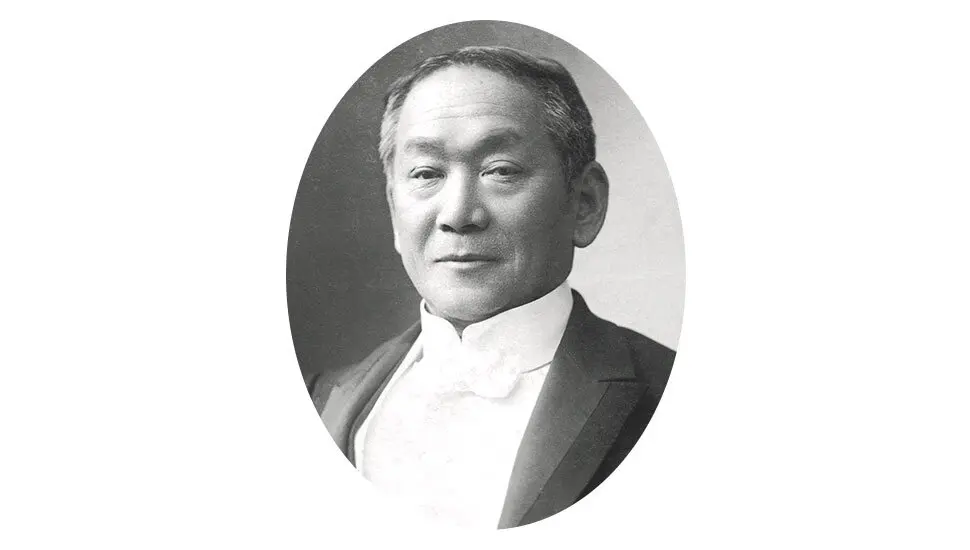
Kyohei Makoshi
The Opening of the Beer Hall and the Creation of a New Beer Culture
At the time, beer was still considered a luxury item and was largely unfamiliar to the general public. To introduce the Japanese to the taste of beer, President Makoshi conceived the idea of opening Japan’s first beer hall.On August 4, 1899, the “Yebisu Beer Hall” (hereinafter referred to as the Yebisu Beer Hall) opened in Minamikimuro-cho, Kyobashi Ward, Tokyo (now Ginza 8-chome). Fresh draft “Yebisu Beer,” delivered directly from the brewery, was served in glass mugs at an affordable price of “10 sen for half a liter (0.5 liters).”Records show that on the third day of operation, American sailors who had heard of the place visited, and sales reportedly doubled compared to the first day. However, there was one complaint from the customers: the only snack available at first was sliced daikon radish. This was meant to mimic the classic German snack of radishes, but it was extremely unpopular. Later, when they served simmered butterbur and shrimp instead, they reportedly went over very well.
The operation of such beer halls has since been taken over by Sapporo Lion, and in the year marking the 100th anniversary of the "Yebisu Beer Hall," August 4 was designated as "Beer Hall Day."
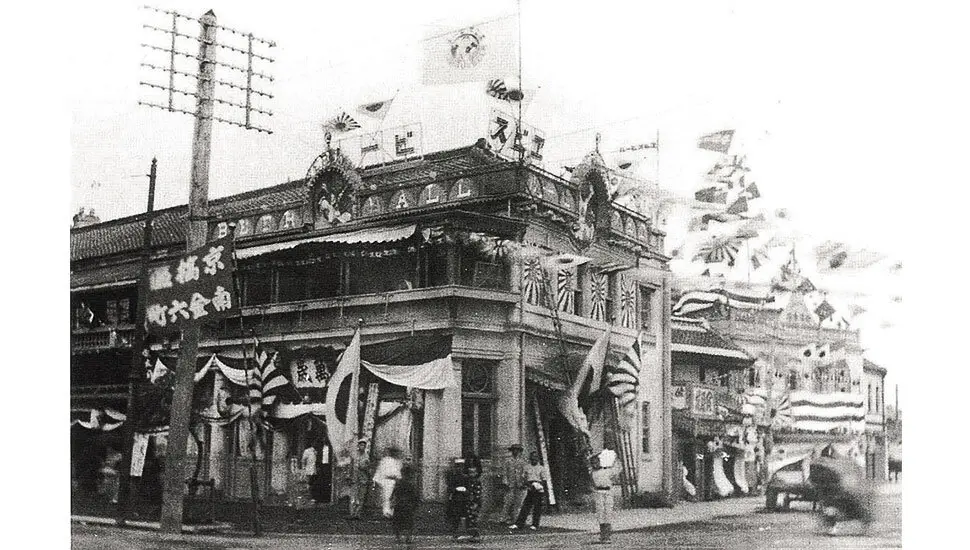
Exterior of the "Yebisu Beer Hall"
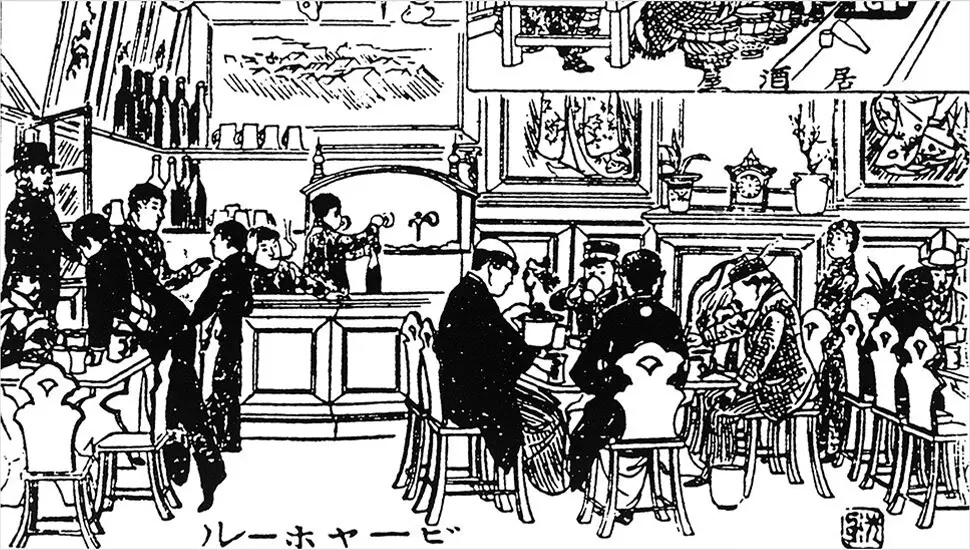
"Yebisu Beer Hall" as depicted in *Tokyo Fuzoku-shi*
Beer Names Becoming Station and Place Names
As production of "Yebisu Beer" increased dramatically, the efficient transportation of the product became a critical management issue. Initially, the company relied on ox-drawn and horse-drawn carts, but to fundamentally strengthen its transport capacity, Japan Beer requested that the Japan Railway (now the JR Yamanote Line), which ran alongside the factory, establish a freight station.This request was accepted, and in February 1901, the “Yebisu Station,” a dedicated freight loading and unloading area for product shipments, was opened on land adjacent to the factory. This event marked the beginning of the area being called “Ebisu.”
Thanks to the establishment of this new means of transportation via rail, "Ebisu Beer" could be supplied stably to regional areas, further solidifying its sales base. Subsequently, as the area around the station became urbanized and the population grew, the current JR "Ebisu Station" opened for passenger service in 1906.Then, in 1928, the area surrounding the station was renamed “Ebisu-dori.” The fact that a company’s product name became a station name and eventually evolved into the name of the neighborhood itself is the greatest testament to how “Ebisu Beer” has been an integral part of people’s lives.
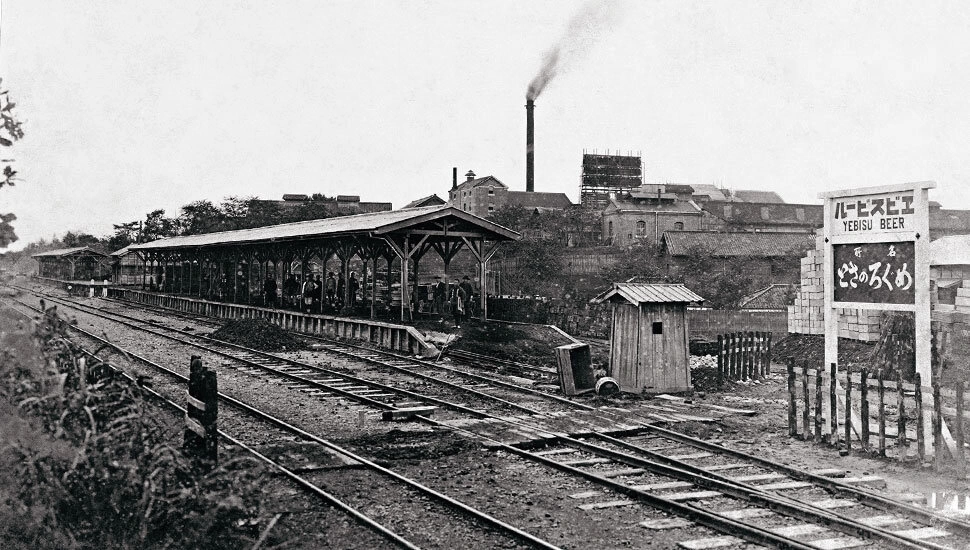
Ebisu Station
Part 3: The Merger of Three Companies—The Birth of Dai-Nippon Beer
1906–1949
The Dawn of Industry Consolidation and the Difficult Merger
The number of breweries in Japan had reached several dozen between the late 1880s and the mid-1890s, but many of them were eventually weeded out. In 1900 (Meiji 33), as sales competition among the four major companies—Sapporo Beer, Nippon Beer, Osaka Beer (Asahi Beer), and Kirin Beer—was intensifying, two events occurred that spurred industry consolidation.
The first was the construction of Sapporo Breweries’ Tokyo plant (in Azumabashi, Sumida Ward). When the plant was completed in May 1903 and “Sapporo Breweries” produced there went on sale, it rapidly eroded the Tokyo market, the stronghold of “Yebisu Beer.”The second was the government’s move to introduce a new beer tax. Amid a rapid expansion in total domestic beer production, the government announced its policy to impose a new tax to fund military expenses, and the “Beer Tax Act” was promulgated in March 1901.
These developments triggered a fierce sales competition within the Japanese beer industry. In 1904, as the Russo-Japanese War broke out, Kyohei Makoshi, president of Nippon Beer, felt a strong sense of crisis, believing that “we should not continue pointless competition within the country.” He proposed a merger of the three companies to Eiichi Shibusawa, chairman of Sapporo Beer, and Komakichi Torii, president of Osaka Beer.Negotiations were difficult due to conflicting interests among the companies, but they progressed thanks to a shared sense of urgency during the Russo-Japanese War and the backing of the Minister of Agriculture and Commerce. Following the determination of merger ratios based on an asset survey in 1905, “Dainippon Beer Company.” was established in March 1906, capturing 70% of the domestic market share.
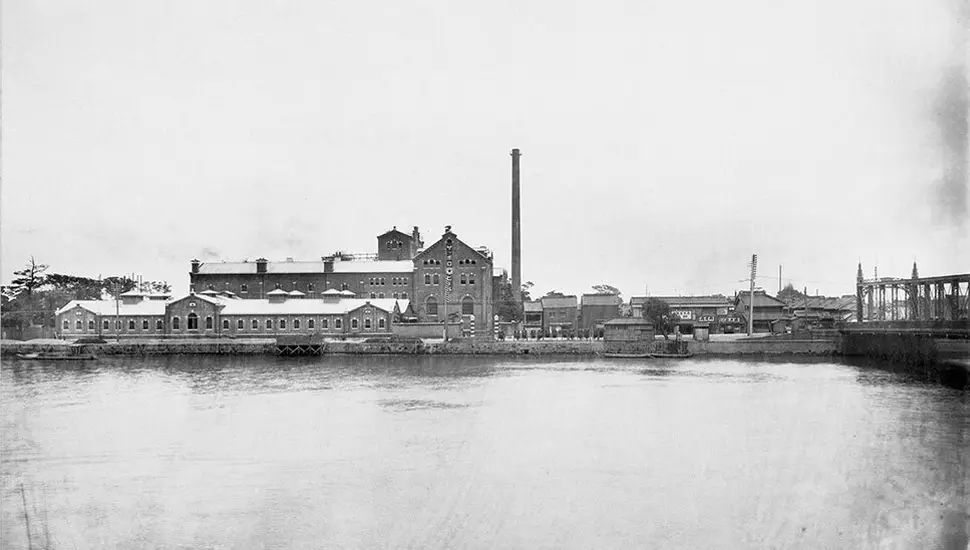
Sapporo Beer Tokyo Plant (Azumabashi, Sumida Ward)
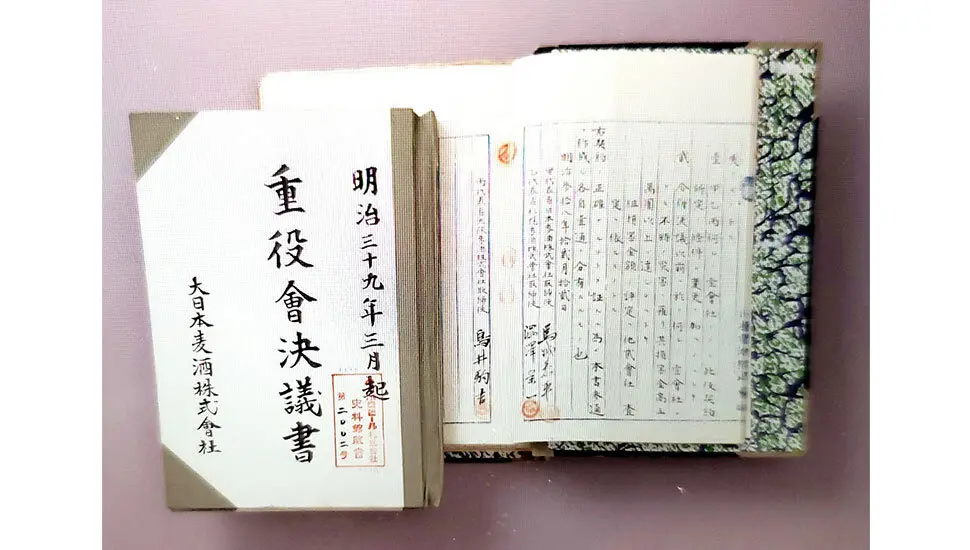
Merger Agreement and Board of Directors Resolution
The Establishment of Dainippon Beer and Business Expansion
Dainippon Beer Company formed through the merger of Sapporo Beer, Nippon Beer, and Osaka Beer, established its head office in Meguro Village, Ebara District, Tokyo Prefecture (now Yebisu Garden Place) and commenced operations on April 1, 1906. Kyohei Makoshi of Nippon Beer was appointed as the first President, and Directors (Members of the Board) included executives from each company, led by Eiichi Shibusawa.The new company continued to market the three former companies’ powerful brands—“Sapporo,” “Yebisu,” and “Asahi”—without change.
The following points were commonly recognized by the three companies at the time of their merger:
- Avoiding domestic competition and expanding sales channels overseas
- To achieve self-sufficiency by sourcing domestic barley and hops—the ingredients for beer—as well as machinery
- To avoid hiring foreign workers as much as possible
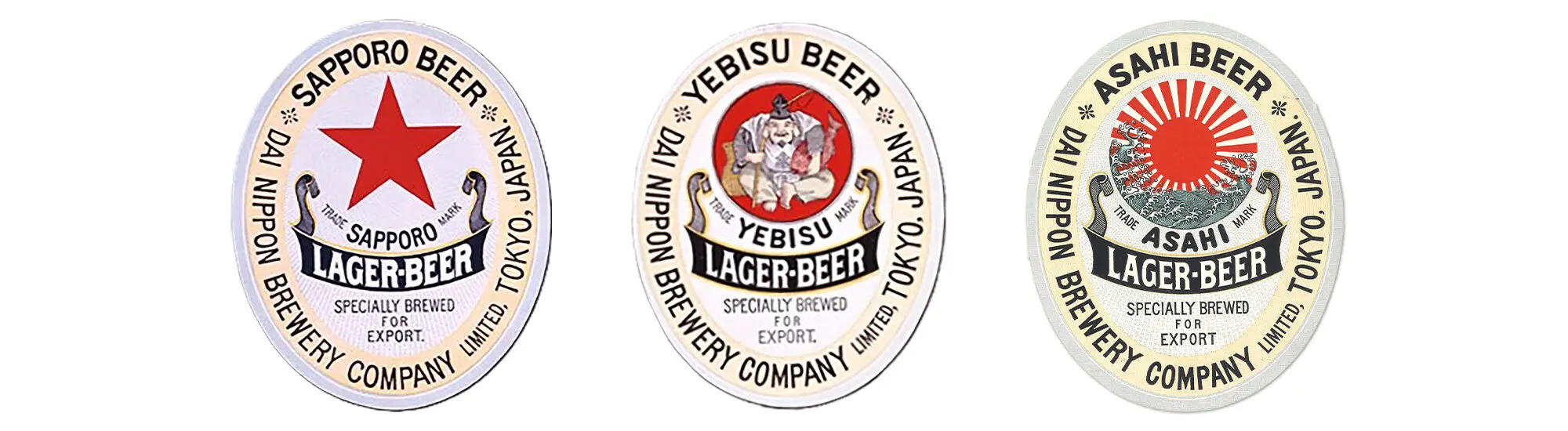
The redesigned labels for "Sapporo," "Yebisu," and "Asahi"
It is said that President Makoshi devoted the most effort to fostering harmony among the former three companies and among their employees. Immediately after the merger, he worked to cultivate a sense of unity, such as by launching “Peace Beer” to commemorate the restoration of peace following the Russo-Japanese War and the merger of the three companies. President Makoshi’s proactive management style showed no signs of slowing down; in the following year, 1907, he acquired Tokyo Beer Co., Ltd.Furthermore, in 1908, to drive further growth, he embarked on a study tour of Europe and the United States to observe the state of the beer industry in those advanced nations firsthand. Recognizing the need for state-of-the-art equipment, he took a keen interest in the fact that a Danish brewery also operated a soft drink business. Consequently, he entered the soft drink market in Japan and launched “Citron.” This was a new venture that leveraged the manufacturing technology and distribution networks cultivated through the beer business, and it became the foundation for the company’s future diversification.
Domestic Sourcing of Raw Materials and Overseas Expansion
The localization of raw materials, one of Dainippon Beer’s three major policies, had been promoted by each of the three predecessor companies. Contract farming of malting barley had been expanded even before the company’s establishment, and this expansion accelerated after the merger. As for hops, the company relied almost entirely on imports, making localization a long-standing challenge.Building on efforts dating back to the former Sapporo Brewery era, and through repeated breeding improvements, a superior new variety suited to Japan’s climate and soil was born in 1910 by crossing the German Saaz variety with the American White Vine variety.This variety was later named “Shinshu Wase,” and contract farming began in Nagano Prefecture. With major production expansion plans underway, the goal of using 100% domestically grown hops was nearly achieved by 1942.
The company actively expanded into overseas markets, increasing exports primarily to East Asia. When World War I began, the company seized the opportunity presented by the disruption of beer supplies from European countries to the Asian market, leading to a rapid expansion of exports.Then, in September 1916, the company formally acquired the Anglo-German Brewery located in Qingdao, China, which had been occupied by Japanese forces during World War I. This facility became the Qingdao Plant, and production and sales of “Qingdao Beer” began the following year, in 1917. This marked the first overseas production base for the Japanese beer industry and was a major step toward the full-scale expansion of business operations in the Asian market.
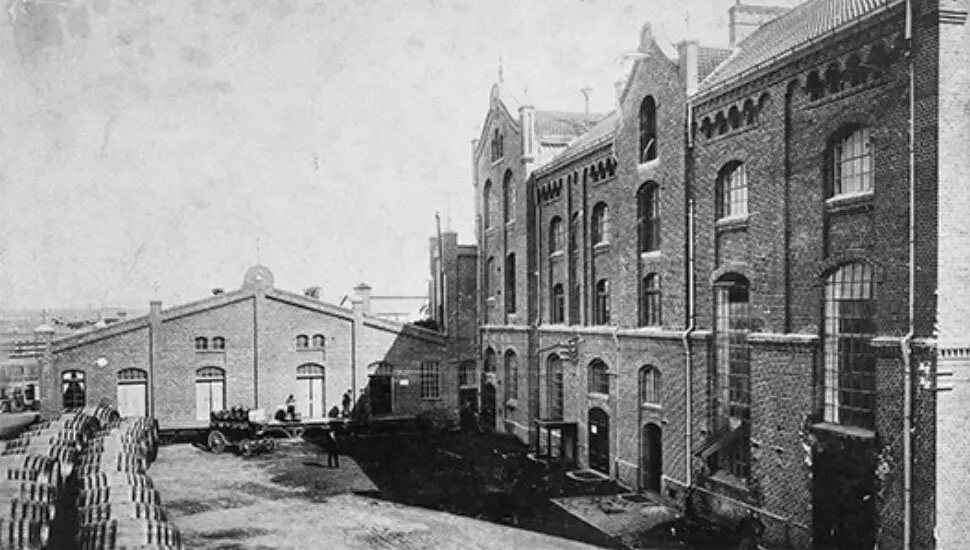
Dainippon Beer Qingdao Plant
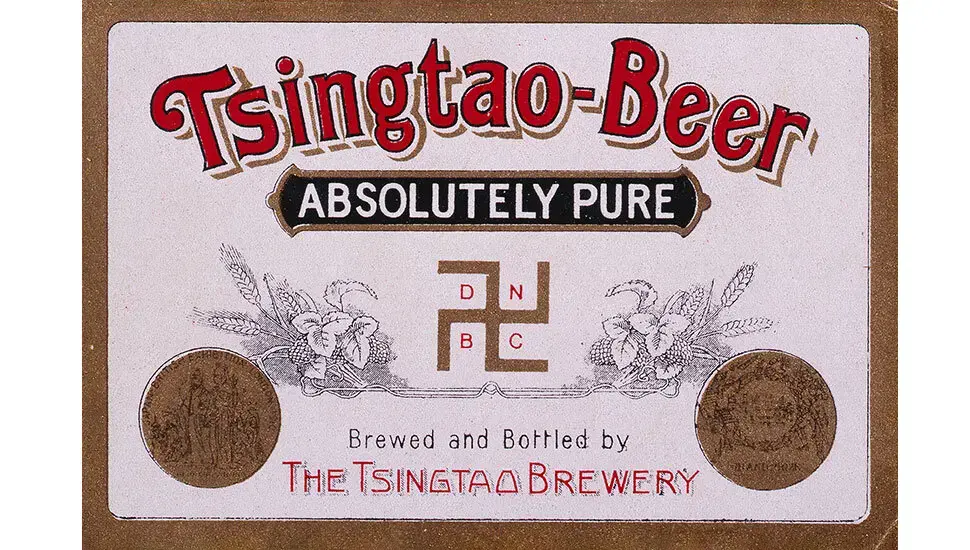
"Tsingtao Beer" Label
From Early Showa-Era Reforms to Wartime
With the onset of the Showa era, amid the turbulent waves of the financial crisis and the Great Depression, the beer industry once again entered an era of fierce sales competition. To break through this situation, President Makoshi, in his later years, once again plotted a major industry merger.While negotiations with Kirin Brewery ended in failure, talks with Nippon Beer & Mineral Water (manufacturer of Kabuto Beer, Union Beer, and others)—a long-standing rival—were finalized by the management team that succeeded Makoshi after his death in April 1933, leading to the merger of Dainippon Beer and Nippon Beer & Mineral Water Co., Ltd. in July of the same year.This put an end to excessive competition in the market and restored order to the industry.
Then, in April 1934, the new steel-framed reinforced concrete headquarters building, the “Ginza Building,” was completed in Ginza 7-chome, Tokyo, and the headquarters functions were relocated from Meguro to Ginza. The “Ginza Beer Hall” opened on the first floor of this building, and the modern space, decorated with glass mosaic murals, became a new landmark in Ginza, bustling with crowds.
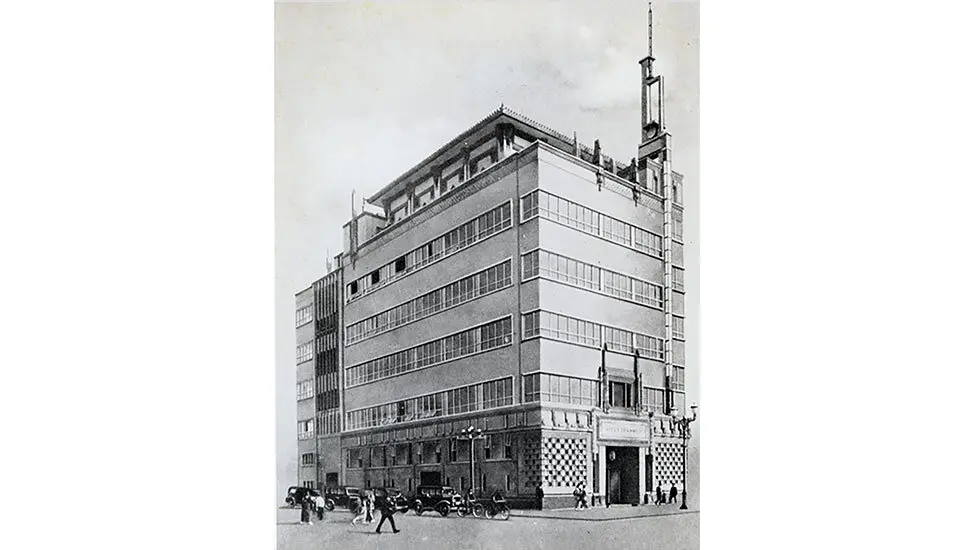
The “Ginza Building” shortly after completion
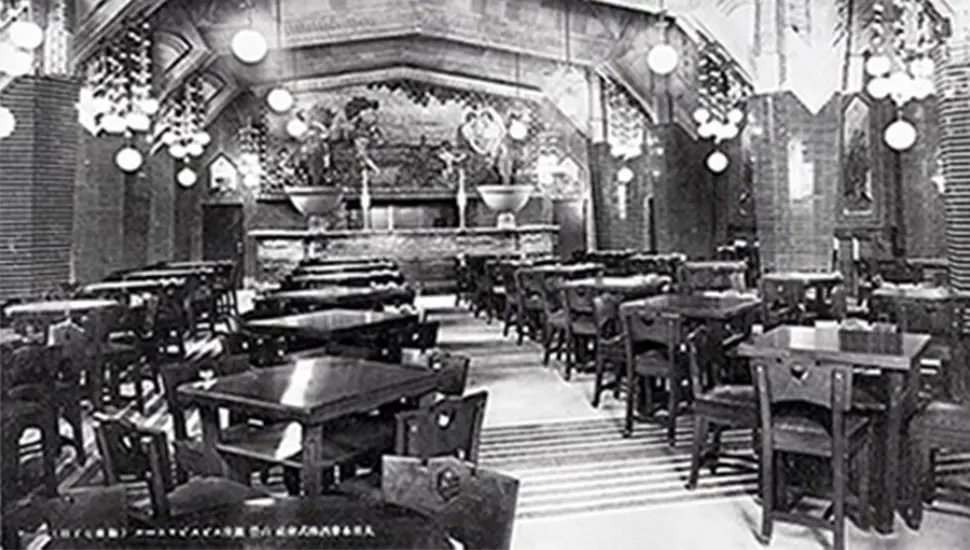
The interior of the “Ginza Beer Hall” shortly after opening
However, the era was hurtling toward World War II, and in 1940, beer became subject to rationing. Furthermore, in 1943, the trademarks of various beer brands were suspended with the aim of streamlining the transportation of war materials. The company would reach the end of the war having lost its distinctive brands.
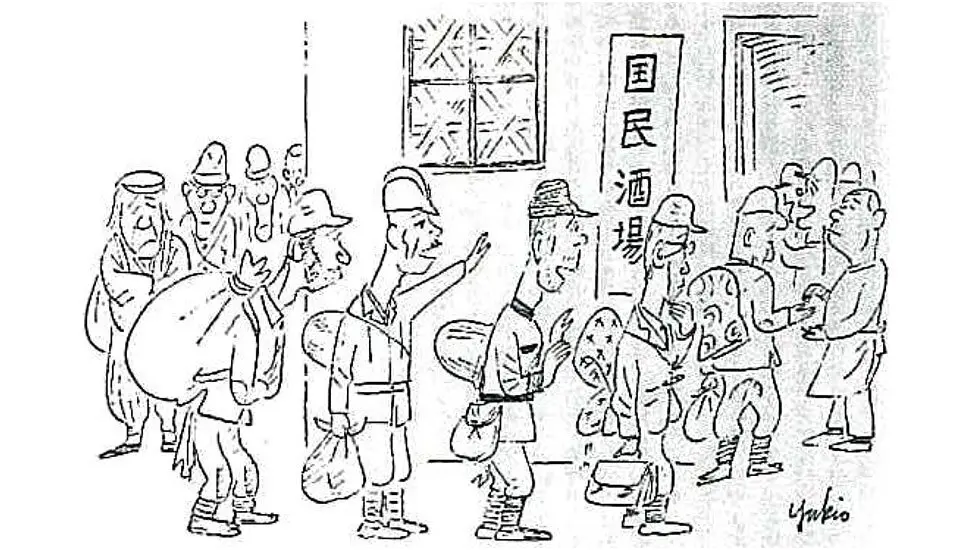
Beer rationing scene (Illustration: Yukio Sugiura)
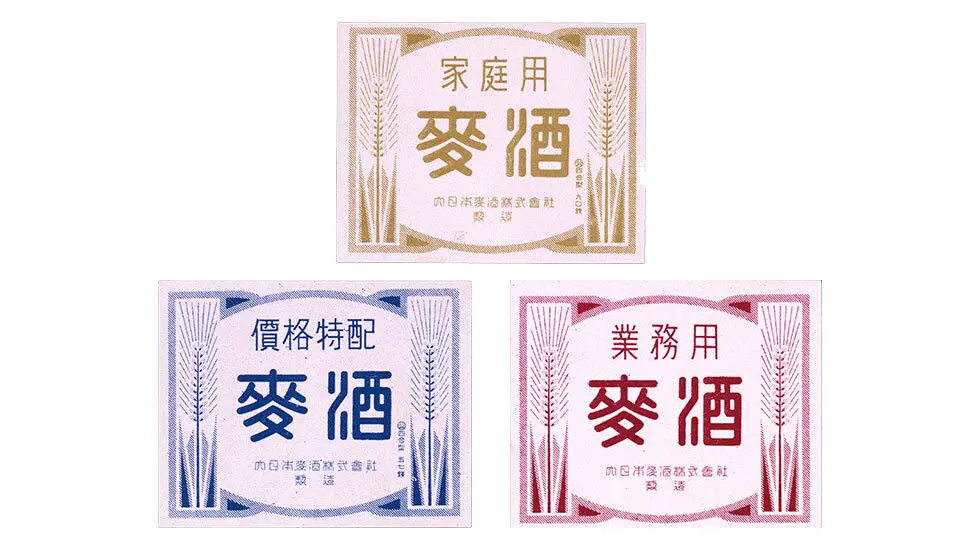
Uniform labels after the suspension of trademarks (1943–)