This data is calculated based on the scope of the Group's business in each fiscal year; the scope of the calculation may change after the fiscal year ending June 30, 2027 due to a review of the business structure. Past data is continuously presented based on the calculation conditions in effect at the time of the fiscal year in question.
Sapporo Group Scope 1 and 2 Greenhouse Gas Emissions
Emissions by business
2022
2023
2024
2025
Domestic Alcoholic Beverages business
1000 tons of CO2
95.4
92.4
87.9
77.9
Domestic Soft Drinks / Food
1000 tons of CO2
34.1
30.9
28.1
19.2
Overseas Alcoholic Beverages business
1000 tons of CO2
31.6
30.3
29.8
28.7
Overseas Soft Drinks / Food
1000 tons of CO2
10.6
9.8
10.6
9.2
Other Businesses
1000 tons of CO2
17.6
11.6
10.6
10.3
Total
1000 tons of CO2
189.3
175.0
167.0
145.2
CH4, N2O, HFCs, PFCs, and SF6 are excluded from the scope of the report, referring to the reporting under the Law Concerning the Promotion of Measures to Cope with Global Warming and the disclosure standards under the CFC Law.
The restaurant business is included in the Domestic Alcoholic Beverages business.
Historical data is included to identify mid- to long-term trends, but simple comparisons between fiscal years may not be possible due to changes in the scope of business.
Emissions per unit revenues
2022
2023
2024
2025
Emissions / revenues
Tons per 100 million yen
40
34
31
29
* Emissions from overseas energy use are calculated according to CO2 emissions intensity data of the International Energy Agency until 2021, and the CO2 emissions intensity data of contracted parties and regions after 2022.
* Revenues are for the entire Sapporo Group.
* For emissions per unit product volume (kg/product volume), please refer to the data in the items of the Sapporo Group’s Domestic Operating Companies, and the Sapporo Group’s Overseas Operating Companies.
Historical data is included to identify mid- to long-term trends, but simple comparisons between fiscal years may not be possible due to changes in the scope of business.
Emission reduction status
2023
2024
2025
Reduction Rate (compared to 2022)
%
8
12
23
* The Sapporo Group has set the goal of “reducing greenhouse gas emissions by 42% compared to 2022 by 2030.”
Historical data is included to identify mid- to long-term trends, but simple comparisons between fiscal years may not be possible due to changes in the scope of business.
Sapporo Group Scope 3 Greenhouse Gas Emissions
Emissions by category
Overview
Emissions (thousand t-CO2e)
2022
2023
2024
Category 1
Purchased goods and services
786
756
672
Category 2
Capital goods
18
37
21
Category 3
Fuel- and energy-related activities (not included in scope1 or scope 2)
29
29
27
Category 4
Upstream transportation and distribution
124
109
98
Category 5
Waste generated in operations
4
3
3
Category 6
Business travel by employees
1
1
0
Category 7
Employee commuting
1
1
1
Category 8
Upstream leased assets
26
24
21
Category 9
Downstream transportation and distribution
78
91
87
Category 10
Processing of sold products
not subject to calculation
not subject to calculation
not subject to calculation
Category 11
Use of sold products
12
11
10
Category 12
End-of-life treatment of sold products
16
15
15
Category 13
Downstream leased assets
5
4
4
Category 14
Franchises
not subject to calculation
not subject to calculation
not subject to calculation
Category 15
Investments
40
23
20
Scope 3 (total)
1,138
1,105
979
Calculations are made according to the Basic Guidelines on Accounting for Greenhouse Gas Emissions Throughout the Supply Chain.
Emissions data is for Sapporo Breweries and POKKA SAPPORO Food & Beverages; the calculation rules formulated by our company and the calculation results have undergone third-party verification by the Japan Quality Assurance Organization in accordance with the international standard ISAE 3410. 2025 JQA Third-Party Evaluation Report for Environmental Information (Japanese)
Historical data is included to identify mid- to long-term trends, but simple comparisons between fiscal years may not be possible due to changes in the scope of business.
Emission reduction status
2023
2024
Reduction rate (based on 2022)
%
3
14
* The Sapporo Group is working towards the goal of “reducing greenhouse gas emissions by 25% compared to 2022 by 2030.”
Historical data is included to identify mid- to long-term trends, but simple comparisons between fiscal years may not be possible due to changes in the scope of business.
FLAG Scope 1,3 Greenhouse Gas Emissions of the Sapporo Group
Emissions by category
Category
Emissions (thousand t-CO2e)
2022
2023
2024
Land use change emissions
11
10
12
Land management emissions
61
55
41
FLAG total
72
65
53
* The calculation method was changed in October 2024 to comply with the SBT certification standards.
Historical data is included to identify mid- to long-term trends, but simple comparisons between fiscal years may not be possible due to changes in the scope of business.
Emission reduction status
2023
2024
Reduction rate (based on 2022)
%
10
26
* The Sapporo Group is working towards the goal of “reducing greenhouse gas emissions by 31% compared to 2022 by 2030.”
Historical data is included to identify mid- to long-term trends, but simple comparisons between fiscal years may not be possible due to changes in the scope of business.
Group-wide energy consumption
* Notice of partial correction as of January 30, 2026: There were errors in the figures for 2021 through 2024. We apologize for the mistake and have corrected it.
Energy consumption by business
2022
2023
2024
2025
Domestic Alcoholic Beverages business
GJ
1,931,010
1,777,315
1,772,528
1,715,187
Domestic Soft Drinks / Food
GJ
693,318
610,633
528,882
362,943
Overseas Alcoholic Beverages business
GJ
803,066
729,766
728,210
709,549
Overseas Soft Drinks / Food
GJ
206,820
180,969
177,595
167,840
Other Businesses
GJ
504,156
455,576
457,095
484,305
Total
GJ
4,138,370
3,754,258
3,664,309
3,439,825
The restaurant business is included in the Domestic Alcoholic Beverages business.
Historical data is included to identify mid- to long-term trends, but simple comparisons between fiscal years may not be possible due to changes in the scope of business.
Energy consumption by country
2022
2023
2024
2025
Japan
GJ
3,128,484
2,843,524
2,758,504
2,562,436
Canada
GJ
540,737
507,326
485,454
487,559
U.S.A
GJ
207,574
174,438
195,789
184,024
Vietnam
GJ
54,755
48,002
46,967
37,967
Singapore
GJ
100,764
87,616
91,286
100,382
Malaysia
GJ
106,056
93,352
86,308
67,457
Total
GJ
4,138,370
3,754,258
3,664,309
3,439,825
Historical data is included to identify mid- to long-term trends, but simple comparisons between fiscal years may not be possible due to changes in the scope of business.
Energy consumption per unit revenues
2022
2023
2024
2025
Energy consumption / revenues
Gigajoules per 100 million yen
865
724
690
679
Revenues are for the entire Sapporo Group.
Historical data is included to identify mid- to long-term trends, but simple comparisons between fiscal years may not be possible due to changes in the scope of business.
Transition to effectively renewable energy in electricity consumption
2022
2023
2024
2025
Total electricity consumption
MWh
244,640
234,148
230,018
220,122
(From effectively renewable energy sources)
MWh
16,948
29,910
51,117
69,661
Ratio of effectively renewable energy
%
7
13
22
32
Calculated based on the RE100 standards.
The Sapporo Group has set the goal of "achieving 60% of effectively renewable energy use in electricity consumption by 2030."
Historical data is included to identify mid- to long-term trends, but simple comparisons between fiscal years may not be possible due to changes in the scope of business.
Group-wide sewage, air pollution, and chemical substances data
Waste water volumes
2022
2023
2024
2025
Waste water volumes
Thousands of m3
5,580
5,408
5,278
4,728.986
(Discharged into sewers)
Thousands of m3
3,209
3,160
3,333
2,892.199
(Discharged into rivers)
Thousands of m3
2,371
2,248
1,945
1,836.786
It was found that there were errors in past data on waste water volumes up to 2019, and the data was corrected in October 2024.
Water pollutant emissions
2022
2023
2024
2025
BOD
t
85
85
79
96
COD
t
62
44
45
43
SS
t
94
75
78
114
T-N
t
39
34
38
37
T-P
t
19
19
9
10
* Scope of calculation: two domestic companies (Sapporo Breweries, POKKA SAPPORO Food & Beverage)
(Reference) Chemical oxygen demand (COD) / production volume
2022
2023
2024
2025
Sapporo Breweries
kg/KL
0.100
0.069
0.067
0.062
POKKA SAPPORO Food & Beverage
kg/t
0.003
0.004
0.003
0.004
Air pollutant emissions
2022
2023
2024
2025
NOx
t
27
25
24
18
SOx
t
0.3
0.6
0.6
0.1
Scope of calculation: two domestic companies (Sapporo Breweries, POKKA SAPPORO Food & Beverage)
PRTR substances movement volumes and emission volumes (April to March)
Year
Annual emission
Annual transfer
2020
t
0.03
0
2021
t
0.03
0
2022
t
0.09
0
2023
t
17
8
2024
t
3
9
Scope of calculation: two domestic companies (Sapporo Breweries, POKKA SAPPORO Food & Beverage)
Group-wide water consumption
* Notice of partial correction as of July 1, 2026: There were errors in the figures for 2022. We apologize for the mistake and have corrected it.
Water consumption by business
2022
2023
2024
2025
Domestic Alcoholic Beverages business
Thousands of m3
3,724
3,702
3,693
3,700
Domestic Soft Drinks / Food
Thousands of m3
1,660
1,542
1,286
821
Overseas Alcoholic Beverages business
Thousands of m3
1,221
1,164
1,146
1,134
Overseas Soft Drinks / Food
Thousands of m3
343
386
409
351
Total
Thousands of m3
6,949
6,793
6,534
6,006
Covers production sites.
It was found that there were errors in past data on water consumption up to 2019, and the data was corrected in October 2024.
The calculation results for some locations have undergone third-party verification by the Japan Quality Assurance (JQA) Organization in accordance with the international standard ISAE 3000.
Water consumption by country
2022
2023
2024
2025
Japan
Thousands of m3
5,384
5,244
4,979
4,521
Canada
Thousands of m3
806
806
726
691
U.S.A
Thousands of m3
294
246
308
350
Vietnam
Thousands of m3
120
112
112
93
Singapore
Thousands of m3
126
141
152
144
Malaysia
Thousands of m3
218
245
257
207
Total
Thousands of m3
6,949
6,793
6,534
6,006
Water consumption by intake source
2022
2023
2024
2025
Public water supply
Thousands of m3
4,472
4,373
4,996
4,689
Ground water
Thousands of m3
2,477
2,420
1,538
1,318
Total
Thousands of m3
6,949
6,793
6,534
6,006
Recycled water volumes
2022
2023
2024
2025
Recycled water volume
Thousands of m3
150
159
168
168
Water consumption per unit revenues
2022
2023
2024
2025
Group-wide water consumption / revenues
Thousands of m3 per 100 million yen
1.4
1.3
1.2
1.2
(Reference) Sapporo Breweries water consumption
m3/KL
6.0
5.8
5.5
5.4
(Reference) POKKA SAPPORO Food & Beverage water consumption
m3/t
8.8
8.9
9.1
8.3
Revenues are for the entire Sapporo Group.
* For water consumption per unit product volume (m3/product volume), please refer to the data in the items of the Sapporo Group’s Domestic Operating Companies, and the Sapporo Group’s Overseas Operating Companies.
Reduction in water consumption per unit revenues in high-risk water areas
2024
2025
Reduction rate in water consumption per unit revenues (based on 2023)
%
6
9
* The Sapporo Group has set the goal of "reducing water consumption per unit revenues by 10% compared to 2023" at the Sapporo Long An plant in Vietnam that was identified as having the highest overall water risk.
WRI Aqueduct rating and the number of applicable production sites
Overall water risk 2025
Water stress 2025
Extremely high
0
0
High
1
1
Medium-high
0
17
Low-medium
25
7
Low
5
7
Survey in April 2025: Overall water risk data is not available for one site.
Survey based on Aqueduct ver. 4.0, April 2025. Comprehensive water risk data was not available for one location.
Water consumption at production sites involving water stress (Thousands of m3)
2023
2024
2025
Extremely high
-
-
-
High
11
10
10
Medium-high
4,085
3,965
3,569
Low-medium
935
962
915
Low
1,762
1,597
1,512
Group-wide by-product and waste volumes
Group-wide by-product and waste volumes by business (in Japan)
Volume generated in tons
Volume recycled in tons
Recycling rate in percent
2022
2023
2024
2022
2023
2024
2022
2023
2024
Domestic Alcoholic Beverages business
50,672
52,734
50,077
48,760
50,154
47,363
96.2
95.1
94.6
Overseas Alcoholic Beverages business
74,965
71,729
79,613
73,990
70,923
78,684
98.7
98.9
98.8
Domestic Soft Drinks / Food
18,109
14,734
12,545
11,123
8,753
6,689
61.4
59.4
53.3
Overseas Soft Drinks / Food
2,416
2,774
2,992
1,949
1,929
1,730
80.7
69.5
57.8
Other Businesses
3,235
3,464
3,760
2,227
2,385
2,538
68.8
68.9
67.5
Total
149,397
145,435
148,986
138,049
134,144
137,004
92.4
92.2
92.0
The above figures include 18 domestic companies and 5 overseas companies.
It was found that there were errors in past data on waste volume generated up to 2023, and the data was corrected in August 2025.
Historical data is included to identify mid- to long-term trends, but simple comparisons between fiscal years may not be possible due to changes in the scope of business.
Group-wide by-product and waste volumes by country
Volume generated in tons
Volume recycled in tons
Recycling rate in percent
2023
2024
2023
2024
2023
2024
Japan
70,932.8
66,381.7
61,292.2
56,589.8
86.4
85.2
Canada
32,889.9
27,188.7
32,471.6
26,924.4
98.7
99.0
U.S.A
35,185.1
48,686.8
34,778.4
47,995.8
98.8
98.6
Vietnam
3,689.8
3,783.3
3,672.8
3,763.8
99.5
99.5
Singapore
846.6
849.0
804.6
805.0
95.0
94.8
Malaysia
1,927.0
2,143.0
1,124.3
925.4
58.3
43.2
Total
145,471
149,032
134,144
137,004
92.2
91.9
Figures show totals for the Sapporo Groupʼs 18 Japanese and five overseas companies
Historical data is included to identify mid- to long-term trends, but simple comparisons between fiscal years may not be possible due to changes in the scope of business.
Recycling target achievement rate
Volume generated in tons
Volume recycled in tons
Recycling rate in percent
2022
2023
2024
2022
2023
2024
2022
2023
2024
Sapporo Breweries (production plant)
48,116
48,818
46,344
48,116
48,818
46,344
100
100
100
POKKA SAPPORO (production plant)
8,568
6,436
4,415
8,568
6,436
4,415
100
100
100
Sapporo Breweries and POKKA SAPPORO Food & Beverage in the calculation scope have set a 2030 target of achieving 100% recycling at their production plants to prevent environmental pollution. As this target has already been achieved, their goal is to maintain 100% recycling going forward. Recycling rates are shown to three digits and rounded up.
The status of emissions and recycling of industrial waste from plastic products by industry (by business)
Year: 2024
Business
Total Quantity (t)
Breakdown
Recycling and Others
Others Quantity Recycled (t)
Ratio of Recycling (%)
Ratio of Heat Recovery (%)
Total Ratio of Recycling and Others (%)
Recycling (t)
Ratio of Thermal Recovery (t)
Domestic Alcoholic Beverages business
408
149
237
22
36
58
95
Domestic Soft Drinks / Food
1,362
827
337
199
61
25
85
Other Businesses
378
173
204
0
46
54
100
Total
2,148
1,149
778
221
53
36
90
Information on businesses that emit large amounts of industrial waste from plastic products*
* Businesses with plastic product and industrial waste emissions of 250t or more in the previous fiscal year.
Sapporo Breweries Ltd. Emissions and recycling status of plastic products and industrial waste
Year
Total Quantity (t)
Breakdown
Recycling and Others
Others Quantity Recycled(t)
Ratio of Recycling (%)
Ratio of Heat Recovery (%)
Total Ratio of Recycling and Others (%)
Recycling (t)
Ratio of Thermal Recovery (t)
2023
306.1
87.0
196.4
22.7
28.4
64.2
92.6
2024
320.3
92.8
206.4
21.2
29.0
64.4
93.4
<Emissions Reduction Targets>
Aim to phase out domestically produced one-way plastic advertising materials derived from fossil fuels by 2030.
<Recycling and Others Targets>
Strive to improve the current ratio of recycling and others.
Pokka Sapporo Food & Beverage Ltd. Emissions and recycling status of plastic products and industrial waste
Year
Total Quantity (t)
Breakdown
Recycling and Others
Others Quantity Recycled(t)
Ratio of Recycling (%)
Ratio of Heat Recovery (%)
Total Ratio of Recycling and Others (%)
Recycling (t)
Ratio of Thermal Recovery (t)
2023
354.3
28.3
244.1
81.9
8.0
68.9
76.9
2024
334.1
27.6
218.2
88.3
8.3
65.3
73.6
<Emissions Reduction Targets>
Aim for a 50% usage ratio of recycled materials in PET bottle products by 2030.
<Recycling and Others Targets>
Strive to improve the current ratio of recycling and others.
PS Beverage Co., Ltd. Emissions and recycling status of plastic products and industrial waste
Year
Total Quantity (t)
Breakdown
Recycling and Others
Others Quantity Recycled(t)
Ratio of Recycling (%)
Ratio of Heat Recovery (%)
Total Ratio of Recycling and Others (%)
Recycling (t)
Ratio of Thermal Recovery (t)
2023
834.8
803.1
31.6
0.2
96.2
3.8
100.0
2024
820.1
781.5
37.8
0.9
95.3
4.6
99.9
<Emissions Reduction Targets>
Strive to procure products using recycled PET resin.
<Recycling and Others Targets>
Endeavor to maintain the current level of resource recycling and related efforts.
The Sapporo Groupʼs Domestic Operating Companies
Production volumes, energy use, water use, and CO2 emissions data
Company
Fiscal year
2021
2022
2023
2024
2025
Sapporo Breweries
Production volumes
Thousands of kL
600
618
634
669
690
Fuel consumption
GJ
835,732
790,510
739,498
756,763
743,797
Electricity consumption
MWh
85,802
87,138
87,630
86,725
82,691
Water consumption
Thousands of m3
3,638
3,717
3,696
3,685
3,693
Water consumption per unit volume produced
m3/KL
6.1
6.0
5.8
5.5
5.4
CO2 emissions
Thousands of t
83
86
83
79
69
CO2 emissions per unit volume produced
kg/KL
138
140
132
117
99
Sapporo Lion
Fuel consumption
GJ
16,685
25,661
24,360
23,603
23,287
Electricity consumption
MWh
7,670
11,195
10,728
10,941
10,571
CO2 emissions
Thousands of t
4
6
6
6
6
POKKA SAPPORO Food & Beverages
Production volumes
Thousands of t
149
148
141
117
86
Fuel consumption
GJ
255,667
250,857
243,397
207,802
121,999
Electricity consumption
MWh
27,306
26,711
25,016
22,289
15,840
Water consumption
Thousands of m3
1,316
1,307
1,250
1,063
711
Water consumption per unit volume produced
m3/t
8.8
8.8
8.9
9.1
8.3
CO2 emissions
Thousands of t
25
25
23
21
13
CO2 emissions per unit volume produced
kg/t
168
166
162
176
152
The Sapporo Groupʼs Overseas Operating Companies
* Notice of partial correction as of July 1, 2026: There were errors in the figures for Sapporo Vietnam in 2022. We apologize for the mistake and have corrected it.
Data on production volumes, energy consumption, water consumption, and CO2 emissions
Company
Country
FY (April 1 to March 31)
2021
2022
2023
2024
2025
Sleeman
Canada
Production volumes
Thousands of kL
202
203
206
174
165
Fuel consumption
GJ
268,493
328,730
321,465
311,851
308,307
Electricity consumption
MWh
23,135
21,265
21,512
20,093
20,747
Water consumption
Thousands of m3
809
806
806
726
691
Water consumption per unit volume produced
m3/KL
4.0
4.0
3.9
4.2
4.2
CO2 emissions
t
17,262
19,993
19,601
18,897
18,720
CO2 emissions per unit volume produced
kg/KL
85.5
98.6
95.3
108.7
113.5
Sapporo Vietnam
Vietnam
Production volumes
Thousands of kL
20
22
23
24
20.94
Fuel consumption
GJ
20,102
20,314
18,195
19,315
16,265
Electricity consumption
MWh
3,444
3,454
3,333
3,009
2,158
Water consumption
Thousands of m3
118
120
112
112
93
Water consumption per unit volume produced
m3/KL
5.8
5.6
4.9
4.6
4.5
CO2 emissions
t
2,404
3,999
3,775
3,254
2,395
CO2 emissions per unit volume produced
kg/KL
119
185
166
135
114
POKKA
Singapore
Production volumes
Thousands of kL
44
45
44
41
53
Fuel consumption
GJ
37,418
37,848
34,952
36,612
37,548
Electricity consumption
MWh
4,396
4,565
3,926
4,090
4,929
Water consumption
Thousands of m3
109
126
141
152
144.07
Water consumption per unit volume produced
m3/KL
2.4
2.8
3.2
3.7
2.7
CO2 emissions
t
3,910
3,801
3,409
3,555
3,905
CO2 emissions per unit volume produced
kg/KL
88.1
84.9
78.0
86.9
73.9
POKKA (MALAYSIA)
Malaysia
Production volumes
Thousands of kL
50
54
52
47
28
Fuel consumption
GJ
36,445
40,047
35,912
34,842
28,270
Electricity consumption
MWh
6,572
6,621
6,421
5,868
3,802
Water consumption
Thousands of m3
200
218
245
257
206.78
Water consumption per unit volume produced
m3/KL
4.0
4.1
4.7
5.5
7.4
CO2 emissions
t
6,413
5,815
5,391
5,980
4,285
CO2 emissions per unit volume produced
kg/KL
129
108
103
128
154
Stone Brewing
United States
production output
Thousands of KL
41
39
67
75
Fuel consumption
GJ
62,035
59,067
79,281
81,593
Electricity consumption
MWh
11,528
11,898
13,485
11,855
Water consumption
Thousands of m3
254
230
308
350
Per-unit water consumption
m3/KL
6.3
6.0
4.6
4.7
CO2 emissions
t
6,516
6,472
7,677
7,540
Per-unit CO2 emissions
kg/KL
161
168
114
101
CO2 emissions factors for overseas energy use are calculated according to data issued by the International Energy Agency or relevant electric power companies
Sapporo Group Environmental Costs (summary)
2023
2024
Remarks
Business area costs
Investment
Millions of yen
451
226
Facilities contributing to environmental preservation
Costs
Millions of yen
1,180
1,124
Upstream/Downstream Costs
Costs
Millions of yen
487
400
Container and packaging recycling fees
Management activity costs
Costs
Millions of yen
136
140
Environmental management system operation, greening of factories
Social activity cost
Costs
Millions of yen
1
1
Nature conservation
Economic effect of environmental facilities
Millions of yen
-444
-512
Effects of Energy and Resource Recovery Facilities
Sapporo Breweries, POKKA SAPPORO Food & Beverage, Sapporo Lion, and Sapporo Real Estate Development are included in the scope of aggregation.
Depreciation of equipment is not recorded.
Historical data is included to identify mid- to long-term trends, but simple comparisons between fiscal years may not be possible due to changes in the scope of business.
Sapporo Group raw material consumption
Business
2023
2024
Domestic Operations (Alcoholic Beverages)
1,000 tons
69.5
61.1
Domestic Operations (Soft Drinks, Food)
1,000 tons
17.7
14.6
Overseas Operations (Alcoholic Beverages)
1,000 tons
33.7
28.5
Total
1,000 tons
120.9
104.3
The scope of the calculation covers Sapporo Breweries, POKKA SAPPORO Food & Beverage, and Sleeman.
Includes contracted staff (excluding full-time employees)
Historical data is included to identify mid- to long-term trends, but simple comparisons between fiscal years may not be possible due to changes in the scope of business.
For the purpose of understanding medium- to long-term trends, past data are provided; however, due to changes in the scope of business, simple year-to-year comparisons may not be possible.
Breakdown of employment status (domestic operating companies)
2020
2021
2022
2023
2024
2025
Number of employees
Persons
3,971
3,619
3,611
3,540
3,425
3,268
Male
Persons
3,170
2,833
2,797
2,710
2,592
2,439
Female
Persons
801
786
814
830
833
829
Female ratio
%
20.2
21.7
22.5
23.4
24.3
25.4
(Number of Mid-Career Hires)
Persons
1,425
1,318
1,330
1,301
1,241
1,200
Male
Persons
1,193
1,067
1,067
1,037
985
941
Female
Persons
232
251
263
264
256
259
Female ratio
%
16.3
19.0
19.8
20.3
20.6
21.6
Mid-Career Hire Ratio
%
35.9
36.4
36.8
36.8
36.2
36.7
Number in management
Persons
1,027
942
938
822
807
753
Male
Persons
984
895
887
767
749
672
Female
Persons
43
47
51
55
58
81
Female ratio
%
4.2
5.0
5.4
6.7
7.2
10.8
Average Years of Continuous Employment
Years
17.5
17.3
17.4
17.5
17.9
18.0
Male
Years
18.7
18.5
18.6
19.0
19.3
19.4
Female
Years
12.7
12.9
13.0
13.2
13.6
13.8
Employed full-time
Persons
98
71
138
147
113
72
Male
Persons
55
44
84
94
66
42
Female
Persons
43
27
54
53
47
30
Female ratio
%
43.9
38.0
39.1
36.1
41.6
41.7
Leaving employees
Persons
150
279
156
146
128
194
Male
Persons
118
228
118
104
101
159
Female
Persons
32
51
38
42
27
35
Ratio of leaving employees
%
3.6
7.2
4.1
4.0
3.7
5.94
Ratio of new graduates leaving within three years of entering
%
7.9
6.9
10.7
10.6
7.0
6.8
Sapporo Breweries, Pokka Sapporo Food & Beverage, Sapporo Lion (includes subsidiaries and workplaces at related companies)
Including those who retired under the early retirement incentive plan in 2020 and 2021
Historical data is included to identify mid- to long-term trends, but simple comparisons between fiscal years may not be possible due to changes in the scope of business.
Ratio of mid-career hires to full-time workers
Company
2020
2021
2022
2023
2024
2025
Sapporo Breweries
27%
41%
54%
51%
25%
49%
Sapporo Field Marketing
100%
100%
-
100%
-
-
SHINSEIEN
25%
0%
57%
75%
46%
57%
POKKA SAPPORO FOOD & BEVERAGE
3%
15%
14%
8%
22%
31%
PS BEVERAGE
100%
100%
100%
100%
100%
100%
Sapporo Lion
82%
82%
100%
40%
88%
0%
Hokkaido Sapporo Lion
100%
57%
92%
Figures for subsidiaries and affiliates with 301 or more regularly employed employees.
Ratio of Female Managers*1
Company Name
2022
2023
2024
2025
Sapporo Breweries
5.6%
6.9%
7.4%
10.7%
POKKA SAPPORO Food & Beverage
5.3%
5.7%
7.0%
10.0%
Sapporo Lion
2.9%
5.9%
5.1%
8.7%
Figures for domestic operating companies are calculated based on the number of employees at the original company which they belong.
For the purpose of understanding medium- to long-term trends, past data are provided; however, due to changes in the scope of business, simple year-to-year comparisons may not be possible.
Wage difference between men and women (ratio of women's wages to men's wages)*1*2
Company Name
2024 (2023) Unit: %
2025 (2024) Unit: %
All employees
Indefinite-term contract workers
Fixed-term contract workers
All employees
Indefinite-term contract workers
Fixed-term contract workers
Sapporo Breweries
68.6(67.8)
67.9(67.8)
60.0(53.6)
69.3(68.6)
68.8(67.9)
61.2(60.0)
POKKA SAPPORO Food & Beverage
70.5(69.7)
69.2(69.6)
75.0(67.4)
71.1(70.5)
70.2(69.2)
75.7(75.0)
Sapporo Lion
42.8(42.3)
77.1(74.3)
72.3(72.3)
45.1(42.8)
79.1(77.1)
68.9(72.3)
Sapporo Field Marketing
31.7(32.7)
90.7(80.9)
32.9(34.7)
33.3(31.7)
32.7(90.7)
34.3(32.9)
Sapporo Group Logistics (New for 2024)
67.3
67.3
64.2
70.3(67.3)
70.4(67.3)
60.8(64.2)
Shinseien
49.8(53.9)
72.0(65.2)
77.9(78.5)
54.4(49.8)
77.8(72.0)
81.3(77.9)
PS BEVERAGE
59.2(65.3)
67.3(71.1)
73.8(68.3)
63.9(59.2)
75.2(67.3)
67.1(73.8)
Foremost Blue Seal (New for 2024)
42.4
78.5
55.4
36.6(42.4)
77.0(78.5)
51.7(55.4)
YASMA (New for 2024)
75.7
89.3
57.8
86.3(75.7)
90.8(89.3)
72.1(57.8)
HOKKAIDO SAPPORO LION
43.8(44.7)
87.3(83.0)
92.6(75.3)
41.9(43.8)
88.0(87.3)
97.1(92.6)
The data for domestic oparating companies, as well as domestic subsidiaries and affiliated companies that regularly employ 101 or more employees, is calculated based on the number of employees originally registered with these companies.
The wage differences between genders are calculated based on the average total amount of salary, allowances, and bonuses shown on withholding tax certificates. In the Group’s wage system or structure, there is no difference in treatment based on gender, and the wage differences are understood to be a result of variations in role grades and the distribution of employment types. Specifically, the wage differences are largely due to a higher proportion of men in management roles, which are among the highest paying positions, and a higher percentage of part-time, fixed-term female workers. Through our ongoing efforts to promote female empowerment to correct this situation, we will prioritize increasing the ratio of women in management roles to an appropriate level and further improve the work environment in which women can continue to work, thereby eliminating wage differences between men and women.
The hyphen (-) indicates that the company does not have employees who are subject to the above calculation.
Seconded employees are counted as employees of the company from which they have been seconded.
For the purpose of understanding medium- to long-term trends, past data are provided; however, due to changes in the scope of business, simple year-to-year comparisons may not be possible.
Percentage of Male Employees Taking Childcare Leave*1
Company Name
2022
2023
2024
2025
Sapporo Breweries
81%
114%
93%
100%
POKKA SAPPORO Food & Beverage
83%
87%
89%
111%
Sapporo Lion
27%
25%
71%
75%
Sapporo Field Marketing (New for 2024)
0%
0%
Sapporo Group Logistics (New for 2024)
100%
-*2
Shinseien (New for 2024)
50%
100%
PS BEVERAGE (New for 2024)
0%
50%
Foremost Blue Seal (New for 2024)
0%
0%
YASMA (New for 2024)
100%
-*2
HOKKAIDO SAPPORO LION (New for 2024)
-*2
-*2
The data for domesticr operating companies, as well as domestic subsidiaries and affiliated companies that regularly employ 101 or more employees, is calculated based on the number of employees originally registered with these companies.
The hyphen (-) indicates that the company does not have employees who are subject to the above calculation.
The percentages of male employees taking childcare leave and leave for childcare purposes are calculated based on Article 71-4, Item 2 of the Enforcement Regulations for the Act on Childcare Leave, Caregiver Leave, and Other Measures for the Welfare of Workers Caring for Children or Other Family Members (Ministry of Labour Ordinance No. 25, 1991), in accordance with the provisions of the Act on Childcare Leave, Caregiver Leave, and Other Measures for the Welfare of Workers Caring for Children or Other Family Members (Act No. 76, 1991).
The percentage may exceed 100% because it includes male employees whose spouses gave birth before the fiscal year and who took leave of absence or leave for childcare purposes during the fiscal year.
For the purpose of understanding medium- to long-term trends, past data are provided; however, due to changes in the scope of business, simple year-to-year comparisons may not be possible.
Employment status of individuals with disabilities (extracted from the registered domicile)
Company Name
2021
2022
2023
2024
2025
Sapporo Breweries
Number of employed individuals
Persons
49
51
51
53
55
Employment ratio
%
2.6
2.8
2.9
3.1
3.4
POKKA SAPPORO Food & Beverage
Number of employed individuals
Persons
15
19
22
25
21
Employment ratio
%
1.7
1.9
2.2
2.7
2.4
Sapporo Lion
Number of employed individuals
Persons
24
21
21
22
22
Employment ratio
%
2.5
2.7
2.8
2.5
2.1
Employment status at Sapporo Breweries (extracted from its registered domicile)
2021
2022
2023
2024
2025
Number of employees
Persons
2,166
2,174
2,157
2,125
2,019
Male
Persons
1,726
1,711
1,674
1,627
1,529
Female
Persons
440
463
483
498
490
Female ratio
%
20.3
21.3
22.4
23.4
24.3
Number in management
Persons
603
609
519
517
458
Male
Persons
569
574
483
473
409
Female
Persons
34
35
36
38
49
Female ratio
%
5.6
5.7
6.9
7.4
10.7
Number of Employees at Director Level or Above
Persons
99
105
95
89
81
Male
Persons
96
102
91
86
77
Female
Persons
3
3
4
3
4
Female ratio
%
3.0
2.9
4.2
3.4
4.9
Number of Employees at Manager Level
Persons
479
504
424
428
377
Male
Persons
449
472
392
395
332
Female
Persons
30
32
32
33
45
Female ratio
%
6.7
6.3
7.5
7.7
11.9
Number of Newly Appointed Managers
Persons
39
43
40
32
33
Male
Persons
34
41
35
25
22
Female
Persons
5
2
5
7
11
Female ratio
%
12.8
4.7
12.5
21.9
33.3
Employed full-time
Persons
39
94
94
79
51
Male
Persons
27
61
63
45
33
Female
Persons
12
33
31
34
18
Female ratio
%
30.8
35.1
33.0
43.0
35.3
Number of New Graduate Hires
Persons
24
43
46
59
26
Male
Persons
14
21
24
31
17
Female
Persons
10
22
22
28
9
Female ratio
%
41.7
51.2
47.8
47.5
34.6
Number of Mid-career Hires
Persons
15
51
48
20
25
Male
Persons
13
40
39
14
16
Female
Persons
2
11
9
6
9
Female ratio
%
13.3
21.6
18.8
30.0
36.0
Leaving employees
Persons
106
96
67
59
92
Male
Persons
87
74
55
44
74
Female
Persons
19
22
12
15
18
Ratio of leaving employees
%
4.7
4.2
3.0
2.8
4.6
Ratio of new graduates leaving within three years of entering
%
4.2
6.3
6.2
7.1
4.7
Including those who retired under the early retirement incentive plan in 2020 and 2022
The figures for the Number of Employees at Manager Level are calculated without including those assigned to professional positions from the 2024 data.
Employment status of individuals with disabilities at Sapporo Breweries (extracted from its registered domicile)
2021
2022
2023
2024
2025
Number of employed individuals with disabilities
Persons
49
51
51
53
55
Physical disability
Persons
42
44
Intellectual disability
Persons
0
0
Mental disability
Persons
11
11
Employment ratio
%
2.6
2.7
2.9
3.1
3.4
Human Resource Development Measures at Sapporo Breweries
Category
Measures
2024
2025
No. of persons
Total hours
No. of persons
Total hours
Manager development
Management skill update training
299
1,443
363
1,817
Career training
In-house internship
26
-
51
1,029
Career development training for employees in their 50s
206
1,442
296
2,072
Real Stars (40s and 50s) career realization initiatives
-
-
201
586
Onboarding support for young employees
Training for new employees
45
6,840
21
3,150
Follow-up training for new employees
45
337.5
19
143
Training for managers of departments with new employees / Tutor training
102
459
38
152
Follow-up training for tutors
7
21
11
33
Training for 2nd year employees
40
680
44
660
Training for 3rd year employees
-
-
37
407
Self-development support
Open skill upgrade training
23
161
16
120
Career development subsidy program
126
-
155
0
Language learning support
183
-
144
2,382
Support for participation in external training
56
293.5
51
180
Training for the production engineering division
Training for the production engineering division
252
5,054
252
4,752
Training for the sales division
Training for the sales division
1,106
7,871
366
6,565
Marketing Department Training
-
-
36
648
Safety Training at Sapporo Breweries
Training content
2023
2024
2025
Persons
Total hours
Persons
Total hours
Persons
Total hours
Safety training for supervisors
11
154
32
448
35
490
Safety training for partner companies
651
1,953
955
2,865
239
717
Safety training upon hiring
39
78
31
62
27
54
Safety training for transferred employees
29
58
16
32
28
56
Safety follow-up training
22
22
48
48
19
19
Hazard prediction training
705
705
379
379
1,275
1,275
Total
1,457
2,970
1,461
3,834
1,623
2,611
Labor, Health, and Work-life Balance
Sapporo Group Health Data
Sapporo Holdings + 4 domestic operating companies (Sapporo Breweries, Pokka Sapporo Food & Beverage, Sapporo Lion, Sapporo Real Estate Development) total➡Sapporo domestic operating companies
The previous version survey conducted from 2016 to 2019 for 17 Group companies. The new version survey conducted in 2020 for 9 domestic companies (Sapporo Breweries, POKKA SAPPORO Food & Beverage, , Sapporo Lion, Sapporo Field Marketing, Sapporo Group Logistics, SAPPORO LOGISTICS SYSTEMS, and New Sanko and more ); in 2021 for 10 domestic companies (the 9 companies in 2020 + Iwata POKKA SAPPORO Food & Beverage), in 2022 for 13 domestic companies (the 10 companies in 2021 + Shinseien, Hanei, and Marushin Kawamura); in 2023 for 12 domestic companies (Sapporo Breweries, POKKA SAPPORO Food & Beverage, Sapporo Lion, Sapporo Field Marketing, Sapporo Group Logistics, SAPPORO LOGISTICS SYSTEMS, New Sanko, Iwata POKKA SAPPORO Food & Beverage, Hokkaido Sapporo Lion, and Hanei and more); in 2024 for 13 domestic companies (the 12 companies in 2023 + Okinawa POKKA Corporation)
2021
2022
2023
2024
2025
Participation rate for regular health check-ups
%
100
100
100
100
100
Participation rate for emergency treatment follow-ups
%
100
100
100
100
100
Participation rate for requiring detailed examination follow-ups
%
82
90
79
87
Participation rate for lifestyle-related health check-ups *1
%
85
92
94
94
93
Participation rate for gynecological check-ups*2
%
47 (19)
54 (28)
62 (41)
57 (43)
60 (37)
Implementation rates for stress checks *3
%
98
96
97
99
99.7
Number of employees on leave due to mental health disorders
%
31
17
14
17
Percentage of employees with healthy body weights * with BMIs between 18.5 to 25
%
64.0
63.9
64.1
62.8
62.1
Percentage of employees at risk of blood pressure disorders * with systolic blood pressures of 180mmHg or more, or diastolic blood pressures of 110mmHg or more
%
1.0
0.9
0.6
0.8
0.6
Percentage of employees with poor diabetes management * with HbA1c of 8.0% or more
%
0.5
0.4
0.5
0.8
0.8
Percentage of employees who smoke
%
23.9
22.3
22.2
22.2
20.6
Percentage of employees who sleep well
%
75.3
71.0
68.4
67.5
68.2
Percentage of employees who regularly exercise for 30 minutes or more, twice a week or more
%
32.9
32.8
33.7
34.6
35.9
Percentage of participants who walk or are physically active for at least 60 minutes per day or equivalent
%
51.2
54.6
55.7
57.1
59.5
Intention to improve lifestyles (percentage of those who have already taken action) *4
%
36.1
36.8
35.9
35.2
34.8
Percentage of employees who skip breakfast three times a week or more
%
30.5
32.0
31.4
30.9
30.2
Reference value: average number of steps taken per day *5
%
9,694
9,842
9,811
9,780
8,974
Percentage of employees eligible for specific health guidance (over 40 years old)
%
28.6
25.7
24.3
25.2
20.1
Percentage of implementation of specific health guidance *6
%
31.3
37.4
35.0
39.9
For employees aged 40 or over
For employees of all ages (employees under 34 years old)
The previous version of the survey was conducted from 2016 to 2019 for 17 Group companies. The new version of the survey was conducted as follows:- In 2020, for 9 domestic companies: Sapporo Breweries, Pokka Sapporo Food & Beverage, Sapporo Lion, Sapporo Field Marketing, Sapporo Group Logistics, Sapporo Logistics Systems, and New Sanko, among others.- In 2021, for 10 domestic companies: the 9 companies in 2020 plus Iwata Pokka Food. - In 2022, for 13 domestic companies: the 10 companies in 2021 plus Shinseien, Hanei, and Marushin Kawamura.- In 2023, for 12 domestic companies: Sapporo Breweries, Pokka Sapporo Food & Beverage, Sapporo Lion, Sapporo Field Marketing, Sapporo Group Logistics, Sapporo Logistics Systems, New Sanko, Iwata Pokka Food, Hokkaido Sapporo Lion, and Hanei, among others.- In 2024, for 13 domestic companies: the 12 companies in 2023 plus Okinawa Pokka.- In 2025, for 14 domestic companies: including Foremost Blue Seal.
Employees who have made lifestyle improvement efforts based on medical interviews (total of efforts for less than 6 months and for more than 6 months)
Average number of steps taken by participants in the Sapporo Breweries Health Insurance Societyʼs Walking Campaign
In 2024, 40.8% for the Sapporo Group as a whole
Stress check and Employee awareness survey (from 2020)
For the purpose of understanding medium- to long-term trends, past data are provided; however, due to changes in the scope of business, simple year-to-year comparisons may not be possible.
Presenteeism loss (%)
Work engagement (deviation score)
Employee engagement (deviation score)
Percentage of high-stress employees (%)
Percentage of highly engaged employees (%)
2021
36.3
53.9
51.3
8.5
20.3
2022
34.4
53.6
51.1
8.7
19.0
2023
33.8
54.0
51.1
9.1
19.7
2024
33.9
54.0
51.3
8.9
20.8
2025
33.5
54.3
51.7
8.1
21.8
Challenge to create future value
Independence
Customer perspective
Speedy business reform
Diversity & Inclusion and Teamwork
2021
2.6
2.9
2.8
2.7
3.0
2022
2.7
2.9
2.8
2.7
3.0
2023
2.7
2.9
2.8
2.7
3.0
2024
2.7
2.9
2.8
2.7
3.0
2025
2.7
2.9
2.9
2.8
3.0
The previous version of the survey was conducted from 2016 to 2019 for 17 Group companies. The new version of the survey was conducted as follows:- In 2020, for 9 domestic companies: Sapporo Breweries, Pokka Sapporo Food & Beverage, Sapporo Lion, Sapporo Field Marketing, Sapporo Group Logistics, Sapporo Logistics Systems, and New Sanko, among others.- In 2021, for 10 domestic companies: the 9 companies in 2020 plus Iwata Pokka Food. - In 2022, for 13 domestic companies: the 10 companies in 2021 plus Shinseien, Hanei, and Marushin Kawamura.- In 2023, for 12 domestic comanies: Sapporo Breweries, Pokka Sapporo Food & Beverage, Sapporo Lion, Sapporo Field Marketing, Sapporo Group Logistics, Sapporo Logistics Systems, New Sanko, Iwata Pokka Food, Hokkaido Sapporo Lion, and Hanei, among others.- In 2024, for 13 domestic companies: the 12 companies in 2023 plus Okinawa Pokka.- In 2025, for 14 domestic companies: including Foremost Blue Seal. Sapporo Group work engagement KPI: 54.0 (deviation score).
Presenteeism (labor loss: %) = 100% - Absolute Presenteeism (calculated based on Question 3 of WHO-HPQ (Health and Work Performance Questionnaire)). Average of domestic operating companies (Sapporo Breweries, Pokka Sapporo Food & Beverage, Sapporo Lion). KPI: 33.4%.
The deviation scores are calculated based on data collected over a specific period from companies and organizations participating in the survey by the research firm. Work engagement is measured using the research firm's own methodology.
The items of Challenge to create future value, Independence, Customer Perspective, Speedy Business Reform, and Diversity & Inclusion and Teamwork are rate on a scale of 1 to 4 (the higher the score, the higher the rating)
Number of fatal accidents (including temporary employees, subcontractors, and outsourcing companies)
Company Name
2021
2022
2023
2024
2025
Sapporo Breweries
Persons
0
0
0
0
0
POKKA SAPPORO Food & Beverage
Persons
0
0
0
0
0
Sapporo Lion
Persons
0
0
0
0
0
Number of fatal accidents
2021
2022
2023
2024
2025
Sapporo Group* employees
0
0
0
0
0
Subcontractors / outsourcing companies
0
0
0
0
0
Sapporo Group (Total of Sapporo Breweries, POKKA SAPPORO Food & Beverage, Sapporo Lion, and SAPPORO REAL ESTATE)
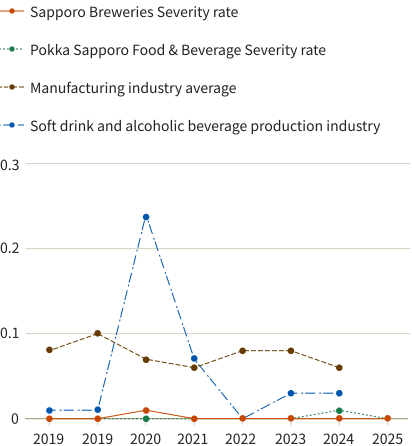
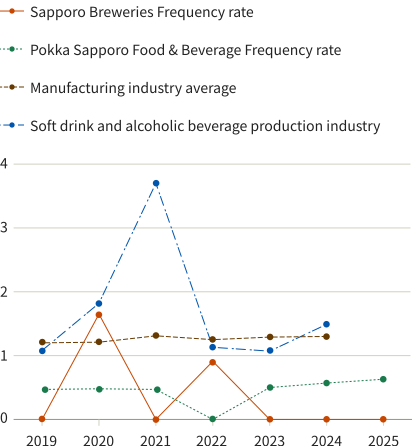
Industry Comparison with Sapporo Breweries for Frequency Rate, Severity Rate of Accidents, and Number of Employees Involved in Accidents Requiring Leave from Work
Sapporo Breweries
2021
2022
2023
2024
2025
Number of fatal accidents*
Cases
0
0
0
0
0
Number of accidents resulting in time off from work
Cases
0
1
0
0
0
Frequency rate
0.00
0.91
0.00
0.00
0.00
Severity rate
0.00
0.00
0.00
0.00
0.00
Number of fatal accidents
Cases
0
0
0
0
0
Average frequency rate of manufacturers
1.31
1.25
1.29
1.30
Frequency rate of soft drink and alcoholic beverage manufacturers
3.7
1.13
1.07
1.49
Average severity rate of manufacturers
0.06
0.08
0.08
0.06
Severity rate of soft drink and alcoholic beverage manufacturers
0.07
0.00
0.03
0.03
Frequency and strength rates are based on directly employed employees of SB's 10 domestic plant divisions (Hokkaido, Sendai, Nasu, Gunma (Kizaki), Gunma (Ojima), Chiba, Shizuoka, Kyushu Hita, Okayama, and Grand Polaire Katsunuma).
Pokka Sapporo Food & Beverage
2021
2022
2023
2024
2025
Frequency Rate
0.47
0.00
0.5
0.57
0.63
Average frequency rate of manufacturers
1.31
1.25
1.29
1.30
Frequency rate of soft drink and alcoholic beverage manufacturers
3.7
1.13
1.07
1.49
Severity Rate
0.00
0.00
0.00
0.01
0.00
Average severity rate of manufacturers
0.06
0.08
0.08
0.06
Severity rate of soft drink and alcoholic beverage manufacturers
0.07
0.00
0.03
0.03
Sapporo Lion
2021
2022
2023
2024
2025
Frequency Rate
12.74
10.06
12.65
13.6
14.2
Average frequency rate of retailers
3.92
3.31
2.43
2.60
Severity Rate
0.02
0.04
0.02
0.014
0.02
Average severity rate of wholesalers and retailers
0.09
0.10
0.06
0.05
Number of employees involved in accidents requiring leave from work (Sapporo Breweries)
2021
2022
2023
2024
2025
Total
Persons
4
4
3
3
Full-time employees
Persons
0
1
0
0
0
Contracted employees
Persons
0
0
1
0
0
Temporary employees, subcontractors, and outsourcing companies
Persons
6
3
3
3
3
Number of employees involved in accidents requiring leave from work (POKKA SAPPORO Food & Beverage)
2021
2022
2023
2024
2025
Total
Persons
1
1
1
1
2
Full-time employees
Persons
1
1
1
0
0
Contracted employees
Persons
0
0
0
1
1
Number of employees involved in accidents requiring leave from work (Sapporo Lion)
2021
2022
2023
2024
2025
Total
Persons
1
3
3
4
1
Full-time employees
Persons
1
1
1
3
0
Contracted employees
Persons
0
2
2
1
1
Sapporo Breweries
2021
2022
2023
2024
2025
Number of employees taking childcare leave
Persons
54
82
84
94
113
Number of male employees taking childcare leave
Persons
43
56
57
59
79
Percentage of male employees taking childcare leave
%
80
81
114
93
100
Average number of days of male employees taking childcare leave
Days
7.5
19.2
32.1
37.5
49.1
Number of employees taking nursing care leave
Persons
0
1
1
1
0
2021
2022
2023
2024
2025
Annual working hours *
Hours
1,941
1,968
1,990
1,975
1,949
Average monthly overtime hours
Hours
15
16
17
16
15
Average number of days of paid leave taken
Days
14.8
15.6
15
16
17
Percentage of available paid leave taken
%
68.6
74.6
64.9
78.1
76.8
Achievement rate for work-interval systems (10 hours)
%
99.7
99.4
99.1
99
99.6
Absenteeim **
Day/person
0.3
0.3
0.4
0.4
0.4
* Non-managerial employees
** Absenteeim: The total number of days absent per year at Sapporo Breweries divided by the number of enrolled employees.
2019
2020
2021
2022
2023
2024
2025
Participation rate for lifestyle-related health check-ups *1
%
86
84
91
93
94
95
94
Percentage of employees who smoke
%
24
22
20
18
18
18
17
Percentage of employees who regularly exercise for 30 minutes or more, two days a week
%
30
34
37
35
36
38
39
Percentage of employees who walk or engage in physical activity of equivalent or greater intensity for at least 60 minutes daily
%
56
52
52
54
56
58
60
Intention to improve lifestyles (percentage of those who have already taken action)*2
%
38
42
42
43
41
40
41
Percentage of employees eligible for specific health guidance (over 40 years old)*3
%
29.1
28.4
27.3
26.5
25.2
25.9
20.2
Percentage of implementation of specific health guidance
%
22.5
33.5
36.4
43.0
38.6
40.1
For employees aged 40 or over
Employees who have made lifestyle improvement efforts based on medical interviews (total of efforts for less than 6 months and for more than 6 months)
Calculated from twice-yearly checkups (regular checkups + lifestyle-related disease checkups) until FY2024, and changed to once-yearly calculation starting FY2025.
Number of people surveyed
Response rate
Work engagement (deviation score)
Percentage of employees with high work engagement
Presenteeism (%)*
Support from others (deviation score)
Support from superiors (deviation score)
Environment and situation in the company and work (deviation score)
Perception of the company's health support initiatives (POS*) (%)
2020
2526
94.5%
54.7
22.1%
36.4
53.2
52.9
54.6
-
2021
2372
98.4%
55.2
24.0%
35.0
53.9
53.5
54.7
-
2022
2393
98.0%
55.3
23.9%
34.1
54.5
53.9
54.8
-
2023
2332
97.6%
55.7
24.7%
33.7
54.6
53.9
55.0
-
2024
2286
98.7%
55.6
25.9%
34.1
54.6
54.0
55.0
85%
2025
2194
99.7%
56.1
27.1%
33.4
54.5
53.8
55.1
87%
※ The deviation scores are calculated based on data collected over a specific period from companies and organizations participating in the survey by the research firm. Work engagement is measured using the research firm's own methodology.
* Presenteeism (labor loss: %) = 100% - Absolute Presenteeism (calculated based on Question 3 of WHO-HPQ (Health and Work Performance Questionnaire)).
** Percentage of respondents who answered, “strongly agree” or “agree” to the question “Does the company provide support for employees to lead healthy lives?”
POKKA SAPPORO Food & Beverage
2021
2022
2023
2024
2025
Number of employees taking childcare leave
Persons
21
19
27
19
19
Number of employees taking nursing care leave
Persons
1
1
1
0
1
2021
2022
2023
2024
2025
Annual working hours*
Hours
2,052
2,086
2,027
2,067
2,041
Average number of days of paid leave taken
Days
8.3
9.4
11.9
13.2
13.7
Percentage of available paid leave taken
%
45.1
52
65
69
73
Absenteeim**
Day/ person
0.2
0.4
0.4
0.3
0.4
* All employees, including both managerial and non-managerial employees
** Absenteeim: The total number of days absent per year at Sapporo Breweries divided by the number of enrolled employees.
2021
2022
2023
2024
2025
Participation rate for lifestyle-related health check-ups*1
%
84
92
93
95
92
Percentage of employees who smoke
%
21
20
21
20
17
Percentage of employees who regularly exercise for 30 minutes or more, two days a week
%
30
31
33
32
33
Intention to improve lifestyles (percentage of those who have already taken action)
%
37
38
38
40
37
Percentage of employees eligible for specific health guidance (over 40 years old)*3
%
30.5
29.2
24.7
27.4
21.6
Percentage of implementation of specific health guidance
%
32.5
32.5
34.5
53.8
For employees aged 40 or over
Employees who have made lifestyle improvement efforts based on medical interviews (total of efforts for less than 6 months and for more than 6 months)
Calculated based on two health checkups per year (regular checkup + lifestyle-related disease screening) through fiscal year 2024; will be calculated based on one checkup per year starting in fiscal year 2025
Number of people surveyed
Response rate
Work engagement (deviation score)
Support from others (deviation score)
Environment and situation in the company and work (deviation score)
Presenteeism(%)*
2021
1016
98.3%
52.3
52.9
52.0
36.8
2022
1054
96.6%
52.2
52.9
52.0
35.9
2023
1060
96.7%
52.5
53.5
52.4
35.5
2024
994
99.4%
53.2
54.0
53.6
34.6
2025
895
100.0%
53.3
54.0
53.9
34.4
* The deviation scores are calculated based on data collected over a specific period from companies and organizations participating in the survey by the research firm. Work engagement is measured using the research firm's proprietary method.
* Presenteeism (labor loss: %) = 100% - Absolute Presenteeism (calculated based on Question 3 of WHO-HPQ (Health and Work Performance Questionnaire)).
Sapporo Lion
2021
2022
2023
2024
2025
Number of employees taking nursing care leave
Persons
0
0
1
1
0
Participation rate for lifestyle-related health check-ups*1
%
70
91
97
100
100
Percentage of employees who smoke
%
38
38
38
38
38
Absenteeim*2
Day/ person
3.4
2.5
1.8
0.5
3.2
Percentage of employees who regularly exercise for 30 minutes or more, two days a week
%
25
27
29
28
30
Intention to improve lifestyles (percentage of those who have already taken action)
%
19
15
15
20
16
Percentage of employees eligible for specific health guidance (over 40 years old)
%
30.0
18.3
20.6
19.6
21.1
Percentage of implementation of specific health guidance
%
13.7
17.1
16.1
13
For employees aged 40 or over
Absenteeim: The total number of days absent per year divided by the number of enrolled employees.
Employees who have made lifestyle improvement efforts based on medical interviews (total of efforts for less than 6 months and for more than 6 months)
Number of people surveyed
Response rate
Stress level (deviation score)
Work engagement (deviation score)
Presenteeism (%) *
2021
576
94.9%
49.3
53.5
41.8
2022
540
89.2%
47.3
53.0
32.6
2023
466
99.3%
47.5
52.7
30.7
2024
480
100.0%
47.8
52.8
32.2
2025
462
99.1%
48.4
53.8
32.2
The deviation scores are calculated based on data collected over a specific period from companies and organizations participating in the survey by the research firm. Work engagement is measured using the research firm's own methodology.
Presenteeism (labor loss: %) = 100% - Absolute Presenteeism (calculated based on Question 3 of WHO-HPQ (Health and Work Performance Questionnaire)).
Number of participants in the Sapporo Group health programs
Program
Total number
2023
2024
2025
Health ambassador study session
625
628
642
E-learning on health
11,886
14,980
16,991
Alcohol Use Disorders Identification Test (AUDIT)
3,300
3,209
3,031
Women's health seminar
878
911
861
Lifestyle improvement challenge campaign
4,100 (23 companies)
3,937 (20 companies)
3,650 (17 companies)
Please click on the link below for Corporate Governance data.