Building a sustainable supply chain
Procurement Basic Policy
Please visit the following page for the Procurement Basic Policy.
Supplier Sustainability Procurement Guidelines
Please visit the following page for the Supplier Sustainability Procurement Guidelines.
Respect for Human Rights
Sapporo Group Human Rights Policy
Please visit the following page for the Sapporo Group Human Rights Policy.
Human Rights Due Diligence
Specific Initiatives
The Sapporo Group positions respect for human rights as a key priority in its corporate activities and respects the human rights of its Group partners based on the Sapporo Group Human Rights Policy. We also ensure a working environment that does not unjustly discriminate based on reasons from race, ethnicity, nationality, creed, gender, religion, disability, sexual orientation, and gender identity etc.
In accordance with the UN Guiding Principles on Business and Human Rights, we have embedded a human rights due diligence process -- comprising (1) impact assessment, (2) integrating and addressing assessment results, (3) follow-up investigation, and (4) information disclosure -- into our business activity process and are advancing it on a continuous basis. We regularly assess our impacts on human rights, implement measures to avoid, prevent, and mitigate adverse impacts, and disclose relevant information regarding these efforts.
We will also strive to build a sustainable supply chain in line with the Sapporo Group Human Rights Policy by strengthening our relationships with suppliers.
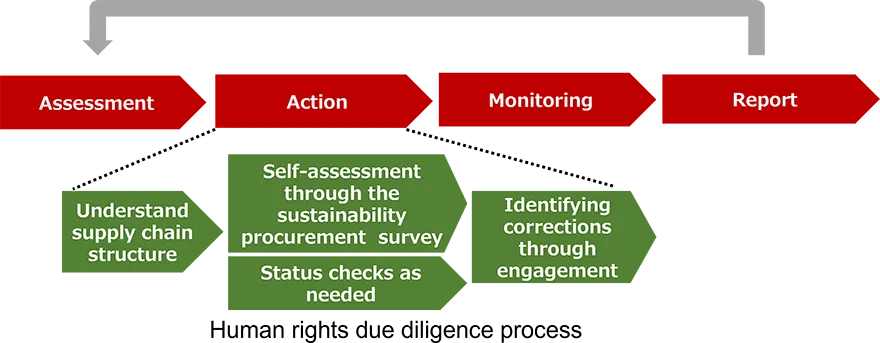
Supply chain initiatives
In our supply chain, we have prioritized checking the status of malt, hops, lemons, plums that are the main raw materials of our business, and raw materials* that are considered to have high human rights risks.
The Sapporo Group has been a member of Sedex since October 2022. Sedex is a non-profit organization that provides an online platform for companies to manage and improve working conditions in the global supply chain. It is the world's largest platform for sharing information on ethical suppliers, enabling companies and organizations to strengthen responsible and sustainable business practices and improve procurement activities. We aim to further strengthen our commitment to human rights by using these tools and working with our business partners to develop and improve our initiatives.
* The decision was based on a comprehensive review of information such as the U.S. Department of State “Trafficking in Persons Report” and the Child Labor Risk Map.
Priority raw materials: Palm oil, tea leaves, coffee beans, soybeans, cocoa beans, liquid sugar, and crude alcohol.
Creating a bright workplace without discrimination and harassment
The Sapporo Group respects the human rights of its employees and incorporates various measures to create a bright workplace with no discrimination and harassment.
We promote training and awareness activities for managers and employees to prevent human rights violations and to eliminate harassment, including the establishment of consultation desks.
- For all employees
Conducting annually web-based training on harassment elimination, with approximately 8,200 employees participating each year.
Creating opportunities for employees in the workplace to reflect on issues together and training on how to respond when harassment occurs. - For Managers
To ensure healthy workplace management, conducting annually training sessions on harassment elimination, psychological safety, one-on-one communication and unconscious bias.
Training on harassment elimination includes specific methods of how to respond to actual harassment consultations as a manager. Furthermore, all parties involved in handling the information of persons who seek consultation at consultation desks are required to sign a confidentiality agreement, and careful measures are taken to ensure that information leading to the identification of such persons is not leaked outside of the parties involved.
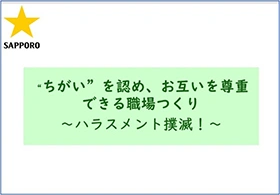
In-house web text (image)
About foreign technical intern trainees
We have conducted a survey on the employment of foreign technical intern trainees at the Group's consolidated subsidiaries and have confirmed that there is currently no employment of such trainees. (As of December 2024)
The Sapporo Group Basic Green Procurement Policy
(Enacted February 28, 2013; revised November 14, 2024)
The Sapporo Group will strive for a sustainable society by conducting selection according to the following factors of safety, quality, price, and sustainability for procurement of raw materials, other materials, goods, etc., necessary for products and services to be provided by all business operations.
1. Reduction of environmental pollutants
There should be minimum use and minimum emission of substances that damage the environment or present a hazard to human health.
2. Energy and resource conservation
There should be minimal resource and energy consumption at manufacturing, transportation and use stages.
3. Consideration toward diversity
- There should be initiatives toward reducing environmental impact and social/regional conservation activities to protect biodiversity.
- Resources should be used in a sustainable manner.
- Deforestation should be prevented.
4. Potential for reduction
There should be activities toward generation control of waste by reduction, use of recycled materials, prolonging usage life, etc.
5. Potential for reuse
Materials used should be available for recycling or be recycled materials, allowing for easy segregation/decomposition/separation and effective use, even when discarded as waste.
6. Potential for recycling
Materials used should be available for recycling or be recycled materials, allowing for easy segregation/decomposition/separation and effective use, even when discarded as waste.
7. Consideration toward partner initiatives
Items should be manufactured and sold by partners that actively disclose their environmental information and initiatives, such as incorporating environmental management systems.
Cooperation with Suppliers
Sapporo Breweries / POKKA SAPPORO Food & Beverage Initiatives
Sapporo Breweries and POKKA SAPPORO Food & Beverage inform their primary suppliers in Japan and overseas of the Sapporo Group Procurement Basic Policy and the Sapporo Group Supplier Sustainability Procurement Guidelines, which include matters related to the environment, human rights, and other social issues, and request them to submit a written consent indicating that they have reviewed the contents of the guidelines. In addition, the companies continuously ask the suppliers to self-evaluate themselves through the Sustainability Procurement Survey to enhance their understanding of and cooperation with the Group’s procurement guidelines.
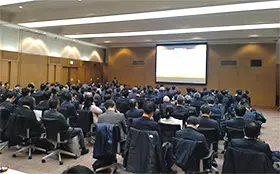
Marketing Policy Briefing Meeting for suppliers
Sapporo Lion Initiatives
Sapporo Lion offers fair and equitable business opportunities to suppliers, and conducts its procurement activities according to stipulated policies and procedures. Furthermore, the company is committed to reinforce business sales structures focused on “safe, reliable and authentic” raw material selection, product traceability, quality and price, while also continuously verifying manufacturing sites, product specification content and logistics systems and services.
Surveys Conducted on Supplier Satisfaction
Sapporo Breweries / POKKA SAPPORO Food & Beverage Initiatives
Sapporo Breweries and POKKA SAPPORO conduct Supplier Satisfaction Surveys to confirm and verify whether procurement activities are being implemented according to the Sapporo Group Procurement Basic Policy. Aspects deemed to require particular improvement are swiftly attended to as part of efforts to strengthen relationships with suppliers.
Supplier Sustainability Activity Evaluation and Exchange Meetings
Sapporo Breweries / POKKA SAPPORO Food & Beverage Initiatives
Sapporo Breweries and POKKA SAPPORO request their suppliers use the Sustainability Procurement Survey to conduct self-evaluations regarding each item of concrete action outlined in the Sapporo Group Supplier Sustainability Procurement Guidelines. The companies also ask their suppliers to sign an agreement on the procurement guidelines in order to increase their understanding and cooperation with the procurement guidelines.
Implementation of Sustainability Survey in FY2025
As part of our human rights due diligence, Sapporo Breweries and POKKA SAPPORO Food & Beverages conducted the Sustainability Procurement Survey.
The Sustainability Procurement Survey was sent to 68 suppliers by Sapporo Breweries and 86 suppliers by POKKA SAPPORO Food & Beverage.
Of the major suppliers (top 154 suppliers), the percentage of suppliers meeting the sustainability procurement guidelines was 100% based on the survey results.
In addition, the companies have been working to obtain written consent to the Sapporo Group Procurement Basic Policy and the Sapporo Group Supplier Sustainability Procurement Guidelines, and as of December 2025, 100% of the suppliers had submitted their written consent.
Supplier Evaluation at Sapporo Breweries
Sapporo Breweries conduct an annual evaluation of suppliers’ initiatives through assessments carried out by persons responsible. The evaluation results are shared with each supplier, and when necessary, we engage in regular, individualized communication to encourage improvements and corrective actions. In 2024, supplier evaluations were conducted for 34 raw material suppliers and 21 packaging and container materials suppliers.
Supplier Meetings
Sapporo Breweries holds annual supplier meetings with suppliers that have significant business relationships with us. These meetings are positioned as an important opportunity to foster open dialogue and mutual understanding, with the aim of supporting mutual business growth and addressing shared challenges.
During these meetings, we exchange views from multiple perspectives—including quality, technological development, and sustainability—and work together to resolve issues and create value by leveraging each party’s strengths. In particular, sustainability initiatives, with a focus on reducing greenhouse gas (GHG) emissions, are a key priority. Going beyond simple status checks, we are advancing concrete actions such as supporting suppliers in the collection of primary GHG emissions data.
Through these efforts, we strive to promote the sustainable development of the entire supply chain and to create greater social value.
Evaluation of New Suppliers at Sapporo Breweries
Sapporo Breweries conducts evaluations of new suppliers at the start of business relationships to confirm that there are no issues related to environmental impact, human rights, or other social concerns. In addition, prior to commencing transactions, the company carries out a quality risk assessment, and based on the results, engages in appropriate communication such as on-site factory inspections.
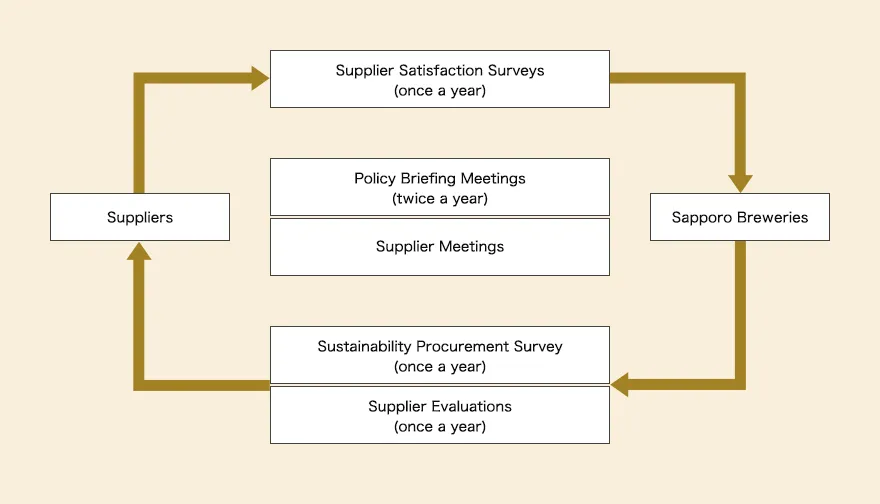
Cooperation and Communication with Partners
Sapporo Breweries Initiatives
In addition to the above initiatives, Sapporo Breweries implements the Collaborative Contract Farming System. Under this system, every year before sowing and planting, before harvesting, and after harvesting, we communicate with producers and suppliers of barley and hops to share its thoughts and policies. Where necessary, Sapporo Breweries also inspects the technologies and hygiene management systems being used.

Collaborative Contract Farming System
POKKA SAPPORO Food & Beverage Initiatives
For domestic and international raw material suppliers and manufacturers, visits to production areas and direct opinion exchanges are made when necessary during harvesting and juicing periods, to ascertain quality and stable supplies.
Furthermore, POKKA SAPPORO also has been promoting technical exchange meetings with its material-related suppliers on development of environmentally friendly materials, weight-reducing packaging materials, and to strive for quality enhancement for existing products.
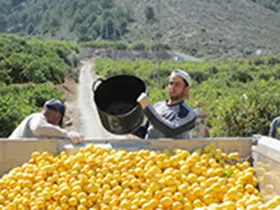
Lemon harvesting in the Mediterranean
Sapporo Lion Initiatives
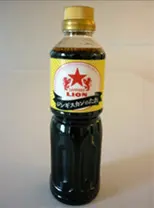
Regular inspections of production areas and processing factories for major food ingredients are made, along with opinion exchanges. Sapporo Lion is also developing new products through its partnerships. For instance, the “Lion Original Sauce” and the original “Genghis Khan (lamb barbecue) Sauce” have been created through its partnership with safe and reliable major partners and are used in major Sapporo Lion restaurants.

SAPPORO REAL ESTATE Initiatives
At Yebisu Garden Place, staff members of SAPPORO REAL ESTATE and contracted partner companies are stationed at the centers of disaster prevention, facilities, cleaning, waste disposal, parking, greenery management, and delivery, etc., and provide various services.
Regular meetings are held to share information on daily operations, events, etc., and to ensure appropriate communication. In order to maintain a comfortable environment, inspections are conducted on a regular basis, and the results of the inspections are reported and improvements are made together with the companies concerned.
Compliance Training Related to Procurement
Sapporo Lion Initiatives
Sapporo Lion offers fair and equitable business opportunities to our suppliers and conducts procurement with established policies and procedures. To commit to this, we regularly conduct training on compliance toward the Antimonopoly Law and the Act against Delay in Payment of Subcontract Proceeds, Etc., to Subcontractors (Subcontracting Charges Law). These training activities are not only for executives and product division managers, but are also for all managers at the head office and each store. We will continue to promote regular compliance training through e-learning and in-house educational tools as a company-wide activity, while also requiring product managers to participate in external seminars/lectures once a year.
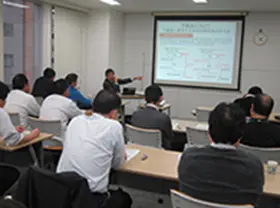
Training sessions feature detailed examples of prohibited activities under the Subcontracting Charges Law, and prevention of abuse of superior positions in the Antimonopoly Law.
Our Focus on Raw Materials
Sapporo Breweries Initiatives
Sapporo Breweries has the belief that “quality materials make quality beer,” and conducts testing and research on processing technologies, material cultivation, barley and hop development (breeding).
Cultivation technologies and various breeds developed through these activities have also supported the current “Collaborative Contract Farming System.”
- For more information about our research efforts and results, click here.
Collaborative Contract Farming System
Sapporo Breweries applies the “Collaborative Contract Farming System” for hop and malt (barley) procurement, as these are the main ingredients of beer. This system focuses on production areas and cooperates with producers from cultivation to processing procedures. The three main elements of this system are:
- The production area and producers of barley and hops are clearly identified,
- The production methods are clearly defined, and
- There is communication between the company and producers
Sapporo Breweries conducts in-house training on crop cultivation, processing and breeding for staff called “field manager.” These staff members actively communicate with crop producers to create high-quality raw materials. This results not only in the stable procurement of raw materials for delicious beer, but also provides a firm grasp on “where,” “who,” and “how” the materials were produced. The foundation of “deliciousness” is safety and reliability.
In-house research department evaluates raw materials
Sapporo Breweries evaluates raw materials by its research department when procuring ingredients for beer and other products. The Ingredient Solution Group and the Hokkaido Ingredient Research Group of the Ingredient R&D Laboratory analyze the characteristics and ingredients of barley, malt, hops, and auxiliary ingredients used as raw materials to confirm their quality as ingredients for various categories such as beer and happoshu (low-malt beer).
POKKA SAPPORO Food & Beverage Initiatives
POKKA SAPPORO conducts risk evaluations on new raw materials to be incorporated into products, based on original standards formulated by the company’s rich experience. Food safety and food defense*, recent hot topics, are some perspectives that are incorporated when making selections. Additionally, inspections at local farms and factories are conducted as necessary to make decisions for selection and for guidance.
Furthermore, systematic sanitation and quality factory inspections are conducted for verification and guidance for raw materials already under use, to confirm their quality standard information.
- Food safety is an initiative to ensure food safety by risk evaluation and management of factors that can be assumed hazardous through the manufacturing/supply procedures, to prevent/reduce contamination risks.
- Food defense is an initiative to prevent intentional or human-caused harm to foods.
Sapporo Lion Initiatives
Sapporo Lion always has “Safe, reliable, and authentic” as its first priority. The food ingredients offered to customers have been procured from origins that ensure the constancy of safety and supply, through close examination of logistic systems, past performances and industry reviews.
Sapporo Lion regularly visits produce regions for ingredients that come directly from farms, and ascertain produce methods, processing procedures and sanitation levels of processing factories before procurement. Furthermore, in the efforts toward further quality enhancement, Sapporo Lion invites producers to its restaurants in the metropolitan area so they can view how their produce is served to customers. Sapporo Lion also makes efforts to improve quality maintenance of products and processed goods excluding farm-direct items, through activities such as regular factory inspections.