Realization of a Decarbonized Society
Reducing of Greenhouse Gas Emissions at Our Sites and Supply Chain
Sapporo Group Greenhouse Gas Reduction Targets
2050
Aim for net zero greenhouse gas emissions in Scopes 1, 2, and 3.
2030
- Reduce greenhouse gas emissions in Scope 1 and 2 by 42% from the 2022 levels.
- Reduce greenhouse gas emissions in Scope 3 by 25% from the 2022 level.
- Reduce greenhouse gas emissions in FLAG Scope 1 and 3 by 31% from the 2022 levels.
- * The targets for 2030 were certified as Science Based Targets (SBT) in March 2024.

Sapporo Breweries
Promotion of global warming prevention by incorporating unused energy sources
Developments in waste heat (unused energy source) collection, which had not been applied up to this point, are progressing and being effectively applied as a heat source for beer brewing processes and other processes to reduce environmental impact (waste water treatment). Energy formerly used for activities such as heating water have been reduced by applying unused energy sources including heat from beer fermentation and waste heat from boiling processes, combustion, equipment, and waste water treatment.
Example of systems installed in factories
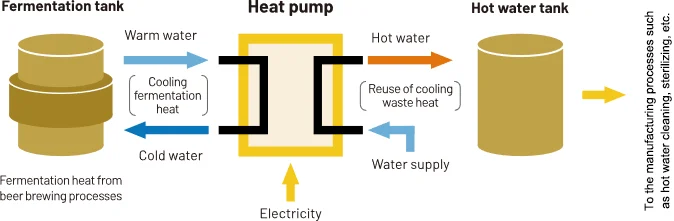
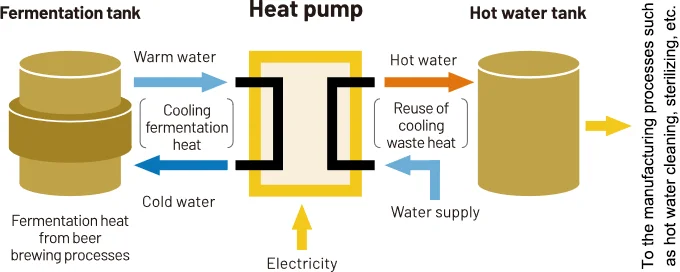
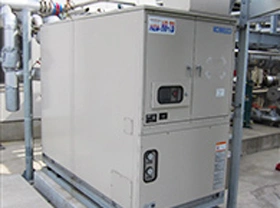
(Utilizing heat from beer fermentation)
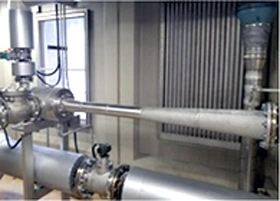
(Utilizing waste heat from boiling processes)
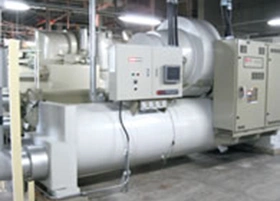
(Utilizing waste heat from equipment)
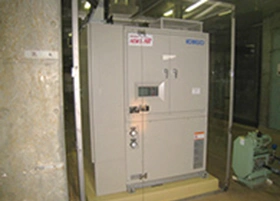
(Utilizing waste heat from waste water treatment)
Installation of Solar Power Generation Facilities
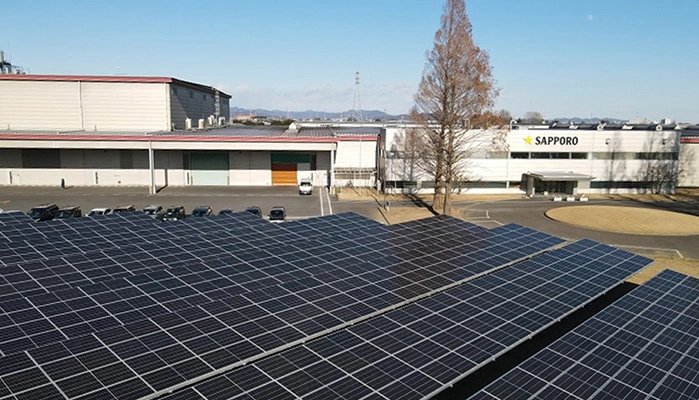
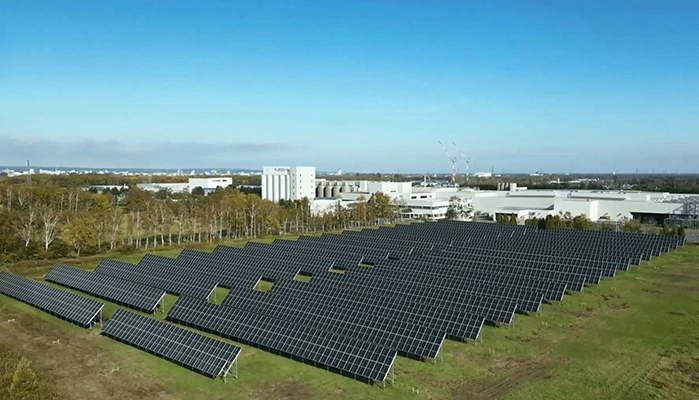
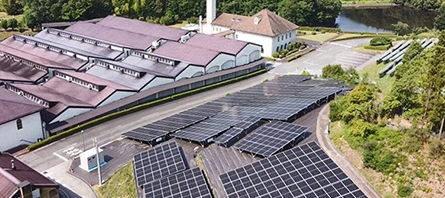
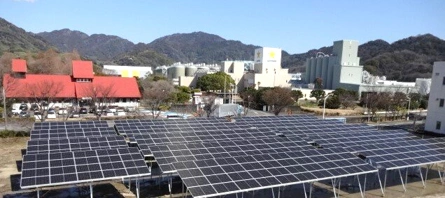
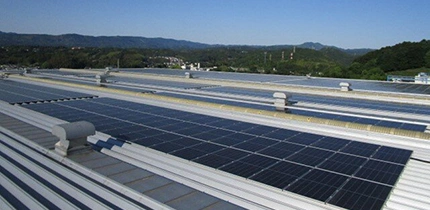
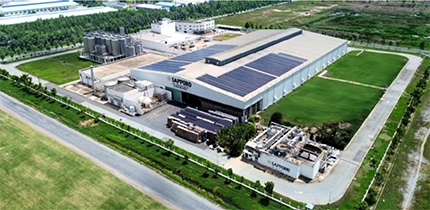
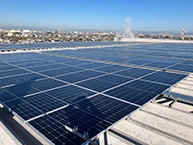
Sapporo Breweries has installed solar power generation facilities and is promoting the reduction of CO2 emissions through the use of electricity derived from renewable energy sources.
* PPA model: A model in which a power producer installs solar power generation equipment on the premises of a company at the cost of the power producer, and supplies the generated electricity to the company
| Jan. 2022 | Gunma factory (Ojima office) | Power generation of 627 MWh/year | CO2 emission reduction amount | approx. 330 tons/year | ※ |
|---|---|---|---|---|---|
| Dec. 2022 | Hokkaido factory | Power generation of 1,539 MWh/year | CO2 emission reduction amount | approx. 840 tons/year | ※ |
| July 2023 | Okayama Winery | Power generation of 407 MWh/year | CO2 emission reduction amount | approx. 222 tons/year | ※ |
| Mar. 2024 | Value Creation Frontier Research Institute | Power generation of 270 MWh/year | CO2 emission reduction amount | approx. 124 tons/year | ※ |
| July 2024 | Kyushu Hita factory | Power generation of 1,276 MWh/year | CO2 emission reduction amount | approx. 612 tons/year | ※ |
| July 2024 | Sapporo Vietnam Long An factory | Power generation of 1,043 MWh/year | CO2 emission reduction amount | approx. 706 tons/year |
* PPA model: A model in which a power producer installs solar power generation equipment on the premises of a company at the cost of the power producer, and supplies the generated electricity to the company
- * The Sapporo Group is a member of RE100.

Incorporation and development of new technologies
At Sapporo Breweries, we are working to reduce the amount of fuel and electricity used at our plants by increasing the efficiency of utility facilities* used in the beer production process and reducing operational losses through a review of the volume control system.
- Boilers, refrigerators, compressors, cogeneration systems, heat pumps, etc.
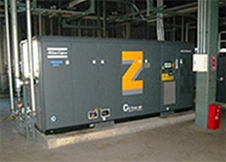
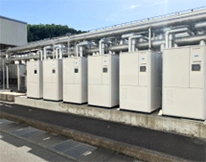
(CO2 refrigerant)
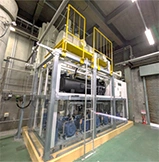
and recovery chiller
(CO2 refrigerant)
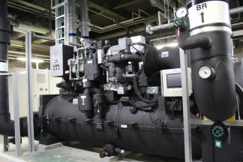
(HFO refrigerant)
Ozone layer protection and suppression of fluorocarbon
Sapporo Breweries is actively moving forward with environmentally-friendly measures in freezing facilities for beer manufacturing processes. With the aim of protecting the ozone layer and curbing global warming, we began switching refrigerants in the refrigeration equipment used in the beer manufacturing process in 2018, and are replacing some of the refrigeration facilities with equipment that uses low-GWP refrigerants or natural refrigerants. Furthermore, equipment inspections are regularly made under the Fluorocarbon Emissions Control Act to ensure legal compliance.
Initiatives to improve transportation efficiency
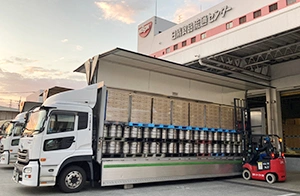
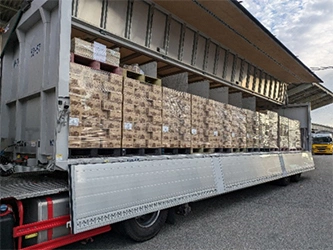
Since the 2000s, the Sapporo Group has been promoting the joint transportation of goods with companies inside and outside the industry, working to reduce environmental impact through improved vehicle loading rates and reduction in the number of vehicles.
In a recent example, we began joint transportation with
NISSIN FOOD PRODUCTS CO., LTD. in March 2022 to carry a
combination of beer and instant noodles.
On the
Shizuoka-Osaka route, we achieved "round transportation" by
carrying mixed products from both companies on the outbound
route, and recycled empty containers and pallets on the
return route.
This transportation will achieve a 100% loading ratio and reduce CO2 emissions by approximately 10 tons per year compared to the previous method.
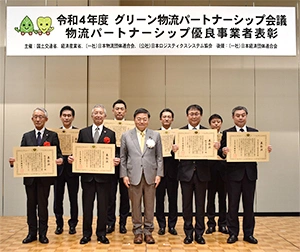
Suzuyo Co., Ltd. and six other companies jointly received the highest award, the Minister of Land, Infrastructure, Transport and Tourism Award, at the "FY2022 Green Logistics Partnership Excellent Company Award" for their efforts in collaborative transportation.
By setting up relay points in the long-distance transportation section and combining driver switches and ferry transportation to the relay points, they were able to improve the working environment for drivers. In addition, it is expected that the reduction in the number of vehicles used will lead to a reduction in CO2 emissions of approximately 299 tons annually compared to the conventional method.
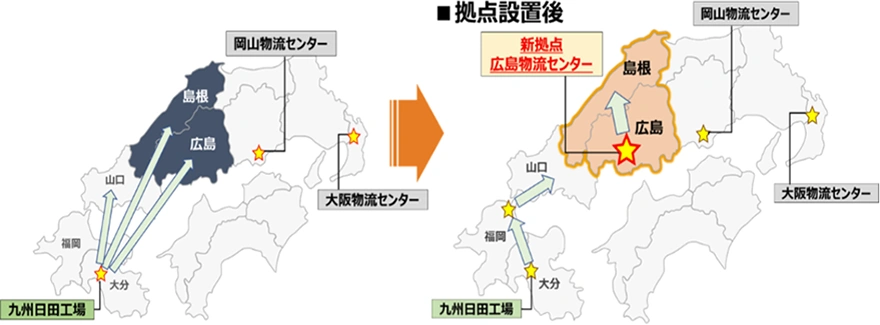
The Sapporo Group has been promoting the reorganization of its distribution bases with an upper limit of 150 km for nationwide deliveries since around 2020.
Starting in April 2024, deliveries to the Hiroshima and Shimane Prefecture area, which were previously shipped from Sapporo Breweries' Kyushu Hita Brewery, are routed through a new distribution base, the Sapporo Breweries Hiroshima Distribution Center. This alleviates truck drivers' long-distance operation and improves truck turnover rates.
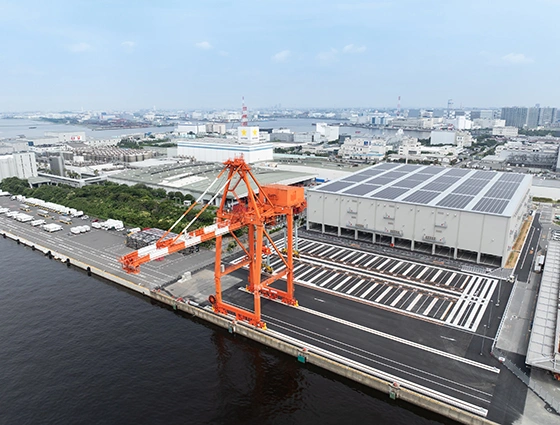
In August 2024, Sapporo Breweries opened the Keiyo Bay Area Distribution Center adjacent to its Chiba Brewery. This allows the truck loading operations previously conducted at two separate locations—the brewery where beer is stored and the former storage facility approximately 4 km away where wine, spirits, and Japanese alcoholic beverages are stored—to be performed at a single location. As a result, it is expected to reduce working hours by approximately 20,000 hours and CO2 emissions by approximately 116 tons per year.
Promotion of modal shift
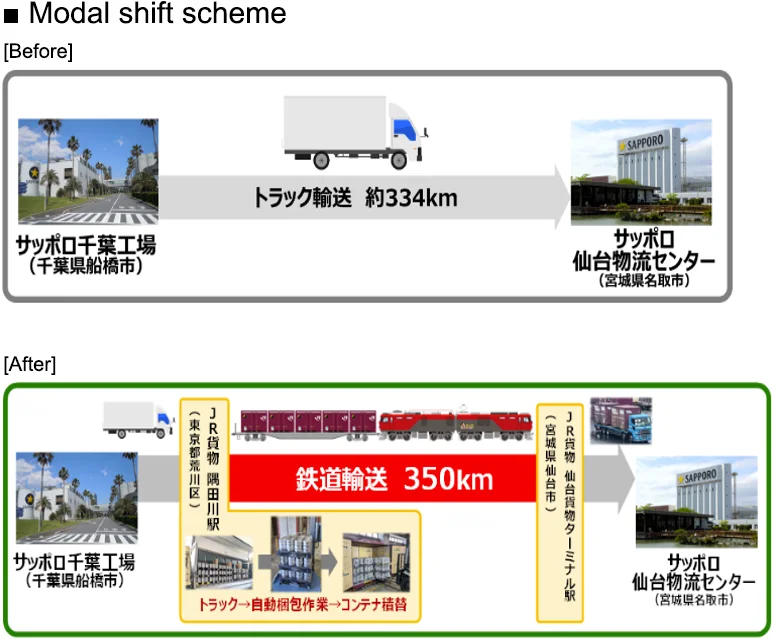
Sapporo Breweries is working on a modal shift, which is to switch distribution methods from trucks to trains and marine transportation, which results in less CO2 emission. To reduce dependence on truck transportation, the company is promoting a modal shift in medium-distance transportation in addition to long-distance transportation, where such shift has been underway for some time
In February 2024, in cooperation with Japan Freight Railway
Company, NIPPON TRANSPORTATION WAREHOUSE Co. Ltd., and Japan
Freight Liner Company, part of Sapporo Breweries' product
transportation from Chiba Brewery to Sendai Distribution Center in
Sendai Brewery was switched from truck transportation to rail
transportation.
This is expected to reduce CO2 emissions by
approximately 44 tons per year compared to the previous method.
In addition, by using automatic packing machines for packing work to prevent cargo from collapsing during transportation, it is expected to shorten the packing time during shipment by about 30 minutes. This will reduce the workload of workers and the waiting time of truck drivers.
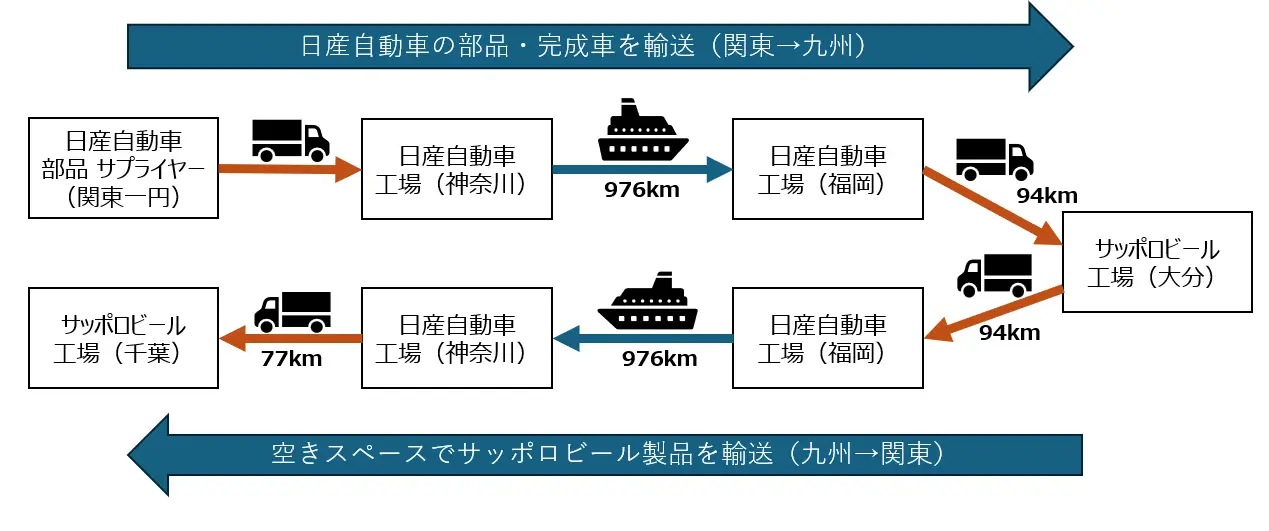
In recent years, we have been cooperating with companies in other industries to promote transportation sharing and modal shifts.
Nissan Motor Co., Ltd. has launched a joint maritime transport service utilizing dedicated ferries owned by Nissan Motor Co., Ltd. between the Kanto region and Kyushu.
By transporting vehicle parts on
the outbound route and beer products on the inbound route, we
expect to improve transportation efficiency and reduce CO2
emissions by approximately 55% annually.
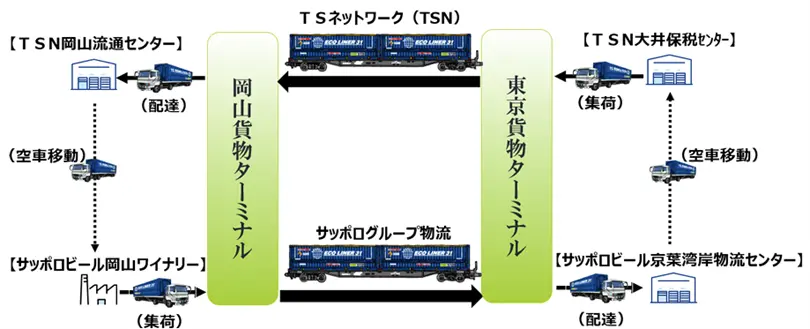
TS Network Co., Ltd. and Nippon Express Co., Ltd. are implementing
an efficient three-company rail round transportation service
between Okayama and Kanto using 31-foot containers.
Switching
from truck to rail transportation will reduce CO2 emissions by
approximately 168 tons per year.
Acquisition of "Green Management Certification"
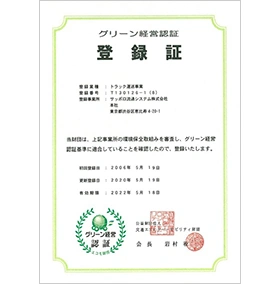
SAPPORO LOGISTICS SYSTEMS CO., LTD has acquired "Green Management Certification" for its head office and three business sites in Hokkaido, the Tokyo metropolitan area, and Nagoya. The company has also been satisfying certificate renewal criteria every two years since 2008 (most recently passed renewal review in April 2024). SAPPORO LOGISTICS SYSTEMS CO., LTD has been certified and registered for satisfying all items in the Green Management Certification Standards of "Implementing structures/systems for environmental conservation," "Implementing eco-driving," "Incorporating low-emission vehicles," "Vehicle inspection and maintenance," "Promotion of recycling, proper disposal and disposal control of waste and vehicle scrap," and "Promotion of environmental conservation in the management department (office)."
POKKA SAPPORO Food & Beverage
Nagoya Plant Achieves Virtually Zero Greenhouse Gas Emissions - Achieved through the Use of Carbon Offset City Gas and Non-Fossil Certificates
From January 2026, POKKA SAPPORO Nagoya Plant has achieved
virtually zero greenhouse gas emissions by switching to carbon
offset city gas and 100% of electricity used to virtually
renewable energy.
Since 2003, the plant has been promoting
continuous energy-saving and decarbonization initiatives,
including a fuel switch, the introduction and operational
optimization of once-through boilers, and the launch of solar
power generation under a PPA model in 2023. Through this latest
initiative, we will balance greenhouse gas emissions with
absorption, and as a net-zero greenhouse gas emissions plant, we
will continue to advance our decarbonization efforts.
Initiatives to improve transportation efficiency
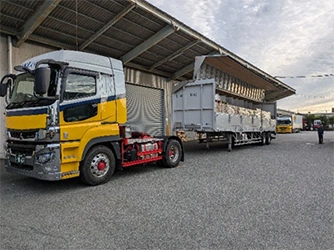
POKKA SAPPORO Food & Beverage and the Suntory Group have established a round-trip transportation scheme, starting in November 2024. In this scheme, POKKA SAPPORO beverages and food products are transported on the outbound route between Gunma Prefecture and Okayama Prefecture, while Suntory beverage products are transported on the return route. Through this scheme, the two companies expect to reduce their combined fleet by approximately 150 trucks and CO₂ emissions by about 45 tons annually.
Sapporo Lion
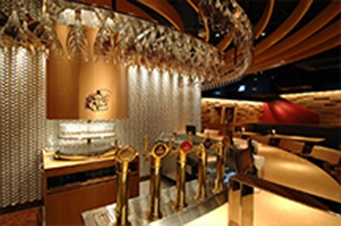
Sapporo Lion has been developing environmentally-friendly
restaurants in various forms to reduce greenhouse gas emissions.
For “Yebisu Bar,” which has been developing in
recent years, and for “Ginza Lion,” which has been
growing with new restaurants in various regions, energy-conserving
LED lighting has been used for most hall lighting. In existing
restaurants as well, lighting has been changed to LED lighting and
kitchens have also been transitioning to environmentally-friendly
refrigerators and icemakers.
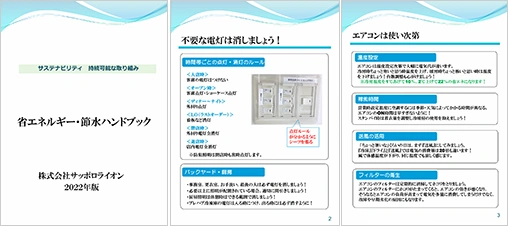
Furthermore, energy and water conservation pamphlets have been distributed to each restaurant and water and utility charges have also been visualized to grasp excess and uneven use in different time slots. Based on information from these activities, energy conservation activities are being implemented during business hours, such as frequently turning switches on and off, configuring proper temperatures for air conditioning and kitchen equipment, along with appropriate operation methods.
Initiatives for Product Environmental Information Disclosure
Product Carbon Footprint and Environmental Measures
*Currently not for sale. Figures are based on a tentative calculation method as of 2009.
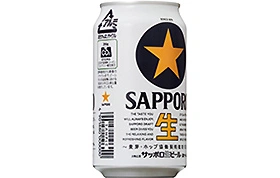
In 2004, Sapporo Breweries was the first in the industry to conduct a life cycle assessment (LCA) for its beer products, in accordance with ISO 14040. This assessment quantitatively evaluates resource inputs and emission of greenhouse gases across the entire process, from raw material procurement through manufacturing products to disposal. In 2008, the carbon footprint of "Sapporo Draft Beer Black Label" (CO2 emissions per can) was calculated and displayed at the "Zero Emission House" at the Hokkaido Toyako Summit. In 2009, canned beer with labelling of its carbon footprint was released for sale in Hokkaido for the first time in the world. The calculation was conducted based on "Beer Products" of the Carbon Footprint Product of a Product - Product Category Rule (CFP-PCR) which enabled us to determine the weight, etc. of each process in the product's life cycle. Based on this knowledge, Sapporo Breweries is promoting environmental measures for its products, such as reducing the weight of containers and packaging, as effective measures to reduce greenhouse gas emissions.
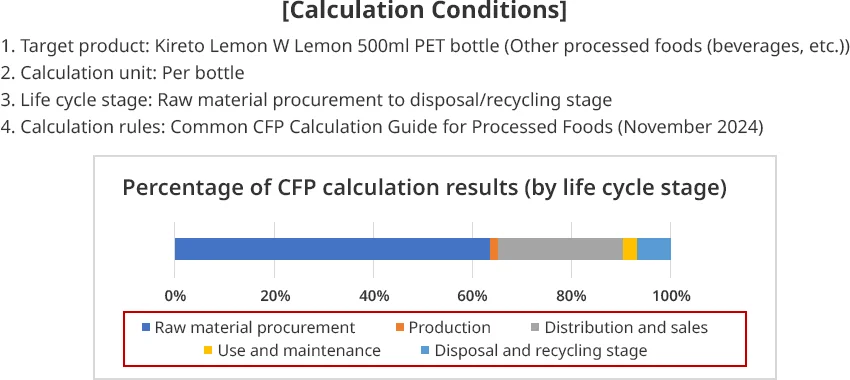
POKKA SAPPORO Food & Beverage participated in a carbon footprint calculation demonstration based on the Common Carbon Footprint (CFP) Calculation Guide for Processed Foods published by the Ministry of Agriculture, Forestry and Fisheries in April 2025, and conducted the calculation for "Kireto Lemon W Lemon (500ml PET bottle)." The CFP analysis of this product confirmed that raw material procurement accounts for over 60% of its greenhouse gas emissions.
The company voluntarily calculates the carbon footprint of its core products. Finding that all products exhibit high CO2 emissions during the raw material procurement stage, it is advancing CO2 reduction efforts focusing on upstream processes. POKKA SAPPORO Food & Beverage aims to provide products and services that contribute to decarbonization.