"Sorachi Ace" is a hop variety highly regarded by brewers around the world. Sapporo Breweries has launched "Sapporo SORACHI1984," a beer made with 100% of this aromatic hop. Sorachi Ace is a hop variety bred by Sapporo Breweries. However, the mechanism behind its unique aroma remained a mystery for a long time. We interviewed Ayako Sanekata of the Value Creation Frontier Laboratories, who helped unravel the secrets behind Sorachi Ace’s aroma formation, and asked her about the research behind the discovery.
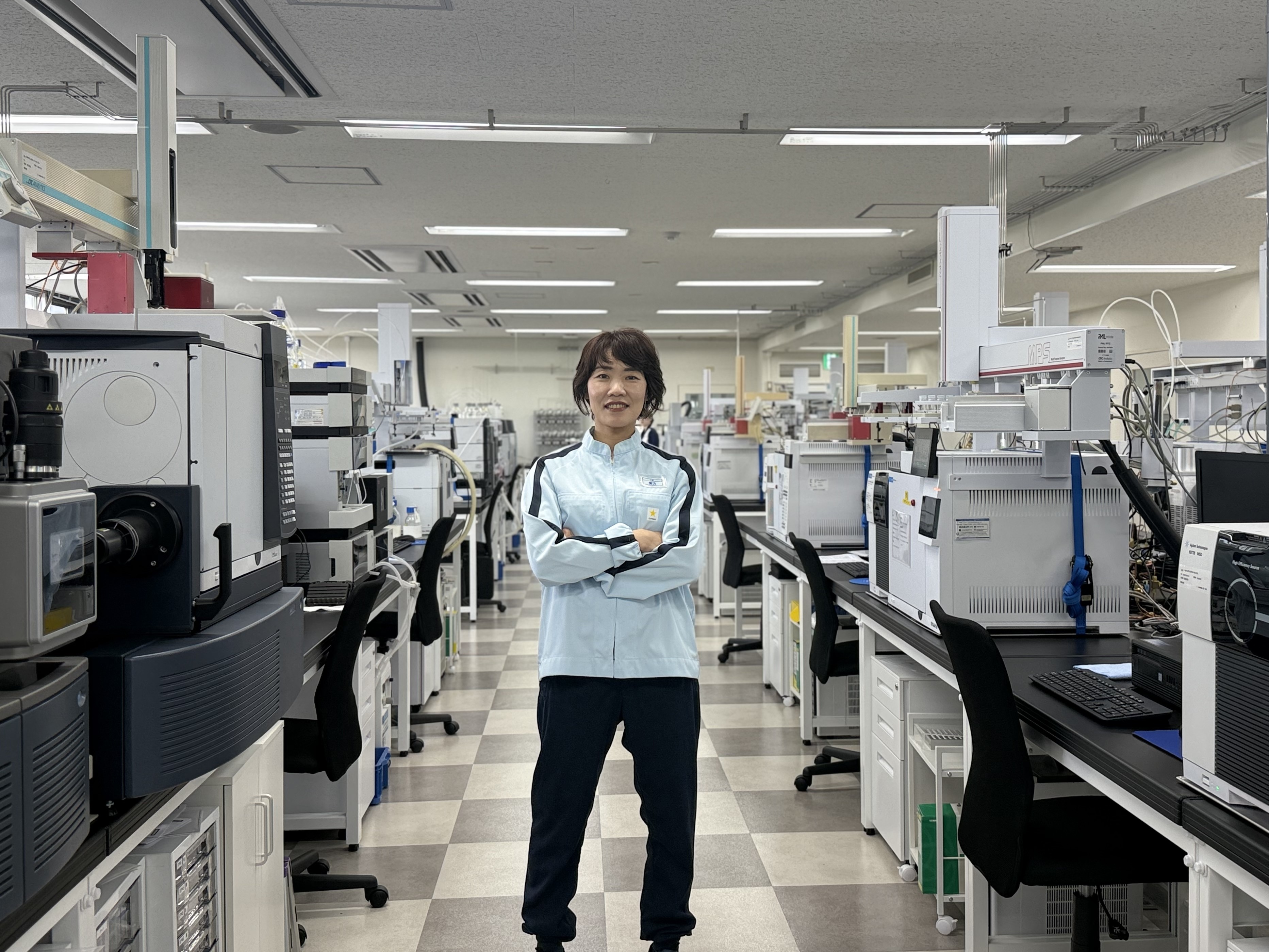
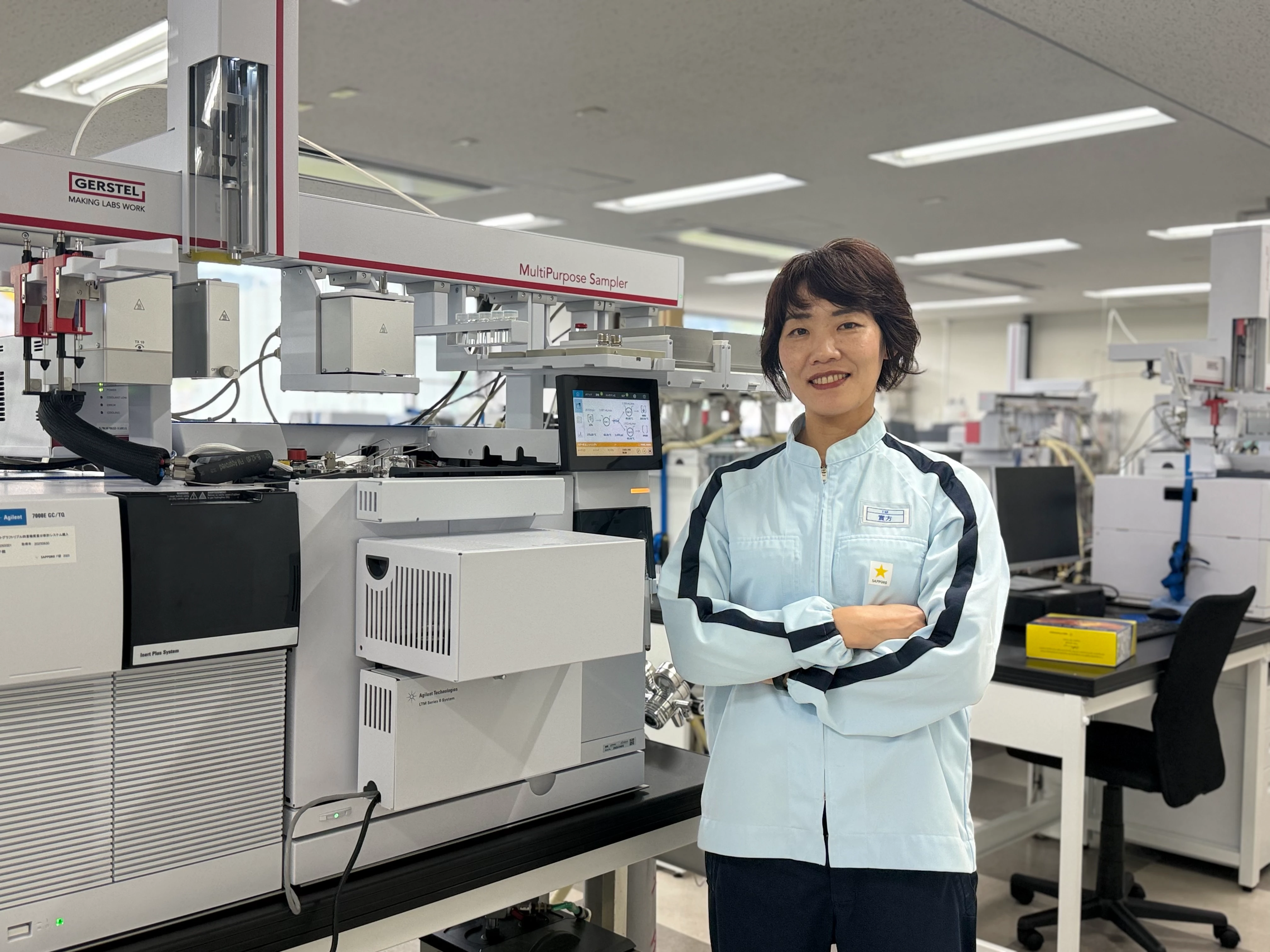
Ayako Sanekata
Advanced Research Specialist, Value Creation Frontier Laboratories, Marketing Division.
After completing a master’s degree in agriculture with a research focus on lipid metabolism, she began her career as a researcher at a food manufacturing company in 2004. She subsequently joined Sapporo Breweries in 2010 and was assigned to the Value Creation Frontier Laboratories. After working in food analysis within the Chemical Analysis Research Group, she engaged in research on the aroma chemistry of the hop variety “Sorachi Ace.” Since 2024, she has been pursuing research that combines fermentation science, aroma analysis, and sensory science in the Fermentation Science and Basic Analysis Research Group. In 2026, she earned a Ph.D. in Agriculture and received the JSBBA(Japan Society for Bioscience, Biotechnology, and Agrochemistry) Award for Women Corporate Researchers.
◆What Is the Legendary Hop “Sorachi Ace”?
In the 1960s, Sapporo Breweries began its hop breeding program and officially registered “Sorachi Ace” as a hop variety in 1984. Although it possessed a highly distinctive aroma, it was not adopted as a beer ingredient in Japan at the time. Later, through international research exchanges, it was brought to the United States. In the 2000s, an American hop grower recognized its unique potential , and its distinctive aroma and bitterness gained high acclaim among brewers in Europe and North America, leading to expanded production. Sapporo Breweries launched its first limited-edition product featuring Sorachi Ace in 2016, and introduced “Sapporo SORACHI 1984,” as a year-round product available in 350-milliliter cans, in 2019.
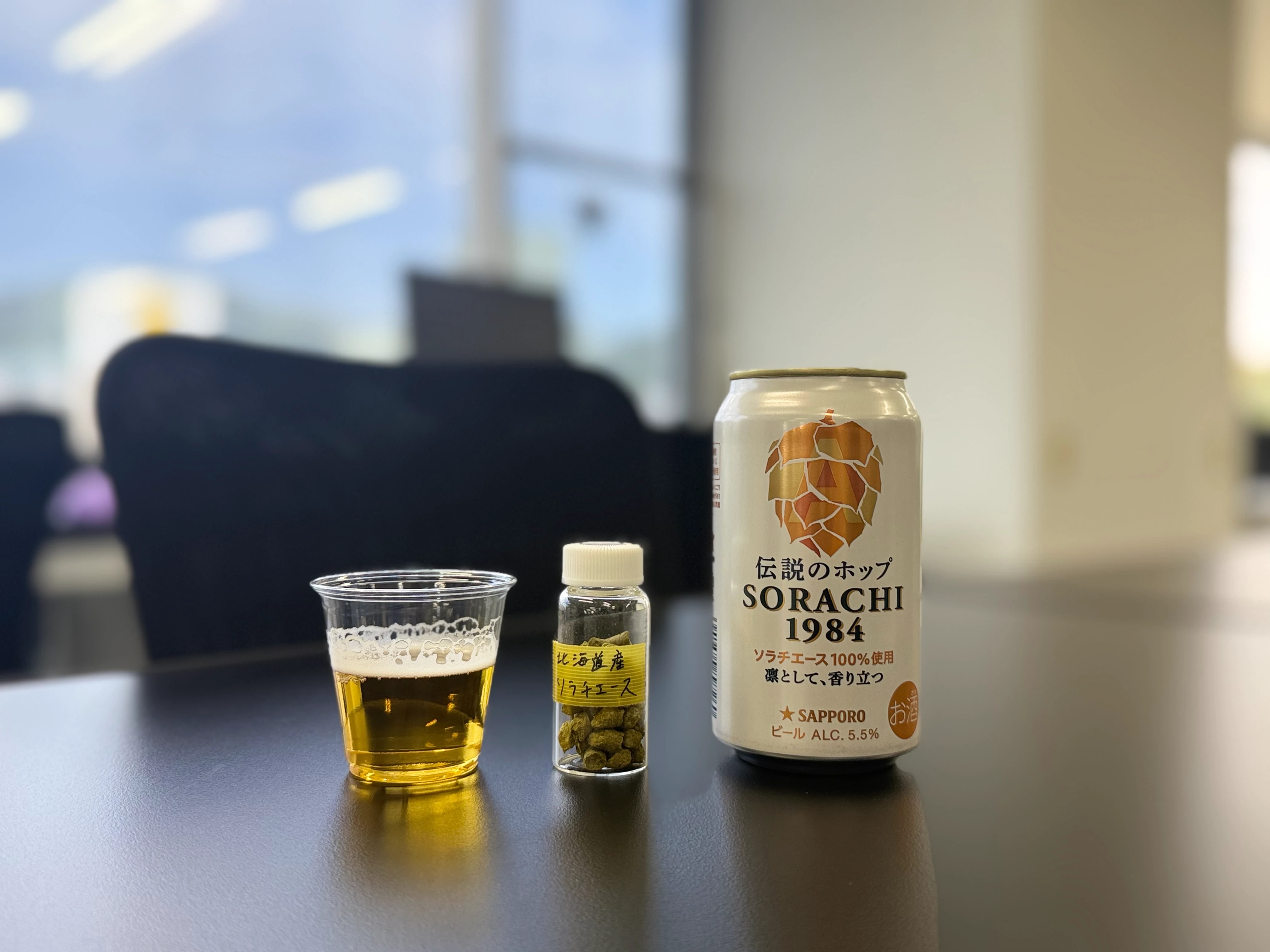
Sorachi Ace, which bred and developed by our company, is known for its unique aroma profile, featuring notes reminiscent of hinoki cypress, pine, and lemongrass that are rarely found in other hop varieties. Brewers around the world were crafting beers with this hop, drawn to its distinctive character. However, it was not known which specific compounds in the hop were responsible for Sorachi Ace’s unique aroma. Understanding the science behind Sorachi Ace's signature aroma would not only solve a long-standing mystery but also provide a powerful way to communicate its value and appeal to consumers.

My work included projects aimed at resolving various questions and challenges related to products and raw materials. Through several aroma-related investigations, I succeeded in detecting subtle odors differences and identifying the components responsible. Over time, I earned a reputation within the company as the person to turn to when it came to aroma analysis.
As a result, in 2015, I was selected to join this project. Working closely with senior researchers specializing in brewing science, I helped establish the research strategy, and together we began investigating the mechanism behind Sorachi Ace’s aroma.
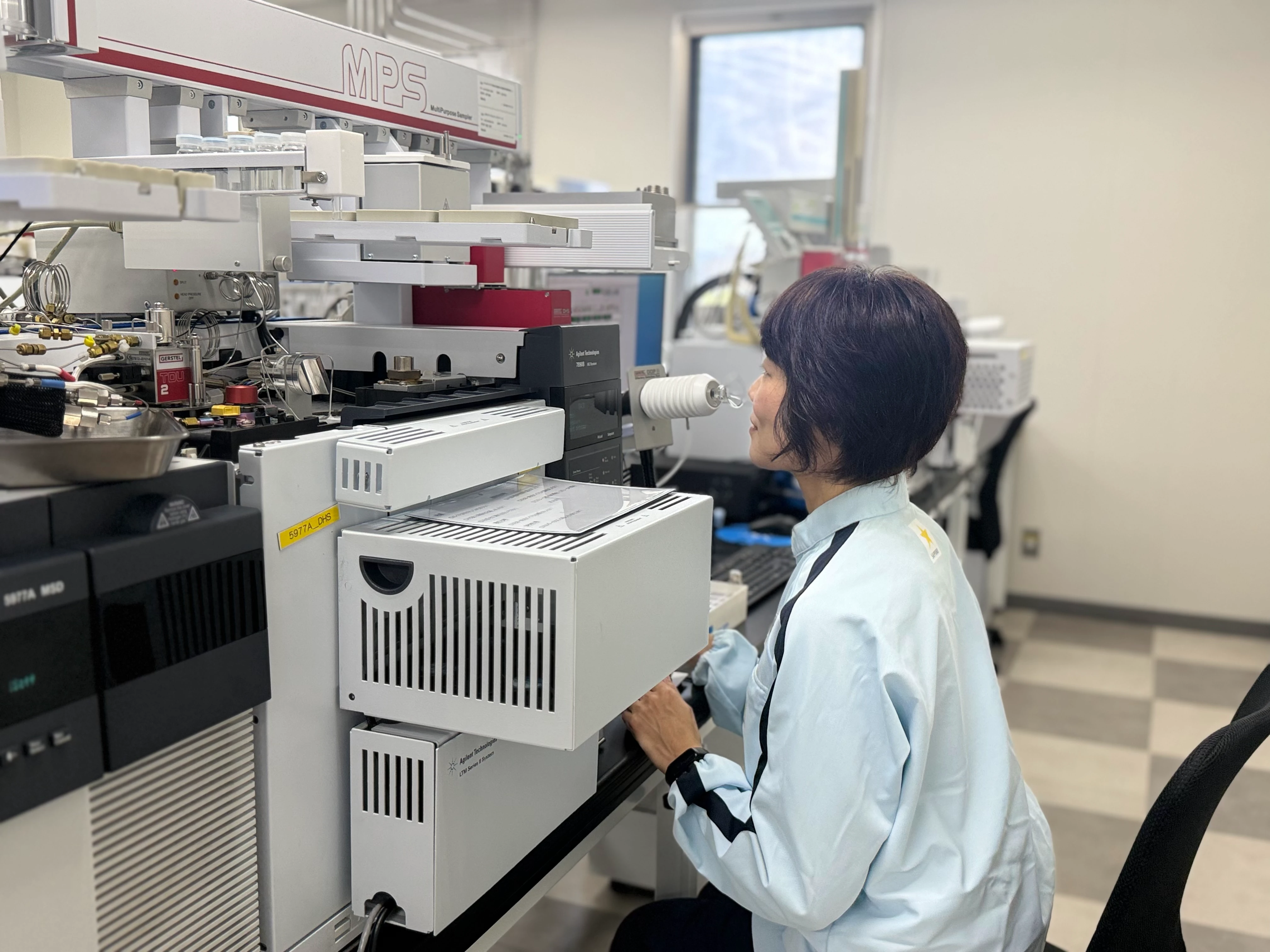
As the aroma compounds in the beer passed through a long tube inside the device known as a “column”, they were separated into individual components. Each component was then evaluated by smell as it emerged from the instrument and described its scent using sensory terms such as “floral ” or “pungent ”, or other aroma characteristics. By comparing the aroma profiles of different beers, we expected that the scent detectable only in the Sorachi Ace beer would reveal the compounds responsible for this hop’s distinctive aroma.
However, GC-O analysis failed to identify any specific odor or aroma compound that characterizes Sorachi Ace’s aroma.
Although the result was very disappointing, we proceeded with another technique for investigating aroma compounds: “Solid Phase Micro Extraction(SPME)”. This method uses an SPME fiber to extract and concentrate volatile aroma components from beer for instrumental analysis, making it possible to detect compounds present at very low concentrations. Similar to GC-O device, the aroma compounds in the beer are individually separated as they pass through a column, allowing each aroma compound to be identified.
Even with a conventional 30-meter column, we were unable to detect any components unique to Sorachi Ace. We therefore employed a 60-meter column to enable clearer separation of the components. To our surprise, a peak appeared on the chromatogram that was found only in Sorachi Ace sample. We revealed that this component was “geranic acid.”
So, I went back to GC-O analysis and tried to smell the aroma at the exact fraction where geranic acid emerged from the instrument. However, I could not detect any odor . “So I simply can’t smell geranic acid,” I thought, and to be honest, I was a bit discouraged.
In other words, it would be natural to conclude that Geranic acid, which could not be detected through GC-O analysis, naturally has no meaningful impact on the aroma of beer and therefore was not a component that contributes to the characteristic aroma of Sorachi Ace.”
However, I had a vague impression that “geranic acid might somehow be associated with a pleasant aroma .” I had no scientific evidence to support the idea, but I felt it was worth investigating further . Looking back, perhaps it was because I was still relatively new to aroma research that I was able to approach the problem with an open mind and without being constrained by conventional thinking.

Next, I added geranic acid to the flavor-hop beer and took a sip. I could just sense, “Wait, has the aroma changed somehow?” The difference was subtle, but it seemed noticeable. When I asked my project members to try it, they agreed, saying, “It definitely does change!”
This led me to a new hypothesis:
“Although geranic acid itself does not have a strong aroma, it may interact with aroma compounds derived from flavor hops and alter the overall aroma profile.”
With this hypothesis in hand, the research began moving forward once again.

At Sapporo Breweries, employees who successfully complete a series of taste and aroma assessments are certified as members of an official “Sensory Evaluation Panel.” These panelists routinely evaluate beers produced at our breweries as well as commercially available products, and they are highly sensitive to subtle differences in beer aroma.
To test our hypothesis, we selected panelists who were particularly sensitive to the aroma of Sorachi Ace and asked them to evaluate a series of beer samples formulated by with selected aroma compounds found in Sorachi Ace beer.
When they compared beer samples containing multiple hop-derived aroma compounds from Sorachi Ace, with and without the addition of geranic acid, the vast majority of panelists reported they could clearly perceive a difference in aroma between the samples.
As a result, we were able to prove that geranic acid significantly alters the overall aroma profile of beer when it is present alongside the other aroma compounds in Sorachi Ace, producing an aroma character that more closely resembles that of Sorachi Ace itself.
I still remember that when we Finally obtained the evidence, the project members were even more excited than I was. They told me, “This is an amazing discovery!” Seeing how happy they were, a sense of joy gradually welled up in my heart as well, and I thought to myself, “This really is an amazing discovery…”

The press release highlighted our research findings, stating We have revealed that beers brewed with Sorachi Ace contain relatively high levels of ‘geranic acid’, a compound also found in lemongrass and other plants, and that this compound contributes to the Sorachi Ace hop’s distinctive aroma.”
They told us:
“Thank you for helping us understand the aroma of Sorachi Ace. We had always known this hop was incredibly appealing. From experience, we knew that combining it with other hop varieties could create more complex and interesting aroma profiles, but we never understood why. Thanks to your research, it finally makes sense.”
Researchers overseas had also been fascinated by Sorachi Ace while at the same time wondering about the science behind its unique aroma. Our work provided a logical explanation for a phenomenon that many brewers had observed empirically, allowing them to better understand what they had experienced in practice. Knowing that our research had helped resolve that long-standing question made all of our efforts worthwhile.
Subsequently, our research on geranic acid in Sorachi Ace won the 2017 JSBBA Hot Topics Award at Annual Meeting in March 2017. It was also presented at the 36th Congress of the European Brewery Convention (EBC) in May 2017, where it received the “Best Poster Award,” the highest honor in the poster presentation category.
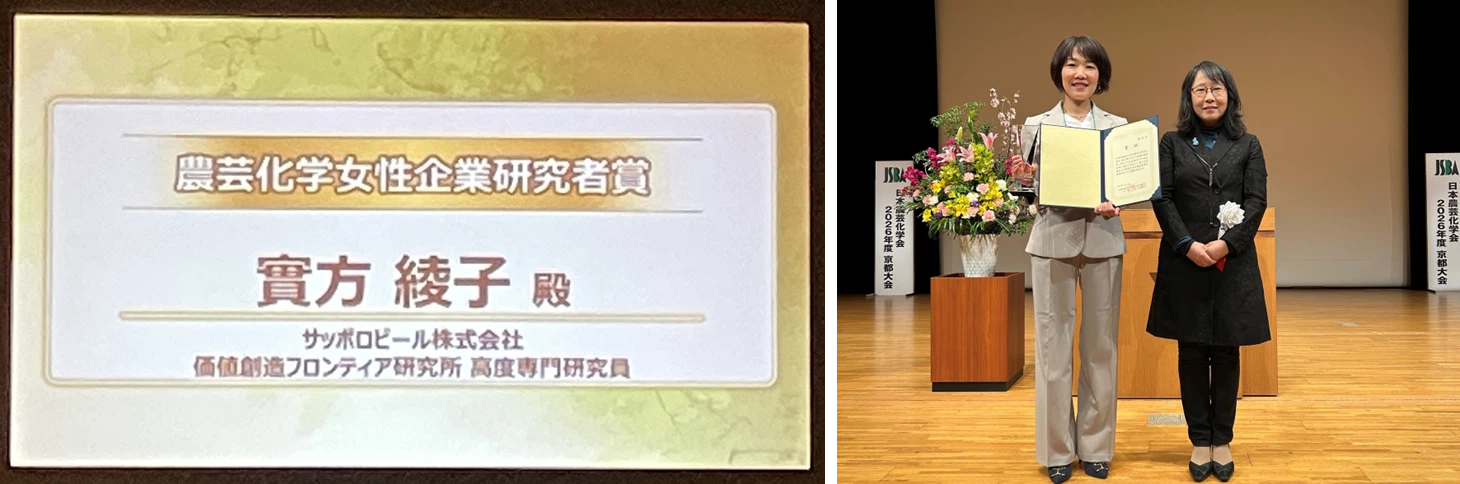
Furthermore, this achievement also contributed to my receiving a Ph.D. in Agriculture. In March 2026, I was honored with the JSBBA Award for Women Corporate Researchers Women in Agricultural Chemistry Corporate Researcher Award for my work on the characteristic aromas of hop varieties and their interactions, becoming the first recipient from Sapporo Breweries to receive this distinction.
Sapporo Breweries Researcher Wins the “JSBBA Award for Women Corporate Researchers Women in Agricultural Chemistry Corporate Researcher Award”
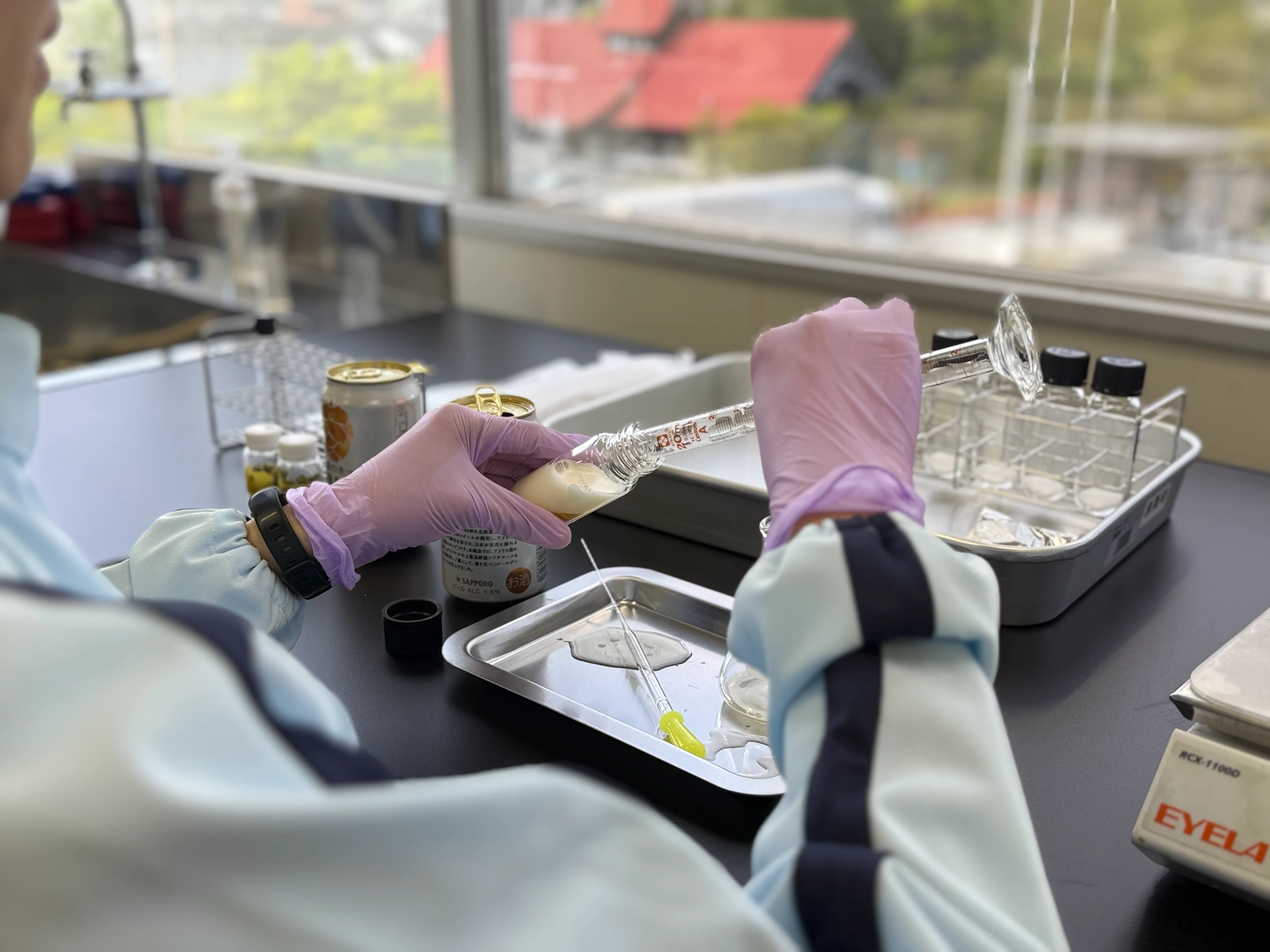
At first glance, an analysis relying on human senses might seem inaccurate. However, the human sense of smell is extremely sensitive. There are often cases where people can recognize an odor even though no corresponding compound can be detected through instrumental analysis.
For example, researchers like us can usually identify the brand of beer simply by tasting and smelling it. Yet when we analyze each beer, the compositions of the aroma components are often remarkably similar . Human sensory perception is that powerful, and analytical technologies have not yet fully caught up with the capabilities of the human nose. That is precisely why GC-O analysis is so rewarding.
Yeast can transform aroma compounds derived from herbs and spices, resulting in entirely different aroma profile in beer . Fermentation is truly amazing. As this research progresses, it may enable us to explain a wide range of aroma phenomena that are not yet fully understood.
Through basic research, I hope to deepen our understanding of how yeast influences aroma and prove new possibilities to our R&D department. In doing so, I would like to help create new products and communicate their appeal to consumers based on scientific evidence, showing how desirable aromas are generated through well-defined biological and chemical processes.
Geranic acid itself has very weak odor , yet it enhances the aroma contributed by other hop compounds and can be considered a hidden contributor to the distinctive character of Sorachi Ace. Similarly, the Value Creation Frontier Laboratories is a group of researchers that generates research findings and technologies that support Sapporo Breweries’ product development. Through my own fundamental research, I hope to become a hidden contributor, just like geranic acid.
LATEST STORIES