Pokka Sapporo launched the “Lemon Technology Development Department” on January 1, 2025, guided by our mission to ”Create the new standard for the future of food.“
We’re exploring new ways to use lemons, turning parts that were once unused, like lemon juice residue into new ingredients.
Through this work, we aim to bring more than just great taste, creating new value for our customers. To learn more about this challenge, we spoke with the Department Manager Hideyasu Okuda and researchers Mikiya Hattori and Aki Makimoto.
1
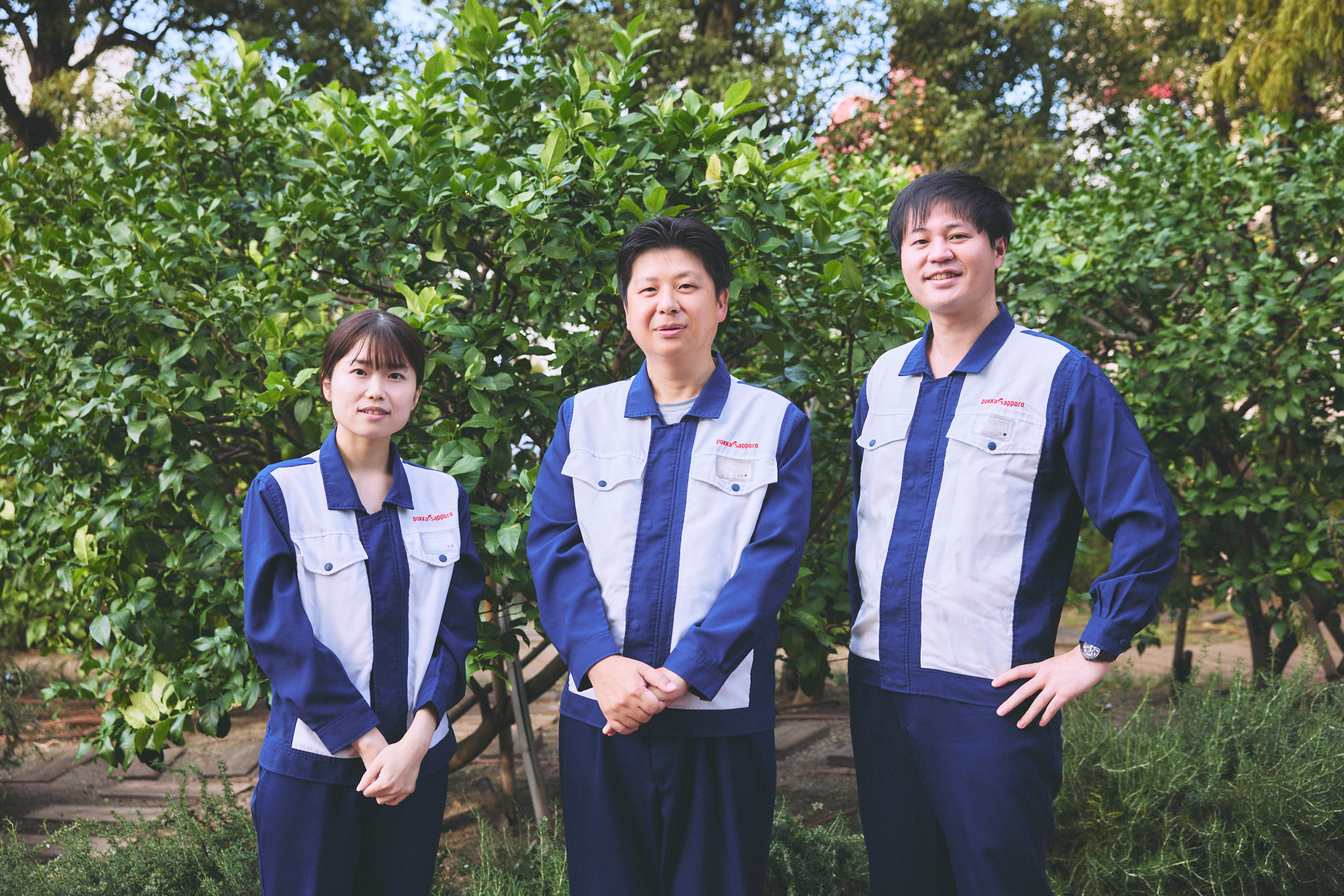
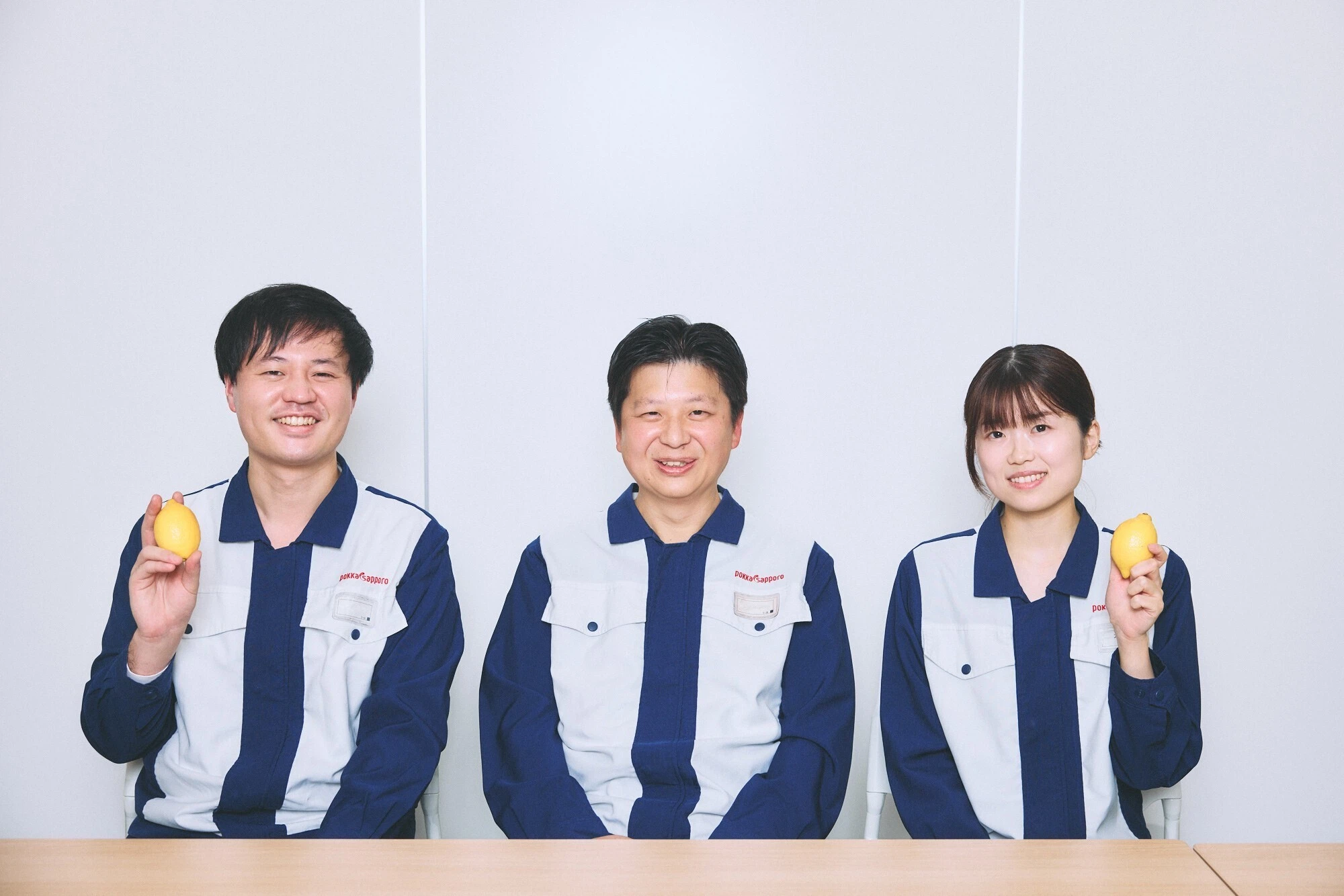
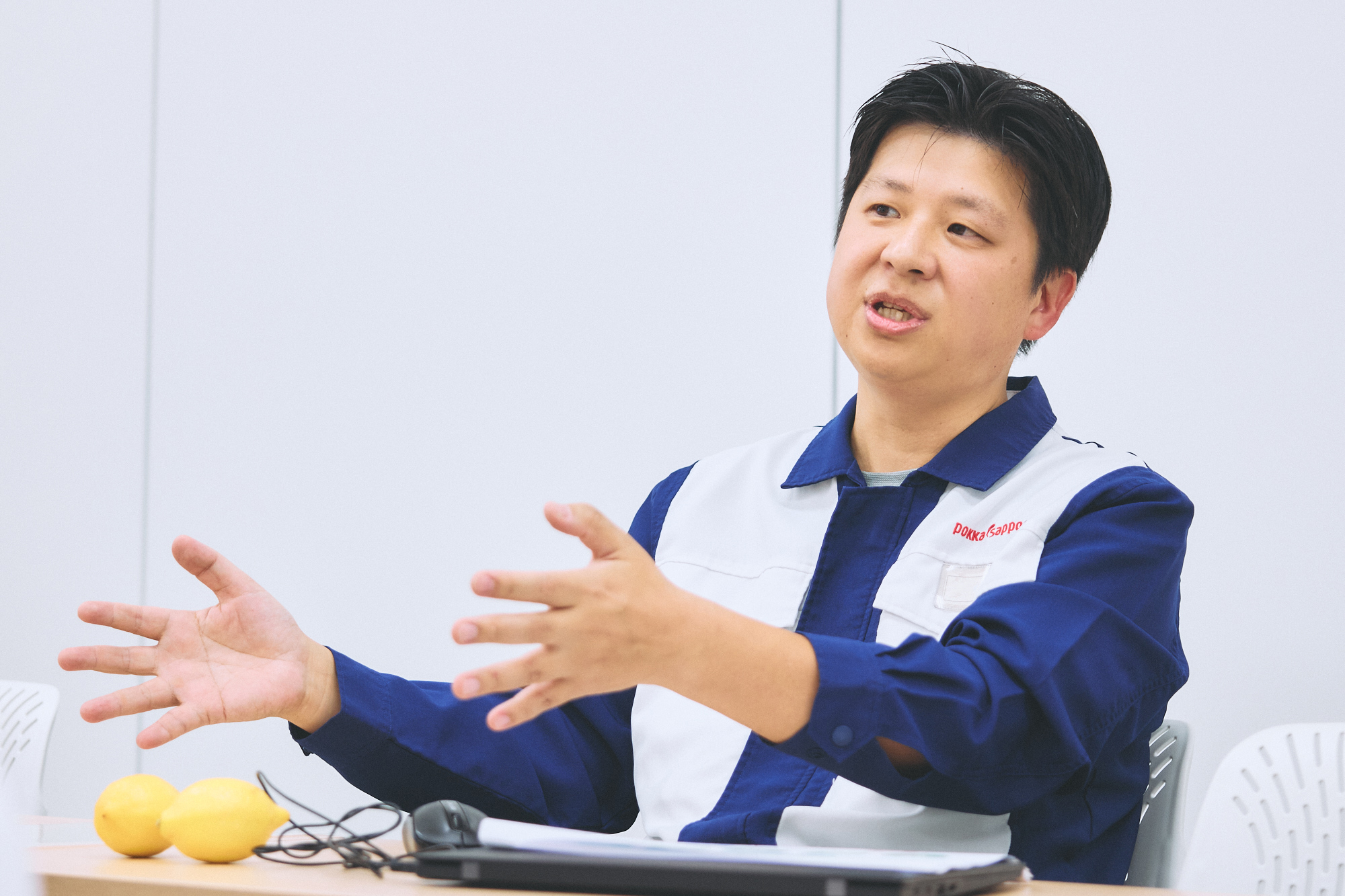
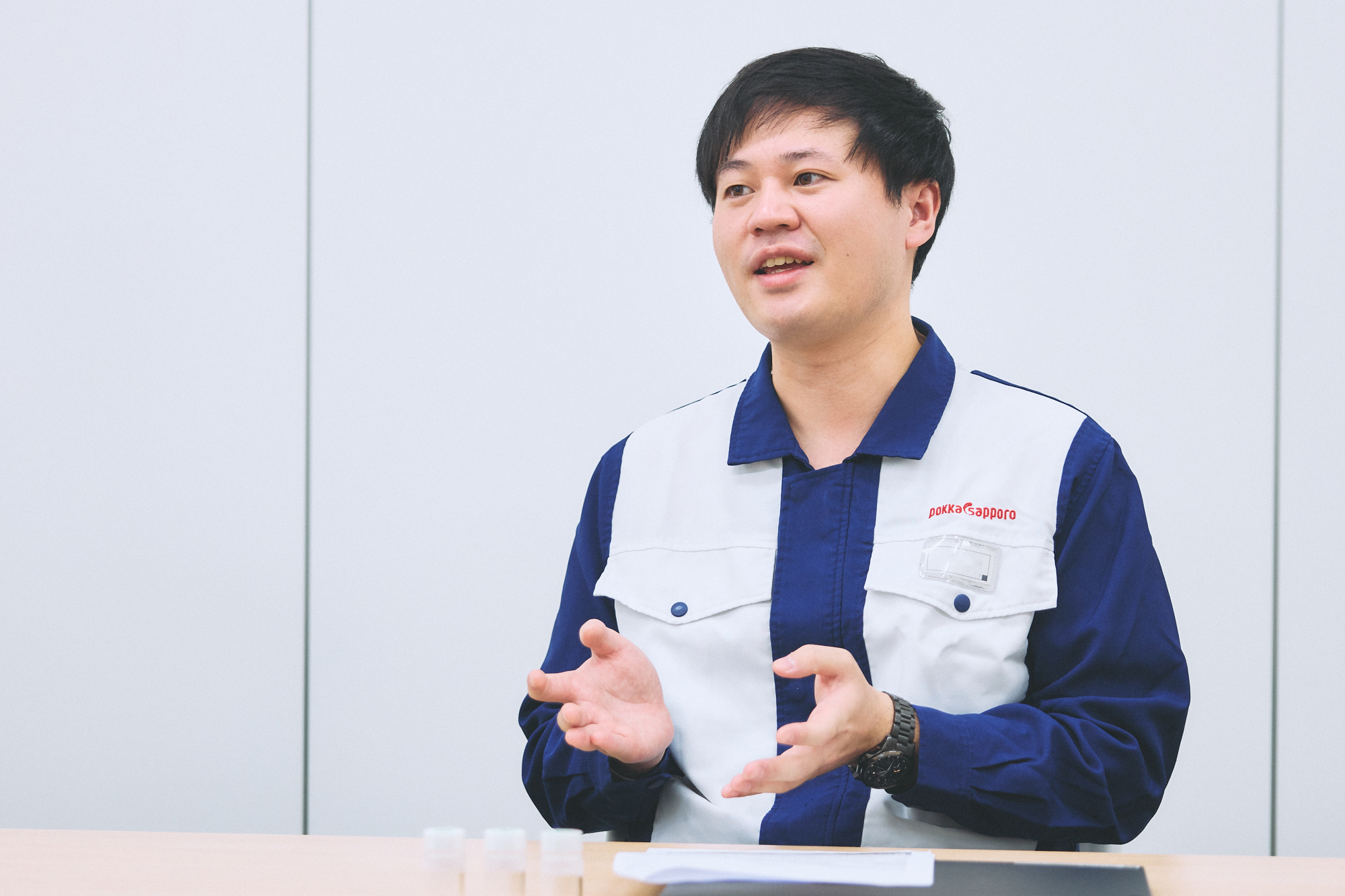
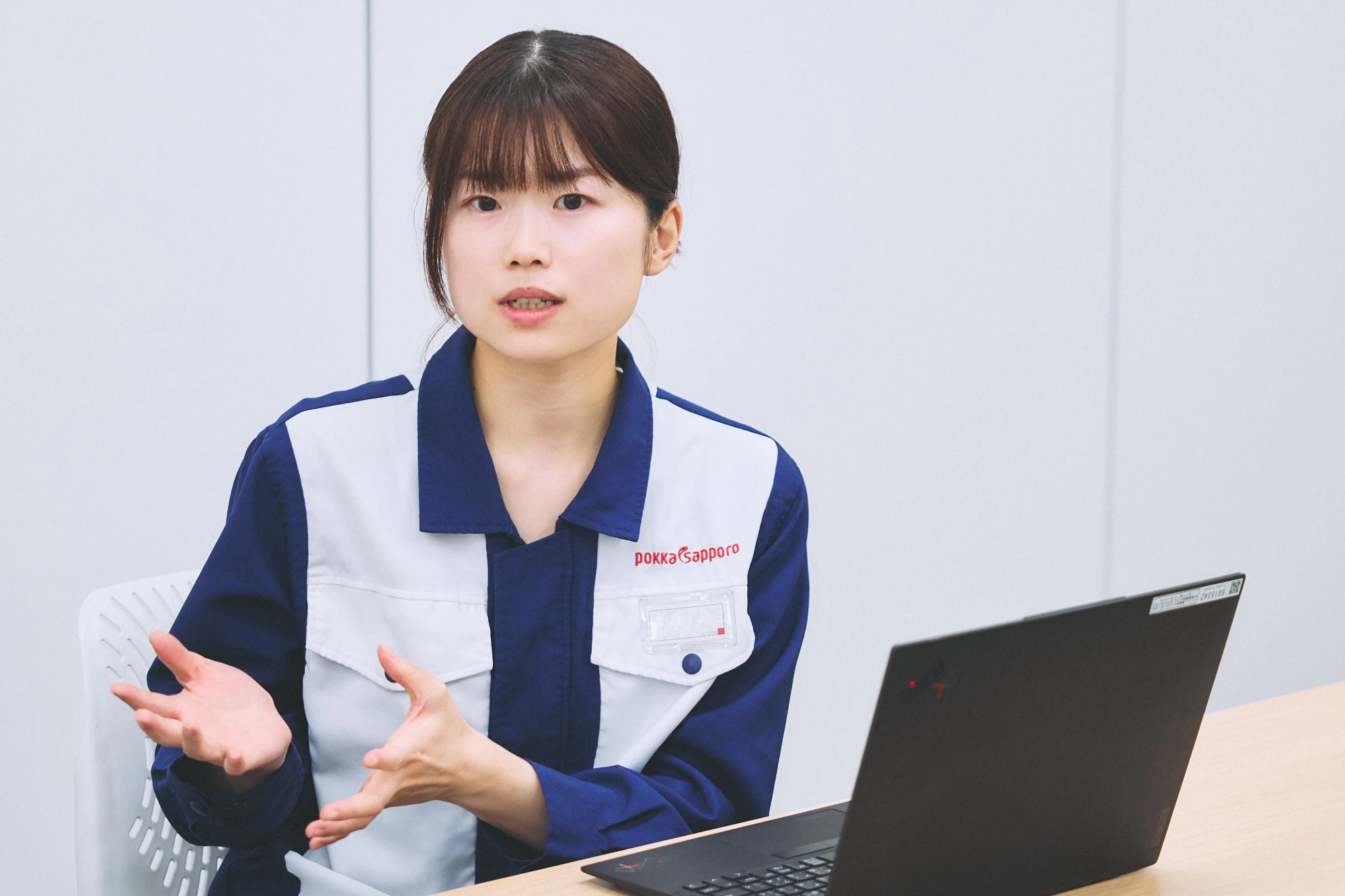
(Center) Hideyasu Okuda, Department Manager, Lemon Technology Development Department, Research & Development Division
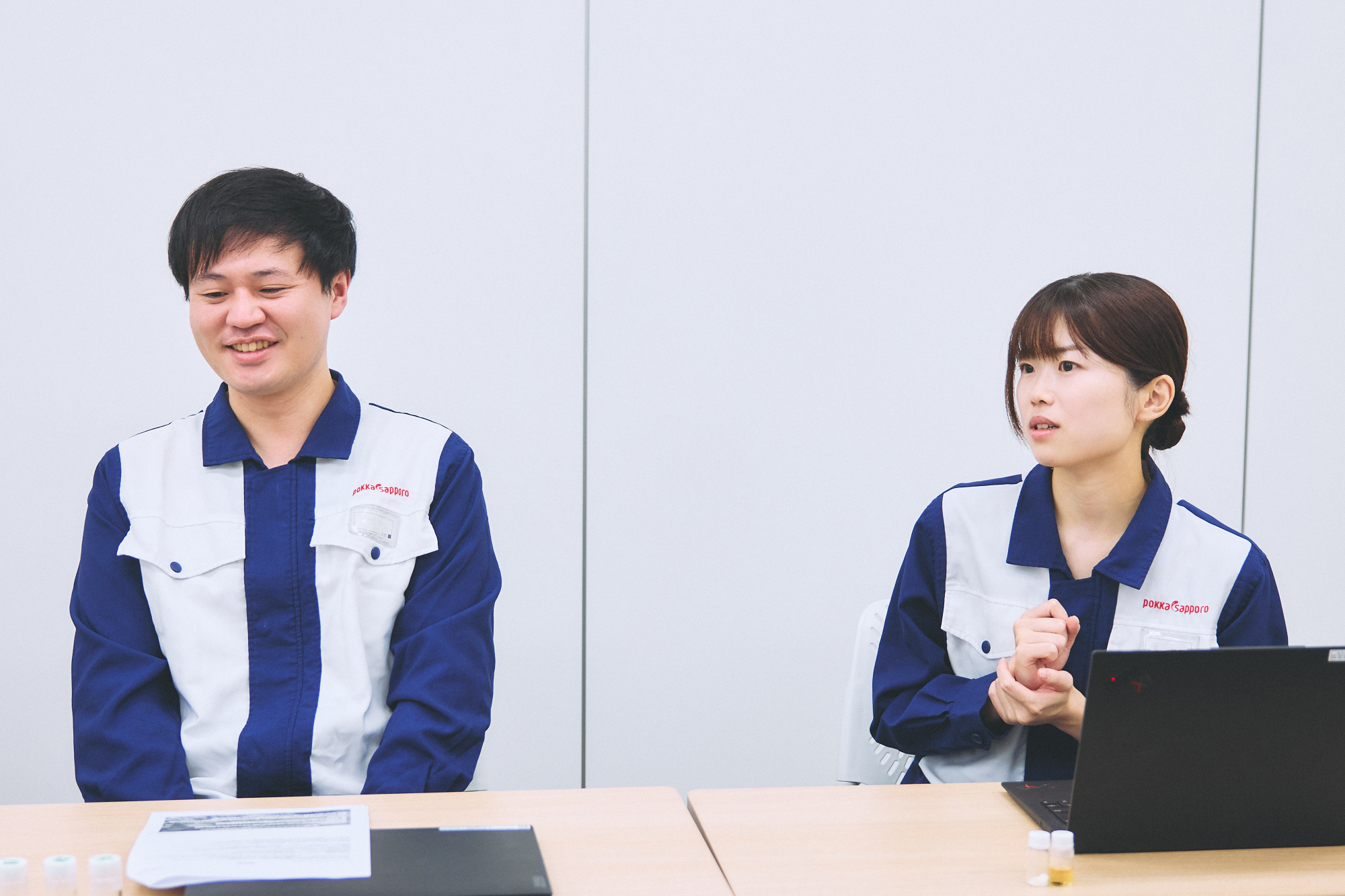
(Right) Mikiya Hattori, same department (in charge of lemon oil development)
(Left) Aki Makimoto, same department (in charge of lemon polyphenol development)
— First, could you tell us why the Lemon Technology Development Department was created?
Okuda: Pokka Sapporo has three main business areas: “Lemon”, “Beverages”, and “Soup”.
As part of the Sapporo Group’s mid-term plan, we set a company-wide goal to increase the demand for lemons and have been making changes to our business to keep up with the market. As part of this strategy, we decided to place the lemon business at the center of our management.
At the same time, we have built a system that covers everything from growing lemons to production. To continue growing the lemon business, we saw the need to strengthen our core lemon-related technologies.
This is why we established the Lemon Technology Development Department.
— What do you mean by “core technologies,” and how will they support the future of the lemon business?
Okuda: In our lemon business, core technologies refer to the processes used to turn raw lemon into products like juice, oil, and peel.
Right now, we are focusing on ways to use the “juice residue,” which is what remains after squeezing lemons. In the past, some of this was used for food, but much of it was used as animal feed and not fully utilized.
Our team is working to develop technologies to extract useful ingredients, such as extracts, oils, and lemon polyphenols from this residue.Through these efforts, we aim to build a more sustainable business and continue growing as a “100-year company” through lemons.
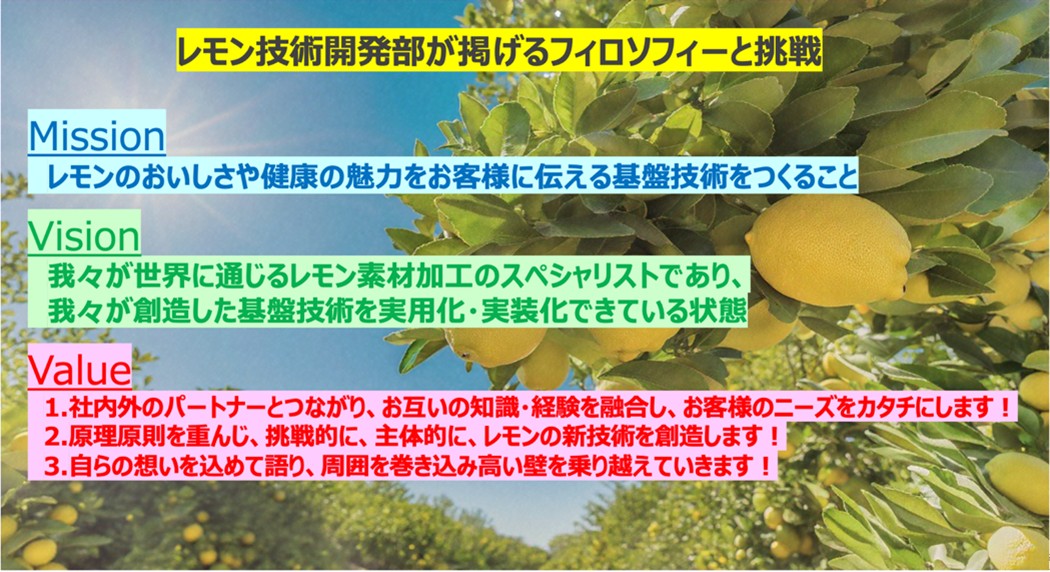
Okuda: We discussed and defined our MVV (Mission, Vision, and Values) during a retreat with all team members. It reflects the ideas and passion of everyone involved.
Our Mission is to create core technologies that deliver the taste and health benefits of lemons to our customers. Through our work, we aim to bring these benefits to more people.
Our Vision is to become world-class specialists in lemon processing and to put our technologies to real use. As specialists, we take pride in our work and aim to turn our research results into practical materials and final products.
Our Values guide how we work. We connect with partners both inside and outside the company, combine our knowledge and experience, and turn ideas into real solutions. We stay true to basic principles, take on challenges, and act proactively to create new technologies. We also value sharing our passion, inspiring others, and working together to overcome challenges.
We believe that working with people both inside and outside the company helps us achieve more, so we actively seek new connections and opportunities.
In our research, we value fundamental principles rather than intuition. At the same time, we set ambitious goals and take initiative to create new lemon technologies. This reflects our strong commitment.
We also believe that, especially when facing difficult challenges, sharing our ideas with passion helps bring others on board.
ーMr. Hattori and Ms. Makimoto, as researchers working in the field every day, how do you see this MVV?
Hattori: I especially keep the first Value in mind. As researchers, we always need to think about what kind of results can solve key problems and meet customer needs.
By talking with other departments, I’ve come to better understand how my research connects to customer needs. I believe these experiences help us see what skills and knowledge are needed next, support our growth, and lead to better results.
Makimoto: What I always keep in mind is the phrase “specialist in lemon material processing” from our Vision.
Our lab has specialists in many different fields. I am still early in my career, but I am learning from colleagues while trying to find my own area of expertise. To do this, I work on a wide range of research and test my ideas every day.
My goal is to become a “specialist in lemon material processing,” so I focus on hands-on work to better understand processing technologies and material properties.
— What kind of structure does the Lemon Technology Development Department use to conduct research?
Okuda: Currently, there are about eight research themes being pursued in the Lemon Technology Development Department, and each theme is handled by a team of about three people. We divide roles, such as passing the baton to members responsible for setting up equipment in the factory once the results of basic research are achieved.
—I understand that you, Mr. Hattori, are conducting research on upcycling juice residue to extract lemon oil.
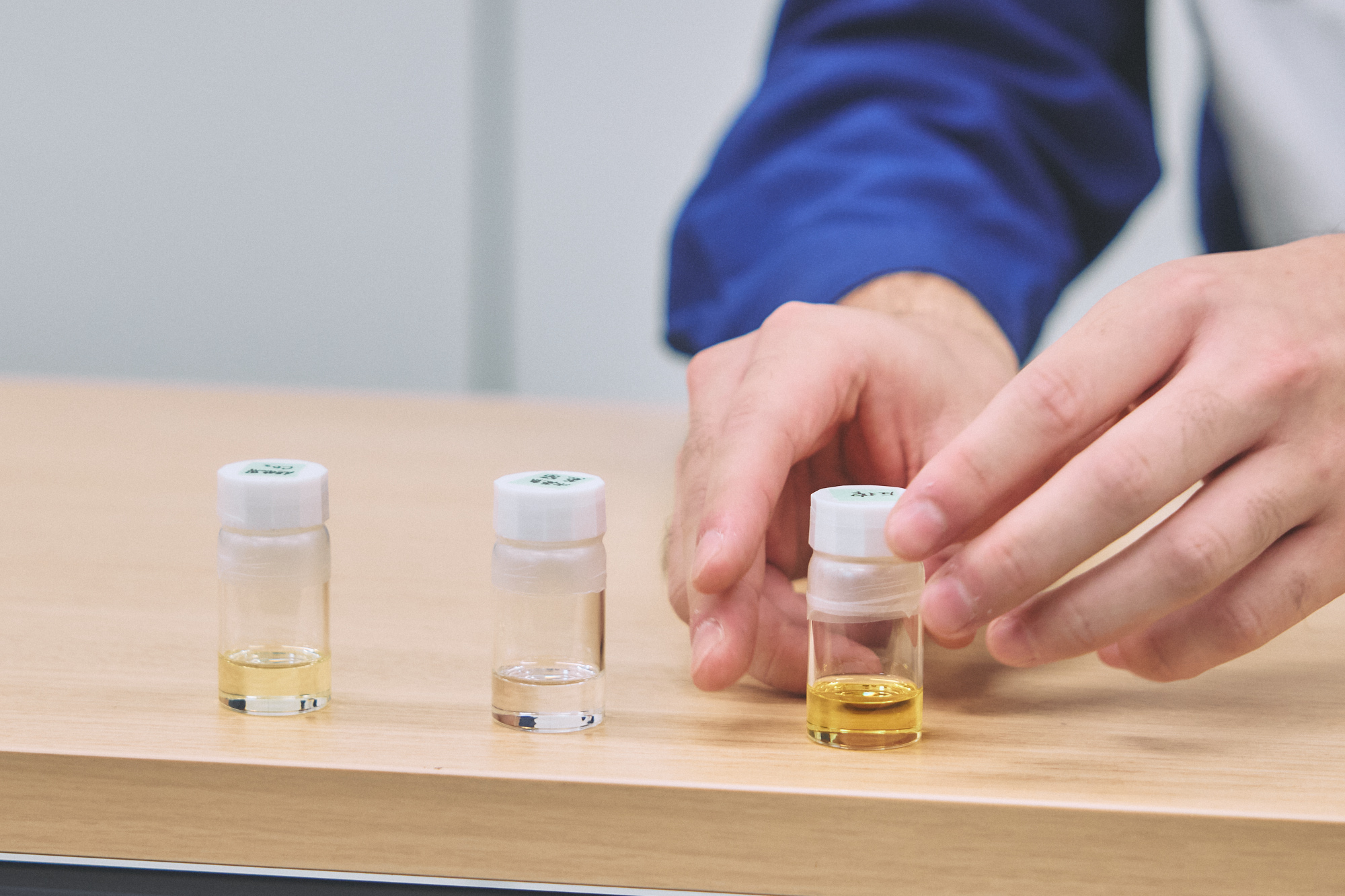
Hattori: Yes. I am researching extraction technology for the oil contained in the peel of the juice residue. By using three different extraction methods, we have found that we can extract oils with distinct scents.
—What possibilities do you see in researching lemon scents?
Hattori: It is known that scent has a significant impact on emotions. Through research into lemon scent components, if we can clarify the relationship between specific lemon scents and the feelings they evoke in people, I hope it will lead to the discovery of new value in lemons.
For example, I believe we could provide even greater value by adding scent to products like our "Pokka Poka Lemon," which we want people to drink when they want to "relax" or "calm down."
—I heard that you, Mr. Makimoto, are researching the extraction of lemon polyphenols from juice residue.
Makimoto: I am aiming to establish technology to extract and utilize useful materials such as polyphenols (antioxidant components naturally present in plants) contained in lemons from juice residue.
What I find difficult in my research is the very act of extracting only the lemon polyphenols, which have beneficial functions for the body, from the juice residue. We create an extract from the lemon peel to pull out as many polyphenols as possible. After that, we need to perform operations to recover only the target polyphenols from the mixture containing impurities through processes called purification and fractionation. It is simple, yet difficult, which is exactly why I find it interesting.
—Could you also tell us about the relationship between your research and existing products?
Makimoto: Hesperidin, one of the polyphenols that can be extracted from lemons, is processed into a water-soluble form (*) and used in our existing product, "KIRETO LEMON MUKUMI".
*Monoglucosyl hesperidin (or monoglucosylation)
This product was on the market before I joined the company, and I was assigned to handle additional studies for it after I joined. Being involved in the development of a product I already liked has made me feel even more attached to it.
—How do you plan to proceed with your research in the future?
Makimoto: Moving forward, I plan to take steps toward implementation and getting it into a manufacturable state.
To that end, I am steadily working on data acquisition while considering stages, scale, and priorities. Of course, it is common for results to differ from what was expected, but those are the times when I get excited and analyze what is happening.
I also consult with my seniors often. There are many veterans in the department, but they are all kind, making it a very easy environment to ask for advice. Every senior achieves solid results even on difficult tasks, so I hope to be able to do that kind of work myself.
—So, there are various stages between developing the technology to extract components and creating materials that can be used in products.
Okuda: That is correct. The Lemon Technology Development Department not only develops basic technology but also develops technology for producing materials on manufacturing lines and conducts tests on necessary equipment.
We operate out of two locations. At the Yaizu base, where Makimoto belongs, we conduct basic experiments. On the other hand, at the Kita-Nagoya base, where Hattori and I belong, we conduct tests using medium-scale equipment called plants, and we are responsible for the preparation stage for actual factory manufacturing.
—Are there any projects currently being researched for actual manufacturing?
Okuda: For things like the lemon polyphenols that Makimoto is in charge of, we are scheduled to begin studies on production lines little by little starting in the spring of 2026. I would like to see some themes realized within three years, and connect more research to implementation in five years.
Our ultimate goal is manufacturing, but the Lemon Technology Development Department is also a "department that creates technology." Therefore, I believe it is important to have technology ready to propose immediately when someone inside or outside the company says, "I want to make something like this using lemons." "Accumulating technology" for the future is also an important role for us.
—Mr. Hattori and Mr. Makimoto, what kind of mindset do you want to bring to lemon technology development in the future?
Hattori: I believe there is potential to further improve the refreshing feeling and healthy image that lemons already possess.
The lemon oil I am researching might not only have a good scent but could also contain new health functionalities. In the future, I would be happy if scent technology becomes a core technology that supports our company and can be expanded to things other than lemons.
Makimoto: Lemon polyphenols, my research theme, have higher antioxidant capacity than polyphenols from other raw materials, and health functions derived from them are also being clarified.
Since my university days, I have wanted to engage in manufacturing that contributes to health, so I am glad to be in charge of this research theme. I want to aim for a wider range of commercialization and further KIRETO LEMON series products with additional functionality, following 'KIRETO LEMON MUKUMI,' which is a Food with Function Claims product.
—I would like to ask you once again, Mr. Okuda, about the vision you hope to realize through lemon technology development.
Okuda: Since joining the company, I have always been excited to take on difficult challenges as a researcher. Overcoming these challenges to contribute to the company and my colleagues, and furthermore, providing new value to society, has been the source of my passion.
My dream is for "Lemon" to be synonymous with "Pokka Sapporo." In other words, I want to make us the No. 1 lemon company, second to none, not just in Japan but anywhere in the world. I envision a future where our steady, persistent research into fundamental lemon technology eventually leads to breakthroughs in other citrus fields.
—How will the initiatives of the Lemon Technology Development Department connect with our mission of "engaging with people and society to Create the new standard for the future of food" moving forward?
Okuda: Until now, food companies have been expected to provide safe, delicious products at an affordable price.
However, as society changes, it has become a corporate responsibility to balance profitability with sustainability while also addressing environmental issues.
For Pokka Sapporo, the symbol of this is our initiative to promote domestic lemon production. We are thinking about how to make full use of the lemons we produce without any waste. By creating new ingredients like lemon polyphenols and lemon oil from the squeezed residue, we are truly realizing what we mean by "creating the future of food." With that thought in mind, I want to continue dedicating myself to research every day.